


What if you could stop paying most interest on your credit cards for 12–18 months and cut your balance?
A balance transfer moves high‑interest debt to a new card with a 0% or low intro APR, buying time to pay principal.
There’s a cost: transfers usually charge 3%–5% and missing a payment or carrying a balance after the promo lets regular APRs (often 18%–27%) kick in.
Read on for a simple, step‑by‑step plan to pick the right offer, set a monthly payoff target, and avoid the common traps.
Understanding How Balance Transfers Help Reduce Credit Card Debt

A balance transfer moves existing high-interest credit card debt to a new card with a lower or 0% introductory APR. You’re basically buying yourself time to pay down the principal without hemorrhaging money on interest charges. Most promotional periods run 12 to 21 months, and that window is your chance to accelerate payoff without watching interest pile up.
Whether it’s worth it depends on what you owe, your credit score, and whether you can actually knock out the transferred balance before the intro period expires. Transfer a $5,000 balance from a card charging 21% APR to one offering 0% for 18 months and pay it off during that window? You’ll save over $800 in interest. But carry a balance past the promotional period and you’ll start accruing interest at the card’s regular APR, often 18% to 27%. That can wipe out most or all of your savings.
Balance transfers work best when you:
- Have good or excellent credit (typically 670 or higher) to qualify for the strongest promotional offers
- Can afford consistent monthly payments large enough to pay down the balance before the intro period expires
- Commit to stopping new purchases on both the old card and the new transfer card
- Understand transfer fees (usually 3% to 5%) and can still save money after paying them
Step‑by‑Step Guide to Executing a Balance Transfer

1. Calculate your affordable monthly payment and multiply it by the intro period length. If you can pay $300 per month and the card offers 15 months at 0%, you can handle a transfer of up to $4,500. Simple math: monthly payment × intro months gives you the maximum transfer amount you can pay off interest free.
2. Compare balance transfer cards and choose one that matches your payoff timeline. Look for the longest 0% intro period you qualify for, the lowest transfer fee, and the most favorable regular APR that kicks in after the promotion ends. Read the full terms to confirm the promotional rate won’t vanish after a single late payment.
3. Apply for the balance transfer card and wait for approval and your credit limit assignment. Your new credit limit determines how much debt you can move. If your limit comes in lower than your total balance, you might need to transfer only part of your debt or prioritize your highest interest cards first.
4. Submit the balance transfer request through the issuer’s online portal, app, or phone line. You’ll need account numbers, current balances, and payment addresses of the cards you want to pay off. Transfers typically take 5 to 14 days to process. You must continue making minimum payments on your old cards until the transfer completes.
5. Confirm the transfer has posted and verify the exact amount moved. Check both your old card statements and your new card balance. Make sure no interest or fees were added during the transfer window that could inflate your new balance unexpectedly.
6. Set up automatic monthly payments on the new card and stop using the old cards for purchases. Divide your transferred balance by the number of months in the intro period, then pay at least that amount every month. Mark the month before your promotional period ends on your calendar so you have a clear deadline.
Costs, Fees, and Fine Print to Evaluate Before Transferring
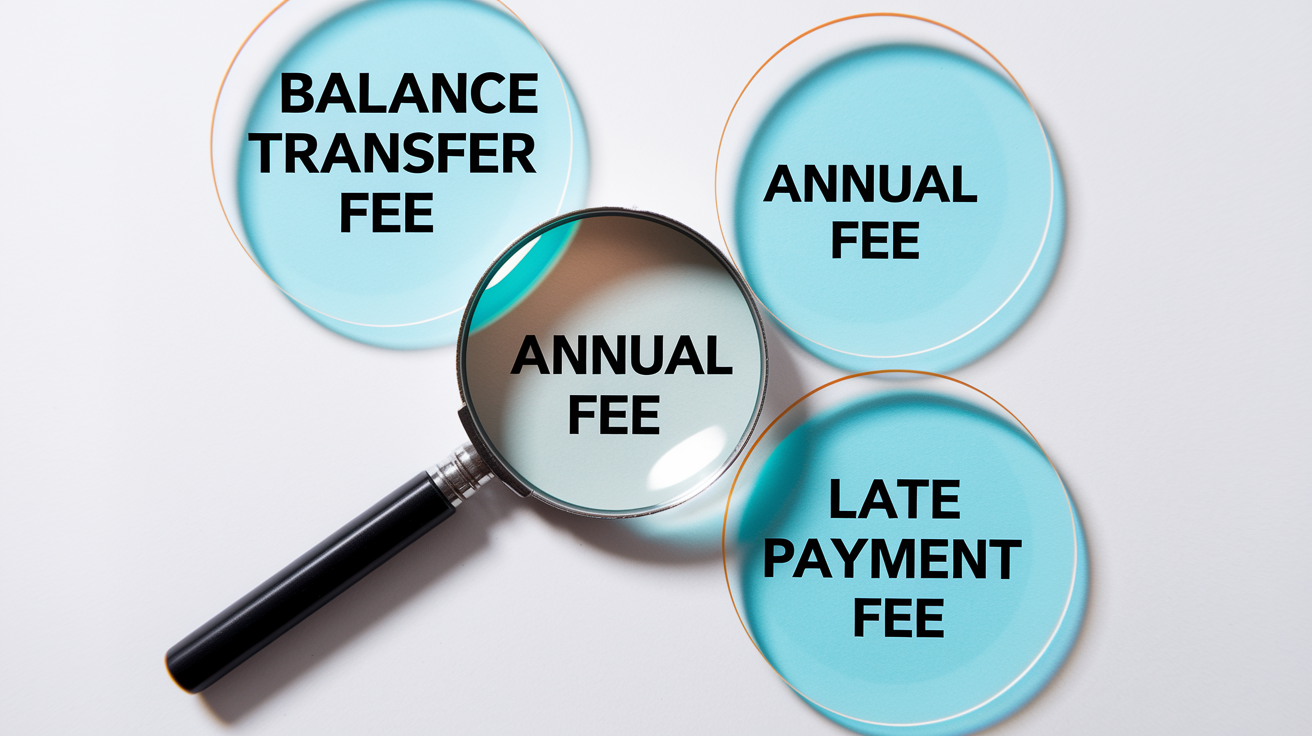
Most balance transfer cards charge a transfer fee, typically 3% to 5% of the amount you move. On a $4,000 transfer, a 3% fee costs $120 up front. That fee gets added to your new card balance immediately, so you’re starting with $4,120 to pay off, not $4,000. Even with the fee, you can still save hundreds if you were paying 20% APR on your old card and the new card offers 0% for 18 months.
The promotional APR isn’t permanent. Missing a single payment can trigger penalty APR clauses that end your 0% rate early. Some issuers reserve the right to revoke the promotional rate and apply a penalty APR, often 29.99%, if you pay late even once. After the intro period ends, any remaining balance will accrue interest at the card’s standard APR, which is usually higher than the rate you were paying before. If you can’t finish paying off the balance in time, you may end up with a higher interest rate than you started with.
| Fee Type | Typical Amount | Impact on Borrower |
|---|---|---|
| Balance transfer fee | 3% to 5% of transfer amount | Increases starting balance; reduces total savings |
| Annual fee | $0 to $95 | Ongoing cost that may offset interest savings |
| Late payment fee | Up to $40 | Can trigger penalty APR and revoke 0% promo rate |
Timing Strategies to Maximize Savings

Initiate your balance transfer as soon as you’re approved and your new card arrives. Every day you wait is a day you continue paying interest on your old card. If your intro period is 15 months and you wait two months to transfer, you’ve lost two months of interest free payoff time. Some issuers count the intro period from the date your account opens, not the date the transfer posts, so confirm the exact start and end dates in your card agreement.
Align your first payment with the earliest possible due date after the transfer completes. If your billing cycle closes on the 5th and your transfer posts on the 8th, your first payment will be due around the 30th of that month. Starting payments immediately keeps you on track to finish before the promotional period expires. Missing that deadline, even by a single billing cycle, means your remaining balance will start accruing interest at the standard APR. That can be 18% to 27% and will quickly erase the savings you worked to capture.
Using Multiple Balance Transfers and High Balances Strategically

If you have more debt than one card’s credit limit can handle, you can apply for a second balance transfer card and split the total across both. This works when your monthly payment capacity is high enough to pay down both cards before their intro periods end. Each new application will add a hard inquiry to your credit report and temporarily lower your score by a few points, but the benefit of paying off high interest debt faster often outweighs that short term impact.
Transferring very high balances, $10,000 or more, requires careful planning. You need a realistic monthly payment plan that accounts for both the transfer fee and the total debt. If you can’t afford to pay off the full amount before the promo expires, consider transferring only the portion you can confidently eliminate, and use a debt avalanche or snowball strategy on the remaining balances.
Risks to consider when using multiple transfers:
- Each new account lowers your average account age, which can reduce your credit score in the short term
- Managing multiple promotional end dates increases the chance of missing a deadline and losing 0% benefits
- Transfer fees on each card compound, reducing total savings if not carefully calculated in advance
How Balance Transfers Affect Credit Scores

Opening a new balance transfer card generates a hard inquiry, which typically lowers your credit score by 3 to 10 points for a few months. The inquiry stays on your report for two years but stops affecting your score after 12 months. If you open multiple cards in a short period, the combined inquiries can have a larger effect.
Your credit utilization ratio (total balances divided by total available credit) improves when you move debt from a maxed out card to a new card with unused capacity. For example, if you had a $3,000 balance on a card with a $3,000 limit (100% utilization) and transfer it to a new card with a $5,000 limit, your overall utilization drops. Lower utilization usually increases your credit score within one to two billing cycles. Keep the old card open and don’t close it after the transfer. Closing it removes that available credit and can push your utilization back up.
The new account reduces your average account age, which is a smaller scoring factor but still relevant. If your credit file is thin (only two or three cards), adding a new account can have a more noticeable impact. As you pay down the transferred balance, your score will typically rise because you’re lowering your total debt and demonstrating consistent on time payments.
Alternatives to Balance Transfers for Paying Off Credit Card Debt

If you don’t qualify for a 0% balance transfer card or the fees and limits don’t fit your situation, other debt payoff strategies can still reduce interest and simplify repayment. Personal loans and structured repayment methods each have tradeoffs worth comparing against balance transfers.
A debt consolidation loan converts revolving credit card debt into a fixed installment loan with a set term and monthly payment. Federal Reserve data shows the average 24 month personal loan APR is around 12.33%, compared to the average credit card APR of 21.76%. You’ll pay less interest than staying on your cards, but more than you would during a 0% balance transfer period. Personal loans often have origination fees (1% to 6% of the loan amount) and your interest rate depends on your credit score, income, and debt to income ratio.
Four common alternatives:
- Debt avalanche method: Pay minimums on all cards and put any extra money toward the card with the highest interest rate. This minimizes total interest paid but may take longer to eliminate your first balance.
- Debt snowball method: Pay minimums on all cards and attack the smallest balance first. You’ll pay more interest overall, but the psychological win of eliminating a card faster can keep you motivated.
- Home equity loan or HELOC: Borrow against your home’s equity at a lower rate, often 7% to 10%. Risk: your home secures the debt, so missed payments can lead to foreclosure. Tax advantages were reduced by the 2017 Tax Cuts and Jobs Act.
- Credit counseling and debt management plans: Nonprofit agencies negotiate lower interest rates with creditors and consolidate your payments into one monthly plan. Setup fees and monthly fees apply, and you may be required to close your credit card accounts.
Common Pitfalls That Reduce the Benefits of Balance Transfers

The most common mistake is continuing to use the old credit card after transferring the balance. Every new purchase on that card starts accruing interest immediately at the standard APR. If you carry a balance, issuers apply your payments to the lowest interest portion first, meaning the new purchases sit unpaid while you chip away at older debt.
Other pitfalls to avoid:
- Missing a payment on the new card: Even one late payment can trigger penalty APR clauses that revoke your 0% rate and replace it with rates as high as 29.99%. Set up autopay for at least the minimum to protect your promotional terms.
- Closing your old card after the transfer: Closing the account removes that card’s credit limit from your total available credit, which raises your utilization ratio and can lower your credit score. Keep the card open unless it has a high annual fee you can’t justify.
- Transferring more than you can pay off in the intro period: If you transfer $8,000 but can only afford $200 per month, you’ll carry a balance of $2,400 into the standard APR period on an 18 month card. That remaining balance will start accruing interest at 18% to 27%, which can cost you more than if you’d stayed on your original card.
- Ignoring the post intro APR: Some cards advertise long 0% periods but have regular APRs of 27% or higher. If you expect to carry any balance past the promo window, compare the ongoing rates and choose a card with a lower standard APR.
Example Scenarios Showing How Much You Can Save

Scenario 1: You have a $5,000 balance on a card charging 22% APR. Your minimum payment is around $150 per month, but at that rate it’ll take over four years to pay off and cost roughly $2,100 in interest. You apply for a balance transfer card with a 3% fee and 0% APR for 18 months. The transfer fee is $150, bringing your new balance to $5,150. You divide $5,150 by 18 months and commit to paying $286 per month. You finish paying off the balance one month before the intro period ends and pay zero interest. Total cost: $150 transfer fee. Total saved: approximately $1,950.
Scenario 2: You owe $3,000 on one card at 19% APR and $2,500 on another at 24% APR, for a combined $5,500 in debt. You’re approved for a balance transfer card with a $6,000 limit, 0% APR for 15 months, and a 4% transfer fee. You transfer both balances. The fee is $220 ($5,500 × 0.04), so your new balance is $5,720. You pay $400 per month and eliminate the full balance in 14 months. If you had stayed on the original cards and paid $400 per month, you would’ve paid roughly $650 in interest over the same period. By using the balance transfer, you save about $430 after accounting for the $220 fee.
Choosing the Right Balance Transfer Card

Start by confirming your credit score and identifying which cards you’re likely to qualify for. Issuers typically reserve their longest 0% promotional periods and lowest transfer fees for borrowers with good to excellent credit, generally a FICO score of 670 or higher. If your score is lower, you may still find balance transfer offers, but the intro period will be shorter and the fees may be higher. Compare at least three cards and calculate the total cost of each option, including transfer fees, annual fees, and the regular APR that applies after the promo ends.
Your payoff timeline should drive the decision. If you can afford to pay off your debt in 12 months, a card offering 12 months at 0% with a 3% fee is often better than a card offering 21 months at 0% with a 5% fee and a $95 annual fee. Run the numbers for your specific balance and monthly payment to see which card delivers the most savings. If you’re uncertain whether you’ll finish within the intro period, prioritize cards with lower post promotional APRs to reduce the cost of any remaining balance.
Key decision criteria:
- Length of 0% intro period: Match it to your realistic payoff timeline. Longer is only better if you’ll use the extra months productively.
- Transfer fee percentage: Lower fees (3% or less) maximize savings, especially on large balances. Some cards waive transfer fees entirely during limited promotional windows.
- Standard APR after intro period ends: If you expect to carry any balance past the promo, choose a card with a competitive ongoing rate (under 20% if possible).
- Annual fee: Avoid paying an annual fee unless the longer intro period or lower transfer fee offsets the cost. Many strong balance transfer cards charge $0 annually.
Final Words
Move high‑interest balances to a 0% intro APR card, follow the six‑step transfer process, and time your payoff to the promo period.
Watch transfer fees, limits, and short‑term credit impacts; avoid new spending and missed payments that can void the offer.
If you can stick to a clear monthly payoff plan, balance transfer strategy to pay off credit card debt can cut interest by hundreds or more. Compare offers, run the numbers, and start paying a bit extra each month. You’ll see progress.
FAQ
Q: Are balance transfers a good way to pay off credit card debt?
A: Balance transfers are a good way to pay off credit card debt when they move high‑interest balances to a 0% intro APR card and you can pay the balance before the promo ends; watch transfer fees.
Q: What is the 2 3 4 rule for credit cards?
A: The 2‑3‑4 rule for credit cards isn’t a formal standard; it’s used informally to describe reward tiers (2%, 3%, 4% categories) or simple account‑management tips—check the source before applying it.
Q: What does Dave Ramsey say about balance transfers?
A: Dave Ramsey says balance transfers are usually a bad idea; he favors the debt‑snowball method, avoiding new cards, and not relying on promotional offers that can lead to more debt risk.
Q: How to get rid of $30,000 credit card debt?
A: To get rid of $30,000 credit card debt, stop new charges, choose snowball or avalanche, consider consolidation or a 0% transfer, then pay $750–1,000+/month or more to cut years off repayment.