


Do late payments disappear from your credit report as soon as you pay them?
They don’t.
A reported late payment stays on your file for seven years, counted from the original delinquency date, the first month you missed a payment and never brought it current.
This guide lays out that seven-year timeline, shows how 30-, 60-, and 90-plus day stages hit your score, and explains the real steps that help your credit recover sooner.
Read on to see when marks fall off, how charge-offs and collections fit in, and what to do next.
Timeline Overview for Late Payments on a Credit Report

Late payments stick around on your credit report for seven years. The clock starts from the original delinquency date, which is the first month you missed a payment and never caught up. That first missed payment kicks off the seven-year countdown, no matter what happens with the account later.
Creditors usually report a missed payment once your account hits 30 days past due. From there, things get worse in four stages: 30 days late, 60 days late, 90 days late, and 120+ days late. Each stage shows up separately on your report, and each one hurts your score more than the last. The first report at 30 days usually causes the biggest single drop.
Here’s what you’re looking at:
- 30 days past due: First delinquency reported, score drops noticeably
- 60 days past due: More serious mark, score drops further
- 90 days past due: Severe reporting, charge-off or collections becomes likely
- 180 days (about 6 months): Common credit card charge-off timing, installment loans often charge off between 120 and 180 days
If you pay before hitting 30 days past due, your lender might still charge a late fee. But in most cases, they won’t report it to the credit bureaus. Your score avoids the hit. Once the late payment gets reported, it stays visible for the full seven years. The good news? Its impact fades over time as you build positive payment history.
Understanding the Original Delinquency Date and Why It Matters
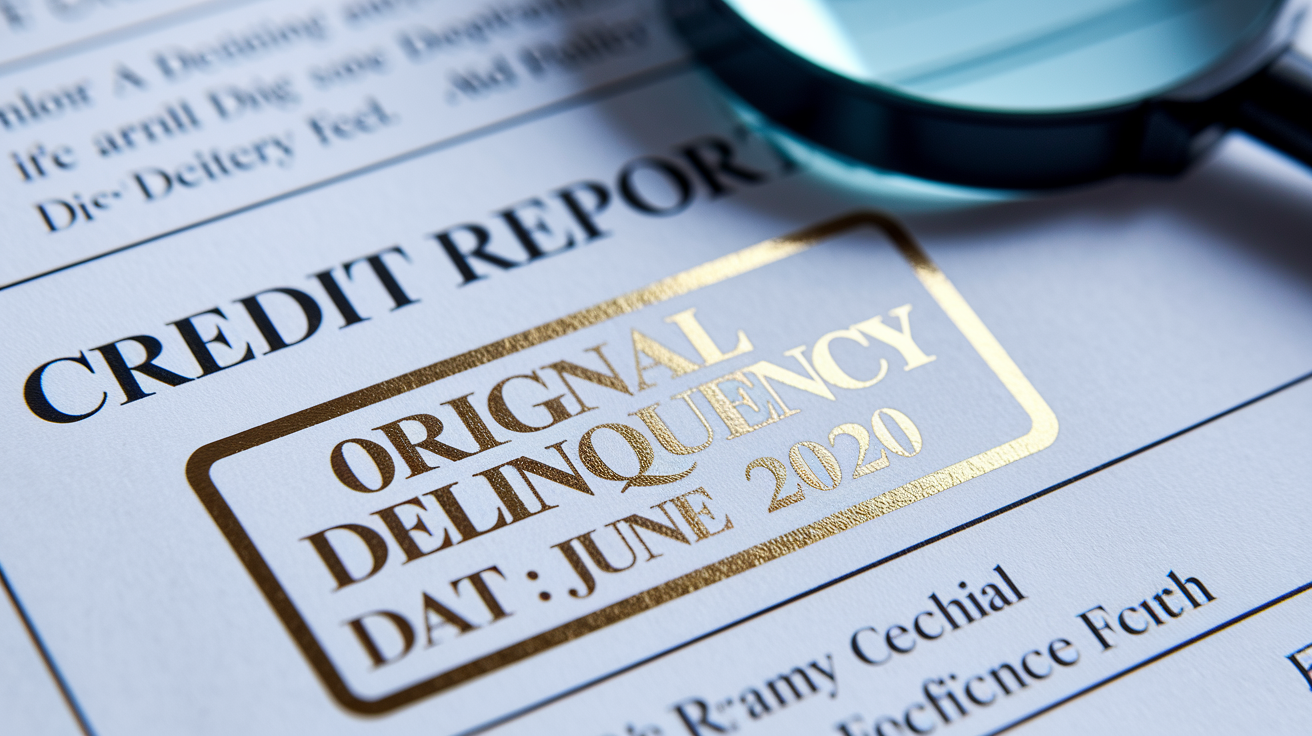
The original delinquency date isn’t the date your account went to collections, got charged off, or was settled. It’s the date of that first missed payment that started everything. Say you missed a payment in June 2020, paid in July, then missed again in August and eventually stopped paying. The original delinquency date is still June 2020.
The seven-year reporting period starts from that first missed payment that was never brought current. The entire late payment history, any charge-off note, and any collection entry all get removed about seven years after that June 2020 date. A late payment that began in June 2020 should drop off your report by July 2027.
Severity Stages of Late Payments and Their Credit Impact

Not all late payments hurt the same. The longer you stay delinquent, the worse it gets.
30 Days Late
A 30-day late payment is the first recorded delinquency on your report. For someone with a high FICO score in the 700s or 800s, this can drop the score by about 60 to 110 points. The exact drop depends on how thick your credit file is and how much positive history you’ve built. If you’ve got a thin file or recent delinquencies already, the damage might be smaller in absolute points but still severe relative to where you’re starting.
60 Days Late
Once you hit 60 days past due, lenders see it as more serious. The score impact is bigger than at 30 days, and the report signals to future lenders that you didn’t fix it quickly. This stage often tips borderline credit decisions toward denial or much higher interest rates.
90+ Days Late
A 90-day late payment or longer is a major derogatory mark. This can reduce a credit score by 100 to 200 or more points, depending on your profile. At this point, the account’s usually headed for charge-off or collections. Most lenders treat 90-day delinquencies as evidence of serious financial trouble.
Recent late payments carry more weight than older ones. A 30-day late from five years ago has less influence on your score today than one from last month. Credit scoring models emphasize recent behavior, so your credit can recover significantly even while the old late payment stays visible.
How Late Payments Influence Loans, Credit Approvals, and Everyday Costs

A late payment on your report affects more than just your score number. Lenders review your full credit history when you apply for a mortgage, auto loan, or credit card. Even one recent 30-day late can trigger a denial or force you to accept a higher interest rate. A borrower with a 720 FICO score and no delinquencies might qualify for a 6.5 percent mortgage rate. That same borrower with a single 60-day late payment in the past year might only qualify at 7.5 percent or higher. That can cost tens of thousands of dollars over a 30-year loan.
Lenders judge recent delinquencies more harshly than old ones. A late payment from six months ago signals higher current risk than one from six years ago. This is why timing matters when you’re planning a major loan application. If you can wait until the late payment is older, your approval odds and rate improve.
Beyond lending, late payments can raise insurance premiums in states where insurers use credit-based insurance scores. Landlords often check credit reports during rental applications, and a history of missed payments can lead to denials or demands for higher security deposits. The cost of a single late payment can ripple through multiple areas of your financial life while it’s still on your report.
How Different Account Types Report Late Payments

Different types of accounts follow the same general rule for late payment reporting, but the details and timelines vary.
| Account Type | Reporting Trigger | Charge-Off Timing | Notes |
|---|---|---|---|
| Credit Card | 30 days past due | Typically 180 days | Charged off around 6 months of non-payment, collection may follow |
| Mortgage | 30 days past due | Foreclosure timeline varies, charge-off after foreclosure completes | Lenders may report each month of lateness (30, 60, 90+), foreclosure adds separate entry |
| Auto Loan | 30 days past due | 120–180 days, repossession may occur sooner | Repossession is reported separately, deficiency balance may be sent to collections |
| Student Loan (federal) | 30 days past due (monthly reporting) | Federal default at 270 days | Federal loans may offer rehabilitation, private loans follow typical charge-off rules |
| Medical Bill in Collections | Once sold or assigned to collections (often after 90–180 days unpaid) | n/a (already a collection) | Seven-year removal clock starts from the original date you stopped paying the provider |
| Utility Accounts | Typically not reported unless sent to collections | n/a | Late utility payments usually don’t appear on credit reports unless a collection agency is involved |
Regardless of account type, all late payments, charge-offs, and collections get removed seven years from the original delinquency date. A medical collection from an unpaid bill that went delinquent in March 2019 should drop off your report by April 2026, even if the collection agency bought the debt later or updated the account multiple times.
What Happens After Charge-Offs and Collections

A charge-off happens when a creditor decides the debt’s unlikely to be collected and writes it off as a loss for accounting. Credit card companies typically charge off accounts around 180 days past due. Installment loans like auto loans and personal loans are often charged off between 120 and 180 days of non-payment. Charge-off doesn’t erase the debt or stop collection efforts. The account gets marked “charged off” on your credit report, and the creditor may sell the debt to a collection agency or keep trying to collect it themselves.
When a debt’s sold to a collection agency, the original account shows as charged off and a new collections entry may appear on your report. Both entries are tied to the same original delinquency date. The seven-year reporting period for the charge-off and the collection starts from that first missed payment on the original account, not from the date the account was charged off or the date the collection agency bought the debt.
Key rules for charge-offs and collections:
- The charge-off stays on your report for seven years from the original delinquency date.
- A related collection entry is removed at the same seven-year mark, even if the debt was sold or transferred multiple times.
- Paying or settling a charge-off or collection doesn’t remove it from your report, but it updates the status to “paid” or “settled,” which can be slightly less damaging than “unpaid.”
- Partial payments or payment plans on a charged-off account don’t restart the seven-year clock.
Do Partial Payments, Settlements, or Account Changes Affect the Reporting Date?

Making partial payments doesn’t reset the seven-year reporting clock. The original delinquency date stays the same even if you pay down part of the balance, negotiate a settlement, or resume payments after months of delinquency. The clock started when you first missed the payment and never brought the account current again.
In rare cases, a creditor might “re-age” an account, which means updating the delinquency date to a more recent month. Re-aging is usually only done if you enter a formal repayment or hardship agreement and the creditor reports the account as current again. This practice is tightly regulated under the Fair Credit Reporting Act, and legitimate re-aging requires the account to be brought fully current or placed in a qualifying program. Unauthorized or inaccurate re-aging is a reporting error and can be disputed.
Three situations where the reporting date might change:
- Re-aging by lender under a formal agreement: If you negotiate a workout plan and the lender reports the account as current after completion, the late payment history may be adjusted. This is uncommon and must follow FCRA rules.
- Dispute correction of an inaccurate date: If the original delinquency date on your report is wrong, and you successfully dispute it with documentation, the bureaus will correct the date. This might move the removal date earlier or later depending on the error.
- Goodwill adjustment after consistent on-time payments: Some creditors will remove a late payment from your report as a goodwill gesture if you’ve since established a strong payment history. This is discretionary and not a right.
Pay-for-delete is a negotiation tactic where you offer to pay a collection or settled debt in exchange for removal from your credit report. Some collection agencies will agree to this, especially if the debt’s old or the amount is small. There’s no legal requirement for them to do so, and many won’t. If you attempt pay-for-delete, get the agreement in writing before you send payment.
Removal Options: Disputes, Goodwill Letters, and Error Correction

Under the Fair Credit Reporting Act, you can dispute inaccurate or incomplete information on your credit report. If a late payment is reported incorrectly (wrong date, wrong account, or a payment you actually made on time), you can file a dispute with each of the three credit bureaus (Equifax, Experian, and TransUnion). The bureau must investigate, usually within 30 days, though the timeline can extend to 45 days in certain situations. If the creditor can’t verify the information, the bureau must remove it.
To dispute effectively, provide clear documentation:
- Copies of bank statements, canceled checks, or payment confirmations showing you paid on time.
- Account statements from the creditor showing the correct payment history.
- Any correspondence with the lender that supports your claim.
Send disputes in writing and keep copies. You can dispute online through each bureau’s website, but written disputes sent via certified mail create a stronger paper trail. Get your free credit reports from AnnualCreditReport.com before you begin, so you know exactly what each bureau is reporting and can tailor your dispute to the specific errors.
Goodwill Removal
Goodwill removal is a request you make directly to the original creditor, asking them to remove an accurate late payment as a courtesy. This works best when you’ve got a long history of on-time payments with that creditor, the late payment was an isolated incident, and you’ve since resumed perfect payment behavior. Write a polite letter explaining the circumstances, taking responsibility, and respectfully requesting removal. Success rates are low, but creditors occasionally grant goodwill removals for valued customers. Don’t expect removal, and don’t rely on this as a primary strategy.
When Pay-for-Delete Is Possible
Pay-for-delete can work with third-party collection agencies, especially for small balances or older debts. The collection agency has discretion over reporting, and some will agree to delete the entry if you pay in full. Negotiate before you pay, get the agreement in writing, and confirm the specific removal timeline. Original creditors are less likely to agree to pay-for-delete because their reporting is tied to internal systems and regulatory expectations.
After filing a dispute, the bureau will send you an investigation result, usually within 30 to 45 days. If the item’s corrected or removed, confirm the change appears on all three bureau reports. If the bureau verifies the information and keeps it on your report, you can add a 100-word consumer statement explaining your side, though this has limited impact on credit decisions. If the updated result is still incorrect, you can re-dispute with additional evidence or escalate through a complaint to the Consumer Financial Protection Bureau.
How to Rebuild Credit While Late Payments Remain

Late payments will stay on your report for seven years, but their impact on your credit score decreases over time, especially if you build consistent positive payment history. The most effective way to rebuild credit is to demonstrate that the late payment was an exception, not a pattern.
Start by bringing all accounts current if any are still past due. An active delinquency continues to hurt your score every month it remains unpaid. Once current, focus on making every payment on time going forward. Payment history is the largest scoring factor, and a string of on-time payments over six to twelve months can offset much of the damage from an old late payment.
Lower your credit card utilization as much as possible. Utilization is the percentage of your credit limit you’re using, and scoring models reward low balances. Try to keep utilization below 30 percent on each card, and ideally below 10 percent for the best score benefit. Paying down balances or making multiple payments per month before your statement closes can reduce the reported utilization. This is one of the fastest ways to see score improvement while waiting for the late payment to age.
Steps to rebuild credit while late payments remain:
- Reduce credit card balances to 30 percent utilization or lower. Aim for under 10 percent for best results.
- Open a secured credit card or credit-builder loan to establish new positive payment history if your current accounts are limited.
- Become an authorized user on a family member’s or partner’s credit card with low utilization and perfect payment history. Their positive history can be added to your report.
- Keep old accounts open even if you don’t use them often, because length of credit history and total available credit both help your score.
- Monitor your credit reports and score monthly using free tools to track progress, spot errors, and confirm when the late payment approaches its seven-year removal date.
Secured credit cards and credit-builder loans are designed for people rebuilding credit. A secured card requires a refundable deposit that becomes your credit limit, and responsible use is reported to the bureaus just like a regular credit card. A credit-builder loan holds your loan amount in a savings account while you make monthly payments. Once paid off, you receive the funds and have built a positive payment history. Both tools can speed up score recovery when combined with low utilization and on-time payments.
Checklist: What to Do Immediately After Missing a Payment
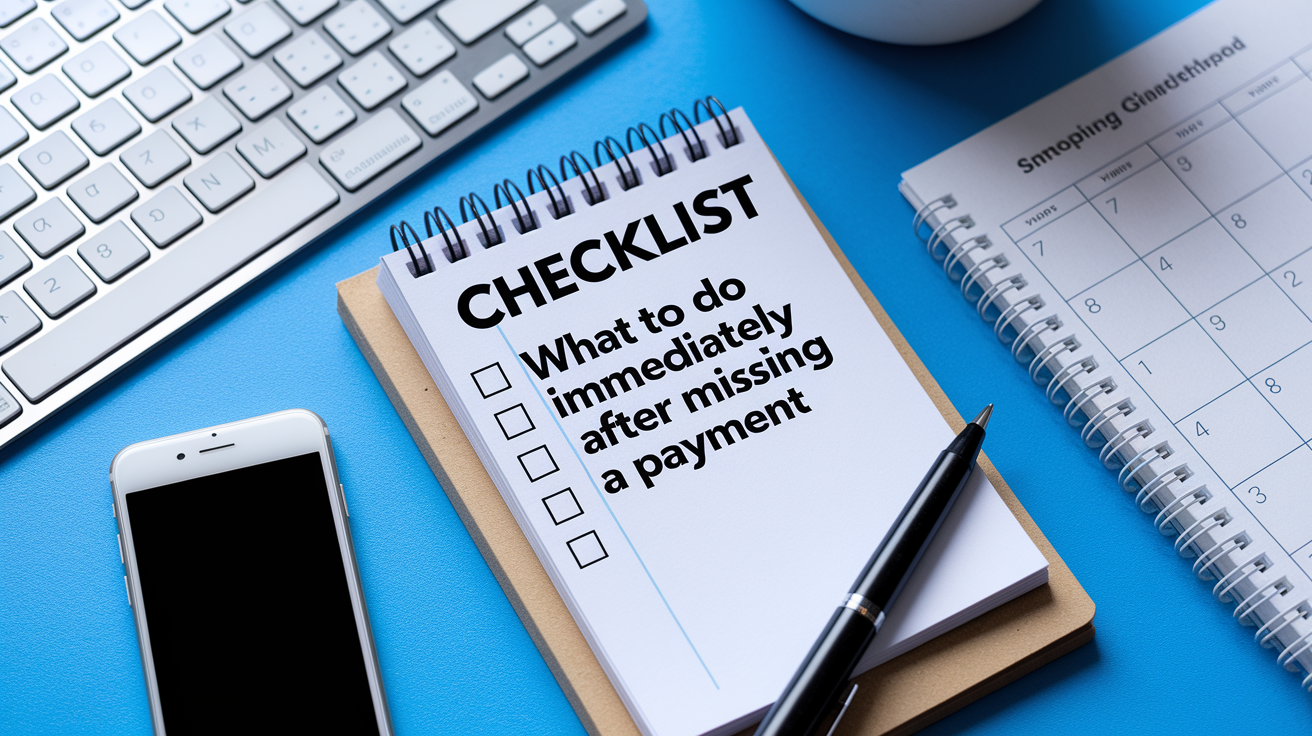
If you realize you missed a payment, act within hours or days to limit the damage.
- Pay the overdue amount immediately, even if you can only pay the minimum. If you catch it before 30 days past due, the creditor may charge a late fee but may not report the delinquency to the credit bureaus.
- Call your creditor or lender right away. Explain the situation, ask if they offer hardship programs, and request that the late payment not be reported if you bring the account current quickly. Some lenders will make a one-time courtesy exception.
- Set up automatic payments for at least the minimum due on all accounts to prevent future missed payments. Confirm your bank account has sufficient funds each month to avoid overdraft or failed payment.
- Adjust your due dates if needed. Many credit card issuers and lenders let you choose a due date that aligns with your payday, making it easier to pay on time.
- Check your credit report 60 days after the missed payment to see if it was reported. If it appears and the information is inaccurate, file a dispute immediately with supporting documentation.
- Review your budget and payment calendar. Identify what caused the missed payment (overlooked due date, cash-flow gap, or disorganization) and put a system in place (alerts, autopay, written calendar) to prevent it from happening again.
Final Words
Start here: late payments stay on your credit report for seven years from the original delinquency date, and most creditors report once a payment is 30 days late. That first missed payment matters most.
We walked the 30/60/90/120 stages, charge‑offs and collections rules, how different account types report, and practical fixes like disputes, goodwill asks, and rebuilding steps you can use.
If you’re asking how long do late payments stay on credit report — it’s seven years, but their bite fades. Keep making on‑time payments and your score will recover.
FAQ
Q: Can you have a 700 credit score with missed payments?
A: You can have a 700 credit score with missed payments if the misses are minor, old, or offset by strong payment history, low balances, and long accounts. Recent 90+ day delinquencies usually prevent reaching 700.
Q: Do late payments from 3 years ago affect credit score?
A: Late payments from 3 years ago do affect your credit score but their impact has likely faded; they stay on your report seven years from the original delinquency and recent activity matters more to lenders.
Q: How to raise your credit score 200 points in 30 days?
A: Raising your credit score 200 points in 30 days is rarely realistic; instead correct errors, pay down high balances to under 30% utilization, avoid new credit, and add positive accounts where possible.
Q: Can late payments be removed from credit?
A: Late payments can be removed from your credit report in limited cases: if they’re inaccurate and successfully disputed, or sometimes via goodwill or pay-for-delete, but removal isn’t guaranteed and depends on documentation and creditor cooperation.