


Your free credit-monitoring app might be giving you a false sense of safety.
Monitoring watches your credit file and pings you about new accounts, inquiries, big balance jumps, and public records so you can spot fraud fast.
But not all services are equal — some show VantageScore while lenders use FICO, some monitor one bureau and others monitor all three, and update speeds range from monthly to real time.
This post shows how monitoring works, which features truly protect you, and when a paid plan is worth it so you can pick the right tool.
Understanding How Credit Score Monitoring Works

Credit score monitoring watches your credit file and pings you when something changes. New accounts, hard inquiries, address updates, big balance jumps, public records like bankruptcies, collections—it catches all of that and sends you an alert so you can confirm it’s legit or shut down fraud before it spreads.
Most services show either FICO or VantageScore. Both run from 300 to 850, but they don’t weigh the same things the same way. FICO is what most lenders actually use when you apply for a loan or card, so if your monitoring tool shows VantageScore, don’t be surprised when a lender’s number looks different. You might get single-bureau coverage (just one of the big three: Equifax, Experian, or TransUnion) or multi-bureau (two or all three). Multi-bureau monitoring gives you a better shot at catching fraud fast since not every creditor reports everywhere.
Score updates depend on the plan. Paid services might refresh daily or in real time. Free ones usually update weekly or monthly. Alerts for critical stuff like new accounts or inquiries can show up within minutes or 24 hours, though some free tools batch everything into a weekly digest. When you check your own score through monitoring, it’s a soft inquiry and won’t ding your number. Hard inquiries happen when lenders pull your report to decide whether to approve you, and those can knock off a few points temporarily.
Common alerts you’ll see:
- New hard inquiry – Someone checked your credit.
- New account opened – A card, loan, or line of credit got added.
- Change of address – Your mailing or billing address changed.
- Large balance increase – A card balance spiked.
- Public record or collection – A bankruptcy, lien, judgment, or collection hit your file.
Key Benefits of Credit Monitoring for Protecting Credit Health
Monitoring helps you catch fraud early. When someone opens an account in your name, the alert can land the same day or within hours. That gives you time to freeze your credit and start a dispute before things get worse. It also surfaces reporting mistakes—duplicate accounts, payments marked late when you paid on time, old debts that should’ve aged off. Spotting those fast can save your score and your ability to borrow.
A lot of mid-tier and premium plans scan the dark web to see if your Social Security number, email, or other personal info has popped up in data-breach dumps. Identity-theft insurance can range from $25,000 to $1,000,000 depending on the plan. Some packages come with 24/7 fraud specialists who walk you through disputes and police reports. Data breaches peaked in 2023, and 2024 saw 1.35 billion victim notices—a 212 percent jump year over year. Monitoring adds a practical layer of defense.
Top things you get:
- Early fraud detection – Alerts hit fast, sometimes within hours, so you can act before a thief racks up damage.
- Error spotting – Catches duplicate accounts, wrong balances, outdated collections so you can dispute and clean things up.
- Trend tracking – Shows how your utilization, payment history, and account mix move your score each month.
- Dark-web visibility – Tells you if your SSN or email landed in a breach database so you can lock your credit and swap passwords.
Free vs. Paid Credit Score Monitoring Services
Free services cost nothing and give you basic score updates plus limited alerts. Most refresh weekly or monthly, pull from one or two bureaus, and email you when new accounts or inquiries appear. They’re fine if you check your score occasionally, aren’t actively applying for credit, and just want a simple way to spot major red flags without paying.
Paid plans start around $8 to $15 a month for entry-level packages. You usually get more frequent updates (sometimes daily) and coverage of one or two bureaus. Mid-tier plans run $15 to $30 a month and typically include three-bureau monitoring, dark-web scans for your Social Security number and email, and identity-theft insurance in the $25,000 to $100,000 range. Premium bundles cost $20 to $40 or more per month and add stuff like 24/7 identity-restoration support, credit lock tools, VPNs, and insurance limits up to $1,000,000. Some providers ask for a credit card even for free-tier accounts, and not every plan shows FICO—many free tools display VantageScore instead.
| Tier | Typical Price | Bureau Coverage | Update Frequency | Identity Theft Insurance |
|---|---|---|---|---|
| Free | $0/month | 1–2 bureaus | Weekly or monthly | None |
| Mid-tier | $15–$30/month | 3 bureaus | Daily | $25,000–$100,000 |
| Premium | $20–$40+/month | 3 bureaus | Real-time or daily | Up to $1,000,000 |
Free works when you check your score once or twice a month, aren’t worried about immediate identity-theft risk, and just want visibility on big account changes. Paid makes sense if you’re applying for a mortgage or auto loan soon, have dealt with identity theft before, or want comprehensive bureau coverage with fast alerts and hands-on support when something goes wrong.
Comparing Leading Credit Monitoring Services and Bureau Coverage

Most providers fall into two buckets: the national bureaus themselves or third-party platforms that pull data from one or more bureaus. Each has different pricing, score models, and features.
Experian
Experian’s free tier includes access to your Experian credit report and your FICO score, plus a feature called Experian Boost that can add positive payment history from utility and streaming bills. The premium plan runs $24.99 per month and adds score comparisons across all three bureaus, subscription-cancellation help, bill-negotiation tools, identity-theft insurance, fraud alerts, and resolution support. The FICO score makes it especially useful if you’re gearing up for a lender pull. The downside? A lot of the best features sit behind the paywall, and product recommendations can feel pushy.
TransUnion
TransUnion’s paid monitoring service costs around $30 per month and lets you check your TransUnion score as often as you want. The service includes free credit-freeze tools, dispute enrollment, and fraud alerts even if you skip the paid plan. You’ll need a credit card to create an account, which might be annoying if you’re just browsing.
Equifax
Equifax pricing runs from $0 to $19.95 per month depending on the plan. You get Equifax report monitoring and alerts when your Social Security number shows up in suspicious activity scans. Equifax had a massive data breach in 2017 that exposed more than half of U.S. consumers. Some users prefer other bureaus for monitoring despite the service improvements since then.
Credit Karma
Credit Karma is free and shows scores and reports from both Equifax and TransUnion, updated weekly. It scans for email and password exposures tied to breaches and uses a clean, beginner-friendly report layout. The catch? Credit Karma doesn’t pull Experian data, so you’re missing one-third of your credit picture. It’s a solid free option if you pair it with an Experian tool.
Capital One CreditWise
CreditWise is free and needs your Social Security number, phone number, and address to sign up. It gives you your TransUnion credit report and VantageScore 3.0, plus free dark-web monitoring that scans for your email and physical address. The service includes educational breakdowns that explain how each factor affects your score. The dark-web feature makes it a strong free add-on even if you use another service for your main score tracking.
American Express MyCredit Guide and FreeCreditReport.com
American Express MyCredit Guide is free to anyone (you don’t need to be a cardholder) and shows your Experian credit report and FICO score. It includes a score-history graph, target-score-setting tools, a FICO score simulator, and compromise alerts. FreeCreditReport.com, run by Experian, is also free and updates your Experian report every 30 days, showing account history, hard inquiries, credit usage, and negative marks. Both are useful if you want regular Experian visibility without paying.
Critical Features to Look For in a Credit Score Monitoring Tool

Bureau coverage matters because creditors don’t always report to all three bureaus. If a fraudster opens an account with a lender that only reports to Equifax, a service monitoring TransUnion and Experian won’t catch it. Three-bureau monitoring gives you the widest net. If budget’s tight, pick a free service covering at least two bureaus or mix two free tools to get all three.
Score model also matters. If you’re shopping for a mortgage, car loan, or most credit cards, lenders will pull a FICO score. VantageScore can be a useful trend tracker, but the number might differ from what the lender sees by 20 or 30 points. Check which model your service displays. If you’re preparing for a major loan application, go with a tool that shows FICO. Update frequency determines how fast you know when something changes. Daily updates catch fraud sooner than monthly refreshes. Alert speed is just as important. Services that fire off SMS or push notifications within minutes let you freeze your credit before a thief opens a second or third account.
Dark-web monitoring scans breach databases and forums where stolen data gets sold or shared. If your Social Security number or email appears, you get an alert and can take action: freeze your credit, change passwords, watch for suspicious charges. Identity-theft insurance limits range from $25,000 to $1,000,000 and typically cover stolen funds, legal fees, and restoration costs. Higher limits matter if you’ve been a victim before or work in a field where your data gets exposed frequently. Customer support quality shows up when you need help filing a dispute or understanding an alert. Premium plans often include 24/7 phone support and dedicated fraud specialists. Free plans may offer only email help or automated FAQs.
Must-have features when comparing tools:
- Bureau coverage – Three bureaus catch more fraud. Single-bureau monitoring misses accounts reported elsewhere.
- Score model – FICO for loan prep, VantageScore for general trends.
- Update frequency and alert speed – Daily updates and instant alerts reduce fraud damage.
- Dark-web scans – Know if your SSN or email has been compromised.
- Identity-theft insurance and restoration – Higher limits and hands-on help protect you financially and save time.
- Ease of dispute submission – Some services file disputes directly with bureaus. Others just point you to the bureau’s website.
Credit Score Monitoring vs. Full Credit Reports, Freezes, and Locks
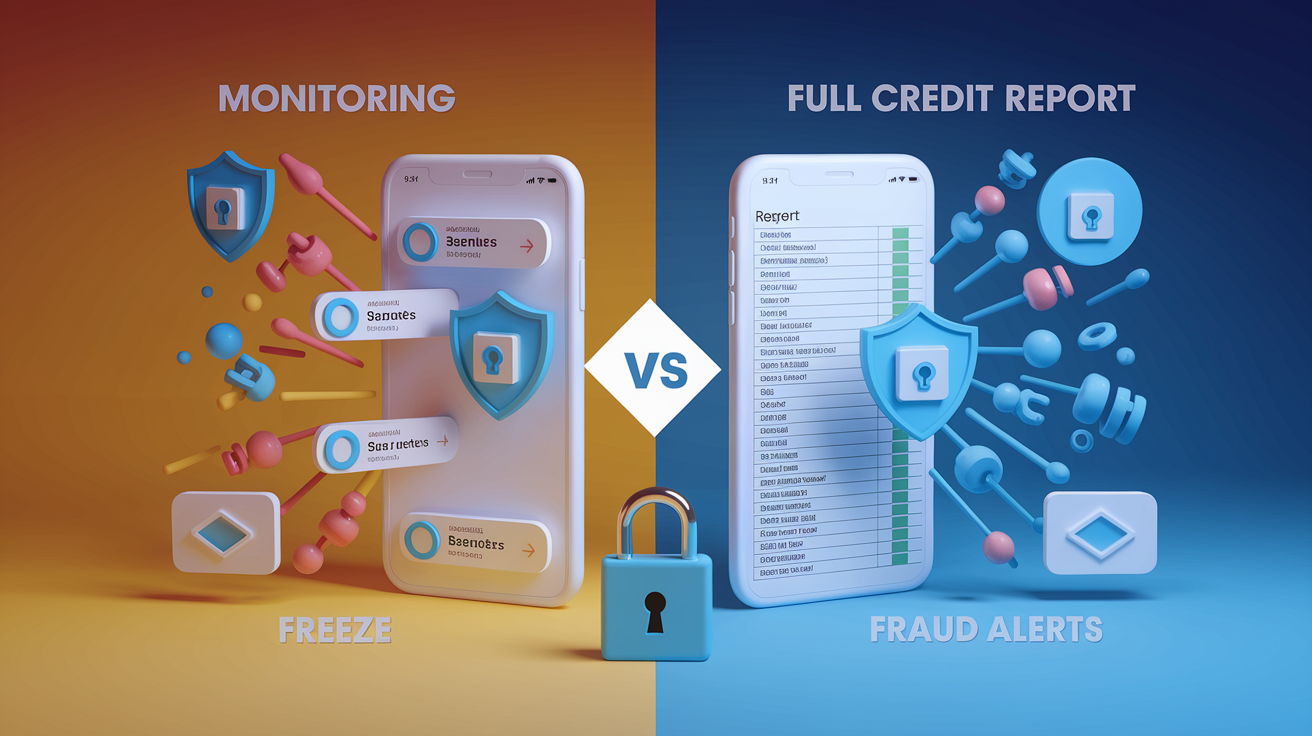
Monitoring delivers alerts and snapshot scores. You see your current score, recent inquiries, new accounts, and selected account balances, but you don’t get the full transaction-by-transaction payment history or the complete list of every lender you’ve ever worked with. Full credit reports provide that detailed account history: every open and closed account, every on-time and late payment, loan balances, credit limits, public records, and collection accounts. You can get one free full report from each bureau every 12 months through the official centralized source. Pull those yearly reports even if you use a monitoring service.
Credit freezes block new accounts from being opened in your name. When your credit’s frozen, lenders can’t access your report to approve applications, which stops identity thieves cold. Freezes are free to place and free to lift at all three bureaus. A freeze is the strongest fraud-prevention tool available, and it’s separate from monitoring. Monitoring tells you when something changes. A freeze prevents the change from happening. Fraud alerts and credit locks offer similar protections but work differently. A fraud alert requires lenders to verify your identity before opening an account, and it stays active for one year (or longer if you’re a confirmed fraud victim). A credit lock is like a freeze but may come with a fee depending on the bureau, and it can be toggled on and off through an app more easily than a freeze.
| Tool | What It Does | Cost | Best Use |
|---|---|---|---|
| Monitoring | Alerts you to new accounts, inquiries, and changes | $0–$40+/month | Track score trends and catch fraud early |
| Full Credit Report | Shows complete account history and payment details | Free yearly | Deep dive to find errors or understand your file |
| Credit Freeze | Blocks lenders from opening new accounts | Free | Prevent identity theft when not applying for credit |
| Credit Lock / Fraud Alert | Requires ID verification or toggles access on/off | Free or fee-based | Quick control for active credit users |
How to Choose the Best Monitoring Service for Your Situation

Start by nailing down your goal. If you’re applying for a mortgage, auto loan, or refinance in the next few months, you need daily updates, three-bureau coverage, and a service showing FICO scores. Lenders will pull FICO, so tracking VantageScore alone won’t prepare you for what the lender sees. If you just want to keep an eye on your credit and catch errors or fraud without paying, free services covering one or two bureaus are enough, especially if you pair two free tools to span all three bureaus.
Compare bureau coverage and score model next. A service monitoring all three bureaus costs more but catches fraud faster because fraudsters often test accounts with multiple lenders that report to different bureaus. If your budget’s tight, mix free services. Credit Karma covers Equifax and TransUnion. American Express MyCredit Guide or FreeCreditReport.com covers Experian. That combination gives you three-bureau visibility at $0 per month. Check which score model each service uses and whether it matches your need. FICO matters for loans. VantageScore is fine for tracking month-to-month trends and spotting errors.
Check alert speed and delivery methods. Services sending SMS or push notifications within minutes to an hour let you freeze your credit before a thief opens more accounts. Email-only alerts that arrive once a week are less useful if fraud hits on Monday and you don’t check email until Friday. Review identity-theft insurance limits and restoration support if you’ve been a fraud victim before or work in a field where your data gets exposed often: healthcare, finance, government. Premium plans with $1,000,000 insurance and 24/7 restoration specialists cost more but save you weeks of phone calls and paperwork if your identity gets stolen.
Steps to select the right service:
- Identify your goal – Loan prep, fraud prevention, or general visibility.
- Compare bureau coverage – One bureau is basic. Three bureaus catch more fraud.
- Verify score model – FICO for lenders, VantageScore for trends.
- Check alert speed – Instant SMS beats weekly email digests.
- Review insurance and restoration support – Higher limits and 24/7 help matter if you’re high-risk or have been a victim.
Practical Tips for Using Credit Monitoring to Improve Your Score
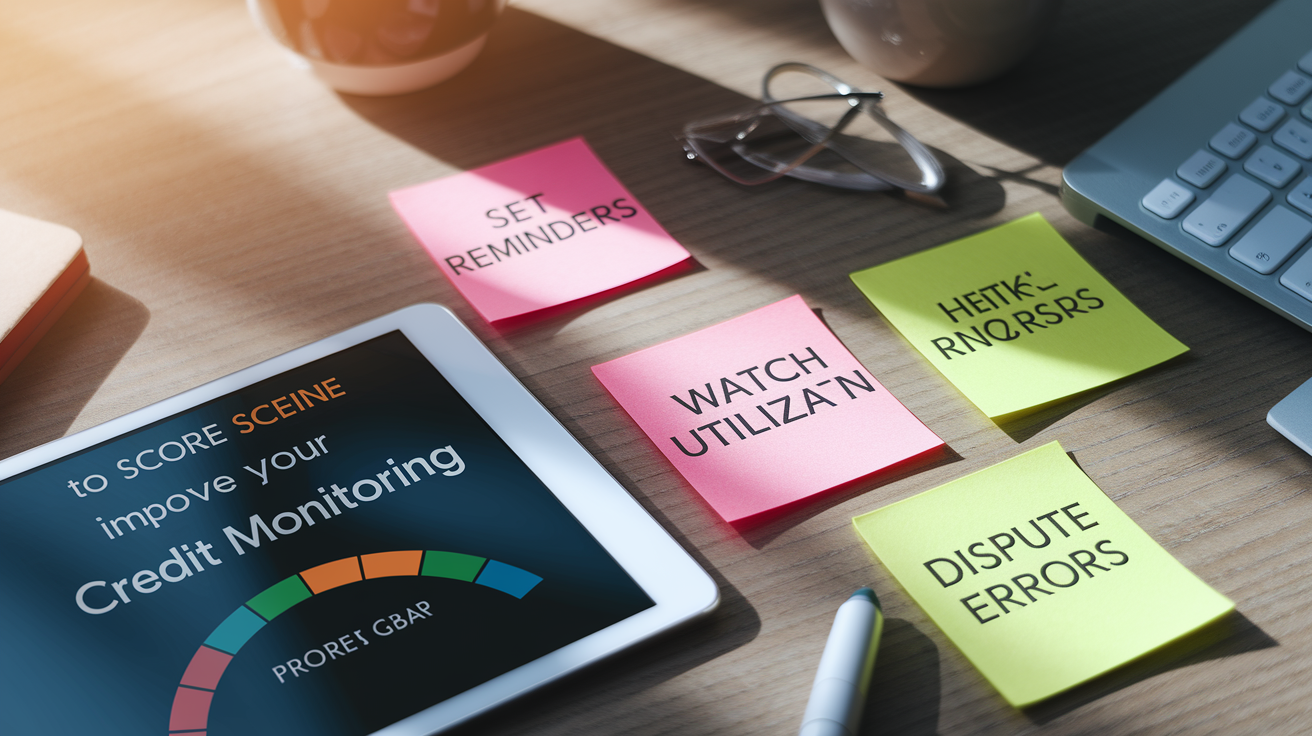
Credit scores range from 300 to 850, and monitoring services show you exactly which factors push your number up or down. Payment history is the biggest driver. Late payments, even by a few days, can drop your score by 50 to 100 points and stay on your report for seven years. Monitoring alerts you the moment a payment gets marked late, so you can verify it’s accurate or dispute it immediately. Utilization (the percentage of your credit limit you’re using) comes next. Keeping balances below 30 percent of your limit helps. Below 10 percent is even better. Many services display your utilization ratio and send alerts when it spikes, which helps you catch billing errors or reminds you to pay down a balance before your statement closes.
Hard inquiries appear when you apply for credit and can shave a few points off your score temporarily. Monitoring services alert you to new inquiries, so you’ll know if someone applied for credit in your name. Most services also include score simulators that let you model decisions: “If I pay off this card, how much will my score rise?” or “If I open a new card, how much will my score drop?” Those tools help you plan moves before you make them. Disputes take 30 to 45 days. Monitoring tracks the status of disputed items so you know when the bureau finishes investigating and whether the negative mark was removed or verified.
Steps to improve your score using monitoring insights:
- Set up payment reminders – Monitoring shows your payment history. Add calendar alerts two days before each due date to avoid late marks.
- Track utilization weekly – Pay down high balances before your statement closes to keep utilization under 30 percent.
- Dispute errors immediately – When an alert shows a duplicate account or incorrect late payment, file a dispute through the monitoring service or directly with the bureau.
- Simulate before you act – Use the score simulator to see how opening a new card or paying off a loan will change your number before you commit.
Security, Privacy, and Data Protection in Credit Monitoring Services

Many monitoring services connect to external bank and credit accounts using third-party aggregators like Plaid. When you authorize Plaid, the service retrieves account balances, transaction history, and payment data from your linked accounts. That data feeds into your monitoring dashboard and can trigger alerts when balances or payments change. Providers warn that they aren’t responsible for delays, data errors, or failures in the aggregation process. They recommend verifying any Plaid-sourced data independently by logging into your bank or card issuer directly.
Monitoring services use soft inquiries to check your credit, which don’t affect your score. Hard inquiries only happen when you apply for new credit and authorize a lender to pull your full report. Some services track when hard inquiries appear and alert you, but they don’t trigger those inquiries themselves. Privacy policies vary widely. Free services often monetize by showing credit-card offers or loan recommendations based on your profile. Premium services may sell less personal data but still share anonymized usage statistics with partners. When a monitoring service links to a third-party site (like a lender or insurance provider), the monitoring company disclaims responsibility for that third party’s content, security, and privacy practices. They recommend reviewing the external site’s privacy policy before sharing information.
Account security features also differ by provider. Some services offer two-factor authentication via SMS or app-based codes. Others rely only on passwords. Check whether the service encrypts data in transit and at rest, and whether it offers activity logs showing when and where your account was accessed. If you spot an unauthorized login, change your password immediately and contact the provider’s support team. For services requiring your Social Security number, verify that the provider is legitimate and check reviews or third-party security audits before entering sensitive data.
Final Words
Check your alerts regularly and pick a plan that matches your needs. The article showed how credit score monitoring tracks score changes, alert types, and bureau coverage.
We compared free vs. paid options, highlighted features that matter (three-bureau coverage, update frequency, dark‑web scans), and summarized top services and their tradeoffs.
Use the five-step decision checklist and the practical tips to lower utilization and fix errors; enable two-factor authentication and consider a freeze for extra safety.
Start small, keep checking, and steady credit score monitoring can reduce surprises and protect your borrowing power.
FAQ
Q: What is credit score monitoring and how does it work?
A: Credit score monitoring tracks changes to your credit score and selected report items, sending alerts for new accounts, inquiries, balance spikes, address changes, and public records. Updates and models depend on the provider.
Q: What specific events and data do monitoring services track?
A: Monitoring services track new accounts, hard and soft inquiries, large balance increases, address or name changes, public records, and SSN exposure—these alerts help you catch fraud and reporting errors quickly.
Q: How quickly do credit monitoring alerts arrive and how often do scores update?
A: Alerts typically arrive within minutes to 24 hours; score updates depend on the service and can be real‑time, daily, weekly, or monthly. Check each provider’s stated update schedule.
Q: Do monitoring services use FICO or VantageScore, and why does that matter?
A: Monitoring services use FICO or VantageScore (both 300–850). The chosen model and which bureau is checked can change the number you see and how lenders may interpret it.
Q: What’s the difference between monitoring and a credit freeze or lock?
A: Monitoring notifies you about changes; a freeze or lock blocks most new accounts. Full reports show detailed histories. Freezes are free at each major bureau and prevent new‑credit openings.
Q: Are free credit monitoring services enough or should I pay for a plan?
A: Free services give basic monthly/weekly updates and limited alerts; paid plans add 3‑bureau coverage, dark‑web scans, faster alerts, and identity‑theft insurance—pay when applying for credit or after fraud.
Q: What key features should I look for when choosing a monitoring service?
A: Look for 3‑bureau coverage, a clear score model, daily or real‑time updates, rapid alert delivery, dark‑web/SSN scans, meaningful identity‑theft insurance, and helpful customer support.
Q: How does monitoring help detect identity theft or fraud?
A: Monitoring detects identity theft by flagging unexpected new accounts, hard inquiries, SSN exposure, and address changes, enabling faster disputes, reduced damage, and access to restoration support or insurance.
Q: Can monitoring services improve my credit score?
A: Monitoring itself doesn’t raise your score; it shows payment history, utilization, and inquiry impacts so you can act. Use simulators, fix errors, pay down balances, and keep on‑time payments to improve scores.
Q: How do monitoring services protect my privacy and data?
A: Monitoring providers use encryption and often offer two‑factor authentication; some use third‑party aggregators. Read privacy policies, confirm soft pulls for monitoring, and review how your data is stored and shared.
Q: How should I set up alerts and use monitoring effectively?
A: Set alerts for new accounts, hard inquiries, large balance spikes, and SSN exposure; enable SMS/email, review notifications promptly, and combine free tools when you need broader bureau coverage.
Q: How long do disputes and fraud resolution usually take once an issue is flagged?
A: Disputes typically take about 30–45 days to resolve; fraud restoration timelines vary. Many monitoring services assist with resolution and may provide insurance to cover related expenses.