


Think one credit card can do it all? Not in 2024. Rewards and cash-back cards vary widely: a 2% flat-rate card gives steady returns, while a 6% supermarket card can save you hundreds if your spending matches its cap. This guide cuts through the clutter and names the best cards for common goals, like set-and-forget cash back, category-heavy grocery wins, rotating bonus picks, and premium cards that can be worth a fee. Read on to find the card that fits your spending, fees, and credit profile.
Top Rewards and Cash‑Back Credit Cards Overview
The best rewards and cash back credit cards in 2024 deliver real value through strong earning rates, flexible redemption, and features that actually match how you spend. There’s no universal winner here. The right card depends on whether you want simplicity, category optimization, or premium travel perks.
- Wells Fargo Active Cash Card – 2% cash back on everything, $0 annual fee, perfect if you want to set it and forget it
- Citi Double Cash Card – 2% total (1% when you buy, 1% when you pay it off), $0 annual fee, best for disciplined payers who want straightforward cash back
- Discover it Cash Back – 5% on rotating quarterly categories (up to $1,500 per quarter), 1% on everything else, $0 annual fee, works well if you’re willing to track quarterly calendars
- Chase Freedom Unlimited – 1.5% base rate plus bonus categories at restaurants and drugstores, $0 annual fee, solid for everyday spenders who want a bit more than flat rate
- Blue Cash Preferred from American Express – 6% at U.S. supermarkets (up to $6,000 annually), 3% at U.S. gas stations and on streaming, $95 annual fee after first year, built for households with high grocery spending
- Capital One Savor Cash Rewards – 3% at grocery stores, restaurants, streaming, and entertainment, $0 annual fee, great for diners and entertainment spenders
These cards stand out because they balance earning power with practical features. Flat rate cards eliminate decision fatigue. Category cards reward focused spending without complicated point transfers. All six let you redeem as statement credit or direct deposit, so you get actual cash. Not points tied to airline partnerships or hotel availability windows. Cards with $0 annual fees work as long term keepers. Cards with fees deliver higher rates that can offset the cost if your spending lines up with their bonus categories.
Comparing Reward Structures

Rewards credit cards use two main systems: cash back and points. Cash back pays a fixed percentage on purchases, credited as dollars you can redeem for statement credits, bank deposits, or checks. Points systems award currency tied to an issuer’s travel portal or transfer partners. Redemption value shifts based on how you use them.
Flat rate cash back cards pay the same percentage on every purchase, typically 1.5% to 2%. Bonus category cards pay higher rates at specific merchant types like groceries, gas, dining, or rotating quarterly categories, often 3% to 6%, with 1% on everything else. Points cards usually earn 1 to 3 points per dollar on base spending, with multipliers on travel, dining, or other categories. The redemption value of points varies. You might get 1 cent per point for cash back or statement credit, sometimes 1.25 to 2 cents per point when redeemed through travel portals or transferred to airline and hotel partners.
| Reward Type | Typical Rate/Value | Best For |
|---|---|---|
| Flat rate cash back | 1.5% to 2% on all purchases | Users who want simplicity and predictable returns without tracking categories |
| Bonus category cash back | 3% to 6% in specific categories, 1% elsewhere | Households with concentrated spending in groceries, gas, dining, or streaming |
| Rotating quarterly categories | 5% on activated categories (usually capped), 1% on other spending | Active users willing to activate categories and track quarterly calendars |
| Travel rewards points | 1 to 3 points per dollar, redeemed at 1 to 2 cents per point | Travelers who optimize redemptions through portals or partner transfers |
The structure you pick should match your spending habits and tolerance for complexity. If you spend $500 monthly on groceries, a 6% supermarket card delivers $30 per month. A 2% flat rate card on the same spending earns $10. That’s a $240 annual difference, which justifies the effort of managing a category card if you’re willing to track caps and merchant codes.
Category Bonuses and Rotating Rewards

Category bonus cards pay higher rates at merchant types like groceries, gas, dining, travel, or streaming. Some categories stay fixed year round. Others rotate every three months and require online or app activation to earn the higher rate. Rotating categories typically pay 5% on up to $1,500 in quarterly spending. That’s $75 in cash back per quarter, or $300 annually if you max out each period. Common rotating categories include Amazon and wholesale clubs in Q4, gas stations and streaming in Q2, grocery stores in Q1, and PayPal or department stores in Q3.
Set category cards offer stability. A card might pay 3% on dining and entertainment every month, with no activation required. These cards often cap bonus earnings at a spending threshold. $2,500 per quarter is common, which equals roughly $833 per month. If your household spends $600 monthly on groceries and the card pays 6% up to $6,000 annually, you’ll earn $360 in cash back on groceries alone. Cards with no caps on bonus categories are rare and usually come with annual fees or lower bonus rates to balance the cost to the issuer.
Rotating category cards work best for users who remember to activate, track the calendar, and shift spending to match the quarter’s bonus merchants. If you forget to activate or the quarter’s categories don’t match your spending, you earn only the base rate. Usually 1%. Set category cards fit users who have predictable monthly spending in one or two areas and want consistent rewards without quarterly management. Both structures require paying attention to merchant category codes, which determine whether a purchase qualifies. A grocery store counts as groceries, but buying groceries at a Walmart Supercenter might code as general merchandise instead.
Annual Fees and Reward Trade Offs

Premium rewards cards often charge annual fees ranging from $95 to $695, depending on the card’s perks and earning power. These fees buy higher point multipliers, travel credits, airport lounge access, statement credits for streaming or dining, and sometimes concierge services or trip insurance. A card with a $95 annual fee might pay 6% on groceries up to $6,000 annually. If you spend $6,000 on groceries, that’s $360 in cash back. Subtract the $95 fee, and your net gain is $265. A no fee card paying 1.5% on the same spending earns $90, so the premium card delivers $175 more value if you use the full cap.
No annual fee cards offer long term value because the reward structure doesn’t require breaking even each year. A 2% flat rate card with no fee earns $200 on $10,000 in annual spending, and you keep the full $200. These cards work as keepers. Accounts you hold for years to build credit history without ongoing costs.
The trade off is straightforward. If your spending in bonus categories exceeds the annual fee by a meaningful margin, the premium card pays off. If your spending is spread thin across many categories or you don’t spend enough to offset the fee, a no fee card delivers better net returns. Run the math on your actual spending before committing. A $95 annual fee requires earning at least $95 more in rewards than a comparable no fee option. If the premium card pays 6% on groceries and the free card pays 3%, you need at least $3,167 in annual grocery spending to break even ($3,167 × 3% extra = $95). Below that threshold, the free card wins.
Credit Score Requirements for Top Cards

Most strong rewards and cash back cards require good to excellent credit, generally defined as a FICO score of 670 or higher. Premium travel cards and top tier cash back cards with the highest earning rates often look for scores above 720. Issuers use credit scores to assess default risk, so applicants with higher scores get access to cards with better rewards and lower APRs.
Cards with no annual fee and moderate rewards rates sometimes approve applicants with fair credit. Scores in the 580 to 669 range. These cards usually offer lower earning rates, smaller sign up bonuses, and fewer premium perks. A card that pays 1.5% cash back with no fee might approve fair credit applicants, while a card paying 2% or offering rotating 5% categories typically requires good credit or better.
If your score sits below 670, focus on building credit before applying for top rewards cards. Secured cards, student cards, or cards designed for credit building help establish payment history and utilization management. Once your score crosses into the good range, you qualify for better earning rates and sign up bonuses. Applying for cards you’re unlikely to get approved for results in hard inquiries that lower your score temporarily and add denial records to your credit report. Target cards that match your current credit profile.
How Redemption Options Affect Value
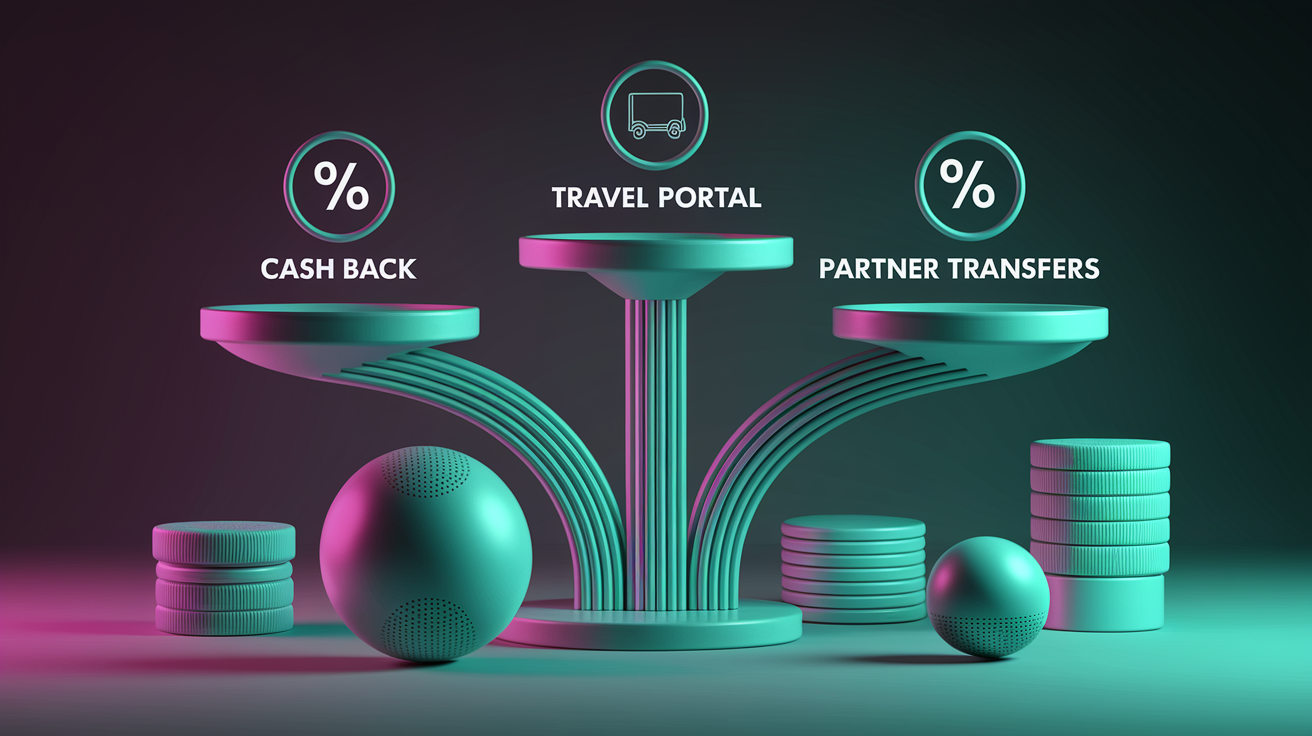
Cash back redemption is simple. 1% cash back equals one cent per dollar spent, redeemed as statement credit, direct deposit, or check. The value is fixed and predictable. Points based rewards vary in value depending on how you redeem them. Redeeming points for cash back or statement credit usually delivers the lowest value, often 0.5 to 1 cent per point. Redeeming through an issuer’s travel portal sometimes boosts value to 1.25 or 1.5 cents per point. Transferring points to airline or hotel loyalty programs can reach 2 cents per point or higher if you book premium cabin flights or high value hotel stays, but finding those redemptions requires flexibility and research.
Common redemption options include:
- Statement credit – Reduces your card balance directly, easiest option with fixed value
- Direct deposit – Transfers cash to your linked bank account, same value as statement credit
- Travel portal bookings – Points used through issuer portals sometimes gain value multipliers (1.25× to 1.5×)
- Partner transfers – Converts points to airline miles or hotel points, highest potential value but requires matching transfer partners and award availability
The redemption method you choose changes the effective earning rate of your card. A card earning 2 points per dollar on dining redeems at 2% if you take cash back, 2.5% if you book travel through a portal with a 1.25× multiplier, or potentially 4% if you transfer to a partner and find award space valued at 2 cents per point. Cash back users avoid this variability. The posted rate is the value you receive. Points users gain upside if they optimize redemptions, but lose value if they redeem for gift cards, merchandise, or cash back below 1 cent per point.
Pros and Cons of Rewards vs Cash Back

Cash back cards offer simplicity and guaranteed value. You spend, you earn a percentage, you redeem it as cash. There’s no learning curve, no devaluation risk, and no need to track award charts or transfer partners. The main downside is lower potential value. 2% cash back is 2%, period. You won’t extract 3% or 4% effective value through strategic redemptions because the reward is already denominated in dollars.
Points based rewards cards deliver higher potential value if you’re willing to manage complexity. Transferring points to the right airline partner at the right time can turn a 2 point per dollar earning rate into 4% to 5% effective value on premium international flights. The flexibility to book any airline or hotel through a portal, transfer to partners, or redeem for cash gives you options cash back cards don’t offer. The tradeoff is effort, uncertainty, and devaluation risk. Award charts change. Transfer partners shift. If you don’t stay informed, points sit unused or get redeemed at low value.
Pros of cash back:
- Fixed, predictable value with no redemption complexity
- No risk of devaluation or program changes
- Easy to understand and manage
- Redeemable immediately without blackout dates
Cons of cash back:
- Lower potential ceiling on value per dollar spent
- No ability to stretch value through premium travel redemptions
- Rewards don’t benefit from transfer partners or award sweet spots
- Less flexibility for high value redemptions like business class flights
Pros of points rewards:
- Higher potential value through optimized redemptions
- Flexibility to transfer to airline and hotel partners
- Travel portal multipliers can boost redemption rates
- Premium perks often bundled with points earning cards
Cons of points rewards:
- Requires research and active management to get full value
- Devaluation risk if programs change award pricing
- Complexity in tracking transfer ratios and partner availability
- Points can expire or lose value if account goes inactive
Methodology for Selecting the Best Cards

Determining the best rewards and cash back cards requires evaluating multiple factors beyond the headline earning rate. Cards are assessed on how well they deliver value to typical users across spending categories, fee structures, and redemption flexibility. The goal is identifying cards that provide strong returns without excessive complexity or hidden costs that erode net value.
Evaluation considers five core factors:
- Reward rates and earning potential – How much cash back or points the card delivers on common spending categories, including base rates, bonus categories, and caps on elevated earnings
- Annual fees and break even thresholds – Whether a card’s fee is justified by the rewards and perks it offers, calculated by comparing net returns against no fee alternatives
- Redemption flexibility and value – How easily rewards convert to usable value, whether through cash back, travel bookings, statement credits, or partner transfers, and the typical value per point or dollar earned
- Approval requirements and accessibility – The credit score range needed for approval, ensuring recommendations match realistic qualification standards for the target audience
- Issuer policies and cardholder experience – Customer service quality, dispute resolution processes, mobile app functionality, and how the issuer handles rewards changes or program devaluations
Cards that rank highest balance strong earning rates with low friction. A 2% flat rate card with no annual fee and simple redemption scores well because it delivers consistent value without requiring category tracking or fee justification. A 6% grocery card with a $95 annual fee ranks highly for households spending $500 or more monthly on groceries, but drops in value for users with lower grocery spending. The methodology accounts for these context dependent outcomes and highlights cards that excel for specific use cases rather than claiming one card suits everyone.
Final Words
in the action, we walked through top rewards and cash-back cards, compared reward structures, explained rotating categories, weighed annual fees, mapped credit score needs, and showed how redemption choices change value.
Use those sections to pick a card that fits your spend: flat-rate for simplicity, rotating for bonus categories, premium for travel value.
If you want a quick pick, focus first on eligibility and how you’ll redeem — that’s how you find the best credit cards for rewards and cash back for your life.
Start small, track rewards, and enjoy the extra value.
FAQ
Q: What is the best credit card for rewards and cash back? What are the best credit card options for cashback and rewards?
A: The best credit card for rewards and cash back depends on your spending: pick a 2% flat-rate card for simplicity (Citi Double Cash), a 5% rotating card for categories (Chase Freedom Flex), or Chase Sapphire Preferred for travel rewards.
Q: Which credit card to use for Cartier?
A: The credit card to use for Cartier is one that offers strong purchase protection, high rewards on large purchases, and no foreign-transaction fee; consider Amex Platinum or Chase Sapphire Reserve for protections and concierge help.
Q: What credit card pays 5% cash back?
A: A credit card that pays 5% cash back is typically a rotating-category card offering 5% on quarterly categories after activation, usually capped (commonly $1,500 per quarter); examples include Chase Freedom Flex and Discover it.