


Think a free credit-monitoring app will catch identity theft before it costs you? Think again.
Free tools usually watch one bureau and update weekly; paid plans ($10–$30/month) monitor all three bureaus with daily or real-time alerts, dark-web scans, and $500,000–$1,000,000 identity-theft insurance.
Speed and coverage are the three big differences: how often your file is checked, how many bureaus are watched, and whether you get hands-on recovery help.
Read on for clear guidance so you can pick the protection level that fits your risk, budget, and upcoming credit needs.
Comprehensive Comparison of Free and Paid Credit Monitoring Options

Free credit monitoring watches one bureau and updates your score weekly or monthly. Paid services run $10–$30 a month and track all three major bureaus with daily or real-time updates. Free tools usually show a VantageScore, while paid plans deliver FICO 8 or FICO 9, the scores most lenders actually check when they’re deciding your application. The update speed matters more than you’d think. Weekly updates mean a fraudulent account can sit there for seven days before you know it exists. Real-time alerts land seconds or minutes after something posts.
Paid monitoring throws in dark-web scans that hunt for your Social Security number, email, and login credentials across underground marketplaces. Identity-theft insurance is another line in the sand. Free services cap reimbursement at $50,000 or don’t offer any, while paid plans commonly provide $500,000 to $1,000,000 for legal fees, lost wages, and recovery costs. Paid tiers also give you a dedicated recovery specialist who files reports, contacts banks, and helps you freeze your credit if fraud lands. Free plans hand you a to-do list and wish you luck.
| Feature | Free Monitoring | Paid Monitoring |
|---|---|---|
| Monitoring frequency | Weekly or monthly updates | Daily or real-time alerts (seconds to minutes) |
| Credit bureau coverage | Usually 1 bureau (Experian, TransUnion, or Equifax) | All 3 bureaus simultaneously |
| Credit score type | VantageScore or single-bureau score | FICO 8, FICO 9, or multi-bureau scores |
| Alert types | New accounts, score changes, hard inquiries | Expanded: personal-info changes, public records, SSN use, account takeovers |
| Dark-web monitoring | Limited or none | Included (SSN, email, password scans on marketplaces) |
| SSN monitoring | Rarely included | Commonly included |
| Identity-theft insurance | $0–$50,000 typical cap (or none) | $500,000–$1,000,000 common reimbursement limit |
| Recovery assistance | Self-service or minimal email support | Dedicated case manager, 24/7 phone support, FTC report filing |
| Customer support level | Email, limited hours, or self-help FAQs | 24/7 phone, live chat, proactive restoration guidance |
| Pricing | $0 | $10–$30/month ($120–$360/year typical range) |
Three things separate the tiers: three-bureau real-time coverage, insurance amounts, and hands-on recovery support. A single-bureau free service might miss an account opened at TransUnion when you’re only watching Experian. Real-time alerts catch fraud the day it appears, not a week later. And if someone files a fraudulent tax return under your Social Security number, a paid plan’s case manager walks you through the IRS maze, police reports, and credit freezes. A free plan emails you an article.
Understanding How Credit Monitoring Works Before Comparing Options

Credit monitoring checks your file for changes that might signal fraud or mistakes. Every time a lender reports a new account, a creditor runs a hard inquiry, your score shifts, or someone updates your address on file, the service flags it. Daily monitoring runs checks every 24 hours. Weekly scans happen once every seven days. Real-time monitoring pushes an alert seconds or minutes after the bureau posts the change. Monthly tools refresh roughly every 30 days and usually show up in free services tied to credit cards or bank accounts.
Monitoring is passive detection, not active prevention. It won’t block a fraudster from opening an account in your name, stop a phishing email, or file a police report for you. What it does is tell you quickly when something new appears so you can freeze your credit, dispute the item, and start recovery before things get worse. Think smoke detector, not fire extinguisher.
Speed matters most in the first 48 hours after fraud. A scammer who opens three store cards on Monday will rack up charges by Wednesday. A real-time alert gives you time to freeze your reports and contact issuers before balances climb. A weekly alert might not arrive until the following Monday. By then collections calls may already start.
Common alert types:
New account opened in your name (credit card, auto loan, mortgage, personal loan). Hard inquiry posted (a lender checked your credit for a new application). Big score change (usually a drop or rise of 20+ points). Dark-web hit (your Social Security number, email, or password shows up on a breach database or underground marketplace).
Free Credit Monitoring Features and Limitations Compared
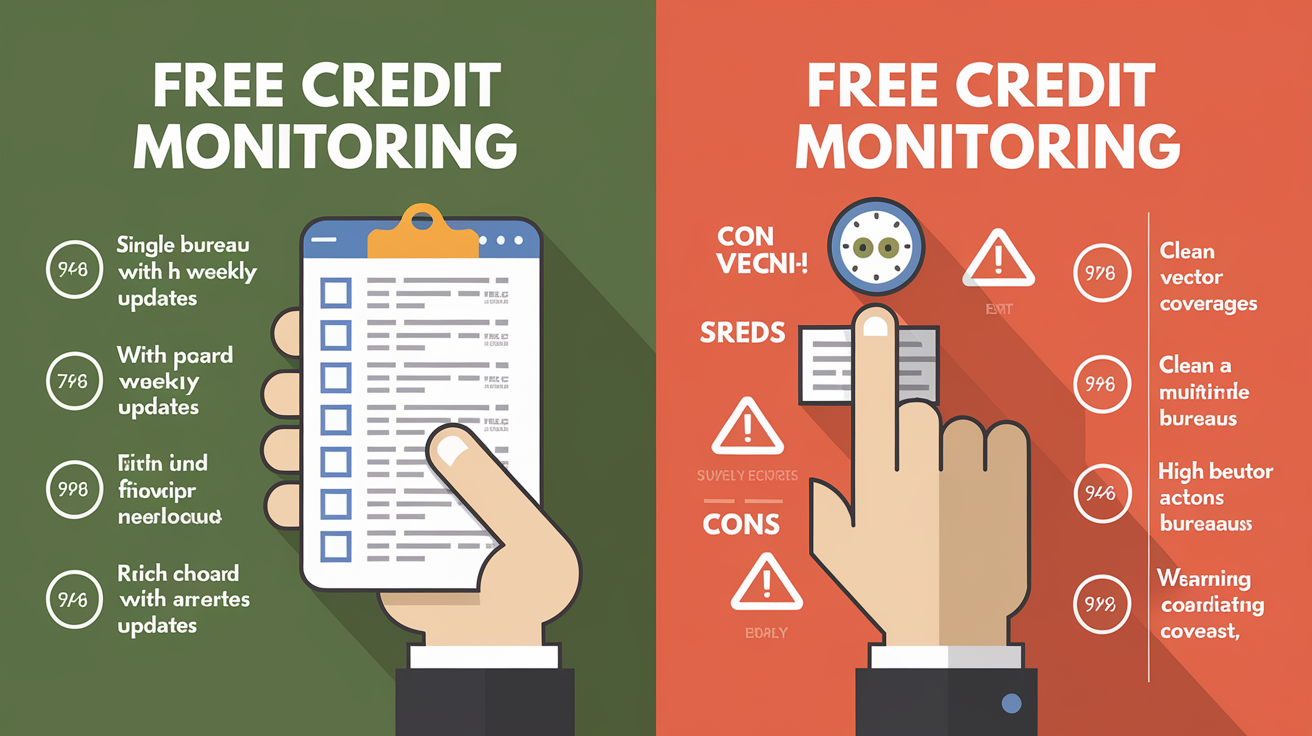
Free credit monitoring gives you basic awareness at no cost. Services like Credit Karma and Credit Sesame watch one or two bureaus, update your VantageScore weekly, and send alerts when a new account appears or your score shifts. You get routine visibility into hard inquiries and can spot obvious errors without paying. If you check your statements often, use strong passwords, and keep a credit freeze active when you’re not applying for loans, free monitoring covers the basics.
The tradeoff is incomplete coverage and slower response. Watching only Equifax leaves you blind to activity at Experian and TransUnion, where lenders may report different accounts or timing. Weekly updates mean a fraudulent account can age for seven days before you know it exists. Free plans rarely include identity-theft insurance or recovery help, so if fraud does hit, you handle FTC reports, bank calls, and disputes alone. Customer support is typically email-only or limited to self-help articles. Some free services fund themselves by showing credit-card offers or loan ads based on your profile.
Pros:
No monthly fee, which works if your budget’s tight or your risk is low. Regular score access and basic alerts for major changes. Does the job if you already use credit freezes and pull annual reports manually. Easy to sign up and cancel without contract hassles.
Cons:
Single-bureau or two-bureau coverage misses activity on the third report. Slower updates (weekly or monthly) delay fraud detection. Limited or zero identity-theft insurance and no dedicated recovery specialist. Displays VantageScore, which may differ 20–30 points from the FICO score lenders actually use.
Free monitoring works when your financial life is simple, you review bank and card statements every month, and you already have credit freezes in place at all three bureaus. If you pull your annual three-bureau reports from AnnualCreditReport.com and stagger them quarterly (Equifax in January, TransUnion in May, Experian in September), free monitoring fills the gaps between manual checks without adding cost. It’s a sensible baseline for anyone not recently breached, not applying for a mortgage, and comfortable handling disputes independently.
Paid Credit Monitoring Benefits and Added Protections

Paid credit monitoring scales up coverage, speed, and support. For $10–$30 a month, you typically get all three bureaus monitored at once, real-time or daily alerts, and dark-web scans searching for your Social Security number, email address, and passwords on underground marketplaces. Instead of waiting a week to learn someone opened a card at Macy’s in your name, you get a push notification within minutes. Instead of guessing whether your credentials leaked in a breach, you get a dark-web alert the day your email appears in a dump.
Identity-theft insurance is the second major upgrade. Paid plans commonly include $500,000 to $1,000,000 reimbursement for legal fees, lost wages, and recovery costs if fraud occurs. That insurance often covers expenses free plans ignore. Certified mail to dispute records, notary fees, credit-monitoring subscriptions you buy during recovery, even daycare costs if you miss work to file reports. Paid services also assign a dedicated case manager who walks you through every step: filing an FTC Identity Theft Report, placing fraud alerts, freezing credit, contacting creditors, and disputing fraudulent accounts. You get a phone number to call 24/7, not a help-center article.
Five paid-only perks:
Three-bureau, real-time or daily monitoring with expanded alert categories (personal-info changes, public records, SSN use, account takeovers). Dark-web scanning for breached credentials, Social Security numbers, and financial account numbers. Identity-theft insurance ranging from $500,000 to $1,000,000 for eligible recovery expenses. Dedicated fraud-resolution specialist and 24/7 phone support for hands-on guidance. Premium tiers that add VPNs, password managers, and family coverage for dependents or household members.
Paid monitoring delivers the most value if you’ve already experienced identity theft, earn more than $75,000 a year and can absorb the $120–$360 annual cost, travel internationally and use public Wi-Fi often, manage multiple credit cards and loans, or went through a data breach in the past 12 months. If you’re a parent monitoring a child’s Social Security number, a business owner with high transaction volume, or someone going through a divorce or major move, the peace of mind and professional recovery help often justify the subscription.
Cost Comparison, Price Ranges, and Hidden Fees in Paid Services

Entry-level paid plans start around $7–$15 a month ($84–$180 a year) and typically include single-bureau or two-bureau monitoring with basic identity-theft insurance. Mid-tier plans cost $15–$25 a month ($180–$300 a year) and add three-bureau coverage, higher insurance limits, dark-web scans, and real-time alerts. Premium tiers run $25–$35+ a month ($300–$420+ a year) and bundle family monitoring (covering spouses and children), VPN access, password managers, and the highest insurance caps. Annual billing often discounts the monthly rate by 10–20 percent but locks you into a year-up-front payment.
Popular services like Experian IdentityWorks range from $10–$20 a month depending on tier. Norton LifeLock spans $8–$30 a month. IdentityForce and Aura sit in the $9–$29 range. Prices shift with promotions, so comparing the annual total cost matters more than the advertised monthly rate. Multiply the monthly fee by 12 to see the real expense. $15 a month becomes $180 a year, which is reasonable if you value real-time three-bureau alerts and professional recovery support, but steep if you already use freezes and rarely apply for credit.
Watch for these five billing traps:
Free-trial auto-renew. Many services offer a 7- or 14-day trial, then auto-charge your card at full price if you forget to cancel. FICO score surcharges. Some plans charge an extra $5–$10 a month to unlock your actual FICO score instead of VantageScore. Upgrade prompts. Lower-tier plans may nag you to upgrade for features advertised as “recommended” or “essential.” Annual billing differences. Paying monthly often costs more over a year than prepaying annually, but annual plans lock you in with limited refund windows. Cancellation rules. Some contracts require 30-day notice or auto-renew unless canceled before a specific cutoff date each billing cycle.
Identifying Which Monitoring Option Fits Your Risk Level
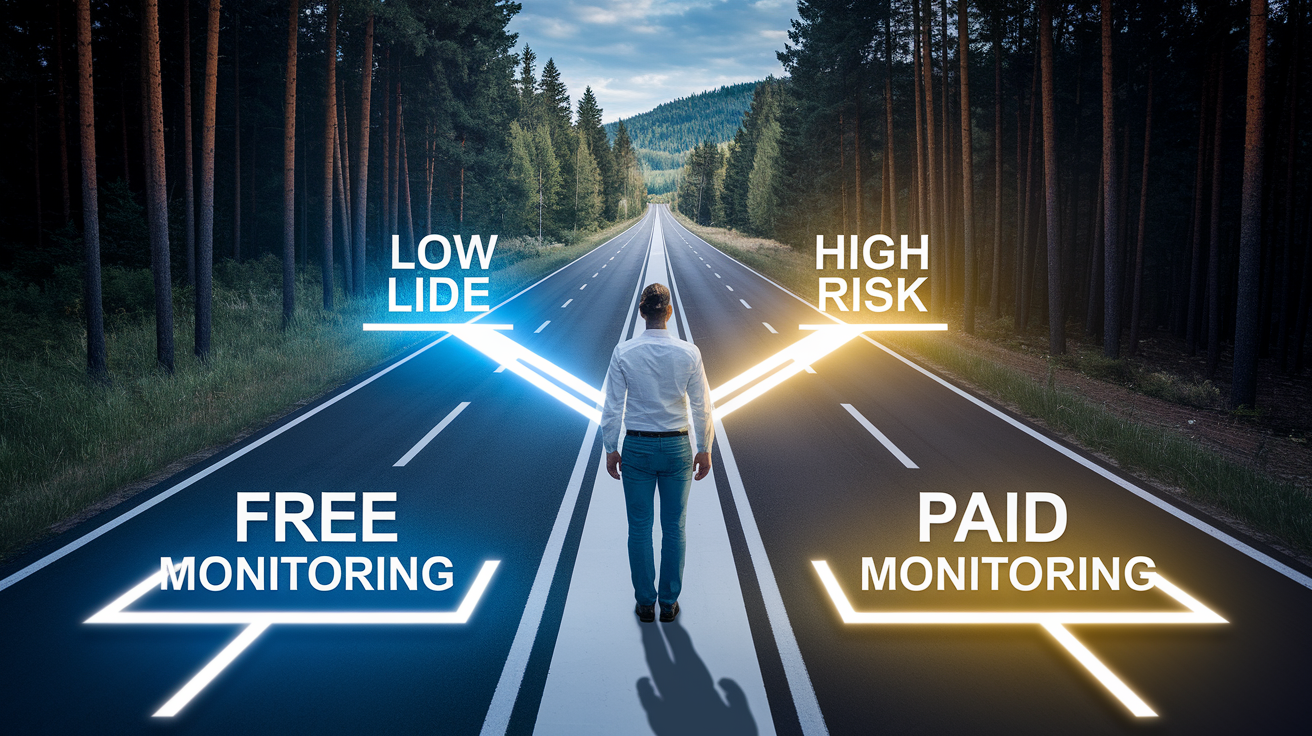
Low-risk users have simple finances, stable addresses, few credit accounts, and already use credit freezes at all three bureaus. If you review bank statements monthly, set up transaction alerts on your cards, and pull your free annual three-bureau reports from AnnualCreditReport.com, free monitoring usually covers your needs. You catch errors during your quarterly manual report check, and the freeze blocks most new-account fraud before it starts. Free monitoring fills the gap between manual pulls without adding cost.
High-risk users face elevated fraud exposure because of data breaches, frequent travel, high income, large credit portfolios, or prior identity theft. If your information appeared in a breach database, your Social Security number may already circulate on dark-web marketplaces. Frequent international travelers connect to public Wi-Fi, raising credential-theft risk. High earners become targets because fraudsters can rack up larger balances before detection. Managing ten credit cards, two auto loans, and a mortgage creates more surface area for fraud. Prior identity-theft victims know how much time and money recovery consumes. Paid monitoring with a case manager and insurance prevents repeating that ordeal.
Upgrade to paid monitoring if any of these six signs apply:
You received a data-breach notification in the past 12 months (retailer, employer, health insurer, credit bureau). You noticed a hard inquiry or new account you didn’t open. You’re applying for a mortgage or large loan and need real-time alerts across all three bureaus. You earn more than $75,000 a year and $10–$25 a month fits comfortably in your budget. You’re a parent monitoring a child’s Social Security number or a caregiver for an elderly relative. You work in healthcare, government, finance, or another field handling sensitive data and worry about targeted attacks.
Stick with free monitoring if your financial profile is straightforward, you actively manage credit freezes, and you can handle disputes and recovery tasks yourself without professional help. Free services give you enough visibility to catch obvious fraud. Pairing them with annual three-bureau report pulls keeps you informed without recurring fees.
Feature Checklist to Compare Credit Monitoring Plans

Comparing credit monitoring plans means evaluating what each service actually delivers versus what the marketing copy promises. A plan that advertises “comprehensive protection” may only watch one bureau, update weekly, and cap insurance at $50,000. Another plan priced $5 higher a month might monitor all three bureaus in real time, scan the dark web daily, and include a $1,000,000 insurance policy. The difference in protection is substantial, but the price gap is small. Reading the feature list and contract terms before subscribing prevents buyer’s remorse and makes sure the service matches your risk level.
Use these eight criteria when comparing plans:
Credit bureau coverage. Confirm whether the plan monitors one, two, or all three bureaus (Equifax, Experian, TransUnion). Score type and frequency. Check if the plan provides FICO or VantageScore, which version, and how often it updates. Alert speed. Verify whether alerts arrive in real time (seconds to minutes), daily (within 24 hours), or weekly. Identity-theft insurance amount. Note the reimbursement cap ($0, $50,000, $500,000, $1,000,000) and what expenses qualify (legal fees, lost wages, document replacement). Dark-web monitoring. Confirm whether the service scans for your Social Security number, email, passwords, and financial accounts on breach databases and marketplaces. Recovery assistance. Determine if the plan includes a dedicated case manager, 24/7 phone support, and hands-on help filing reports and disputing fraud. Customer support level. Check support hours (business hours, 24/7), contact methods (phone, email, chat), and response-time guarantees. Contract terms and cancellation rules. Read the fine print on auto-renew, free-trial billing, required notice periods, refund policies, and annual-billing lock-in.
Read the full terms of service and insurance policy before signing up. Identity-theft insurance often excludes certain types of fraud, caps specific expense categories, and requires you to file a police report within a set time frame. Cancellation policies vary. Some services let you cancel anytime with one click. Others require 30-day written notice or charge early-termination fees. Knowing these details up front helps you choose a plan that fits your budget, risk level, and tolerance for manual recovery work if fraud occurs.
Final Words
You can see the core tradeoffs quickly: free plans give basic weekly updates and single‑bureau alerts; paid plans (about $10–$30/month) add real‑time alerts, three‑bureau coverage, SSN and dark‑web scans, and stronger insurance and recovery help.
Pick based on your risk: low‑risk, simple finances often do fine with free tools; higher risk or past fraud victims usually benefit from paid protections. Compare coverage, alert speed, insurance, and contract terms.
This free vs paid credit monitoring comparison should help you choose a plan that fits your needs and budget, and sleep a bit easier knowing you made an informed choice.
FAQ
Q: Is free credit monitoring worth it?
A: Free credit monitoring is worth it if you want basic awareness—typically one‑bureau, weekly updates and a VantageScore. It’s fine for low‑risk users but lacks real‑time alerts, SSN checks, and strong insurance.
Q: Which credit monitoring system is the best?
A: The best credit monitoring system depends on your needs: choose paid plans for 3‑bureau, real‑time alerts, SSN monitoring, and higher insurance; choose reputable free tools for low‑risk, budget‑conscious tracking.
Q: Is it safe to give SSN to idx?
A: Giving your SSN to IDX can be safe when the company uses strong encryption, a clear privacy policy, and only requests it for necessary checks; avoid sharing your SSN with unknown or unverified services.
Q: Is LifeLock better than Experian?
A: LifeLock is better than Experian for identity‑theft protection (insurance, recovery specialists, SSN monitoring); Experian is stronger for credit reporting and score access—pick based on whether protection or reporting matters more to you.