


Is checking your credit score every day overkill, or your best defense against identity theft?
For most people, checking your score once a month and pulling full reports from all three bureaus once a year is the sweet spot.
Monthly checks catch reporting changes and big balance swings.
Increase checks to weekly when you’re applying for a mortgage or daily after a suspected breach.
This post explains when to check, why it matters in dollars and loan odds, and exactly what schedule to follow.
Recommended Frequency for Checking Your Credit Score

Check your credit score at least once a month. Pull your full credit reports from all three bureaus once every 12 months, minimum. Monthly checks let you spot trends, catch drops, and verify recent account activity before surprises show up on a loan application. Routine monitoring protects you from errors, fraud, and the kind of damage that piles up when you haven’t looked in a year.
Credit scores update when your report data changes. Most lenders report account balances, payment history, and account status to the bureaus once a month, usually near the end of your billing cycle. That means your score can shift every 30 days or so, depending on whether your balances dropped, you paid on time, or a new account appeared. Checking monthly gives you visibility into those changes without overdoing it. Annual credit reports (free from each of the three nationwide credit reporting agencies) give you the account detail you need to verify every tradeline, inquiry, and public record once a year.
How often you check should adjust based on what’s happening in your financial life:
Routine monitoring: Check your score once a month and review full reports from Experian, Equifax, and TransUnion at least once every 12 months.
Preparing for a major purchase (mortgage, auto loan, refinance): Start checking monthly 3–6 months before you plan to apply, then switch to weekly checks in the final 30–60 days before submitting applications.
Suspected identity theft or data breach: Monitor daily or enable real-time alerts for at least 3 months, then continue weekly or monthly monitoring as long as risk remains elevated.
Monitoring a dispute or correction: Check weekly until the bureau completes its investigation (typically 30 days) and the corrected data appears on your report.
After opening or closing accounts: Check within the next billing cycle (30–60 days) to confirm the new account appears correctly or the closed account updates as expected.
Checking your own credit score is a soft inquiry and has zero impact on your score. Frequency is about usefulness, not damage. Tailor your routine to your timeline and your risk level.
Understanding Credit Score vs. Credit Report Checks
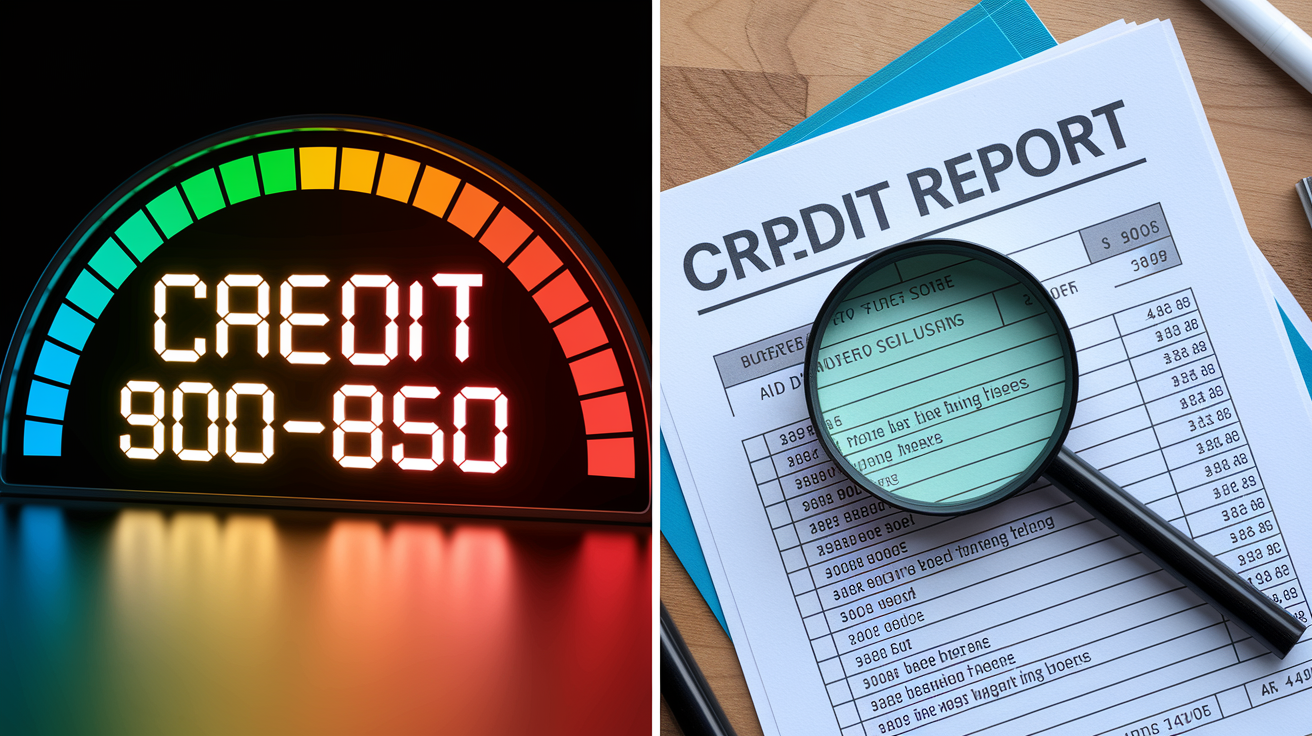
A credit score is a three-digit number (typically 300 to 850) that summarizes your creditworthiness at a point in time. A credit report is the detailed document behind that number, listing every account, balance, payment history, inquiry, and public record the bureau has on file. Scores are generated on demand using the data in your report. When your report data changes, your score can change. Most lenders report account updates to the credit bureaus once a month, which means your credit report (and therefore your score) can update roughly every 30 days.
| Type | What It Includes | Recommended Frequency |
|---|---|---|
| Credit Score | Three-digit summary (300–850) calculated from report data | Monthly |
| Credit Report | Account details, balances, payment history, inquiries, public records | At least annually from each bureau |
| Multi-Bureau Comparison | Side-by-side view of Experian, Equifax, and TransUnion reports | Annually or when discrepancies appear |
Checking your score monthly tells you if something shifted. Reviewing your full credit reports tells you what shifted and whether the change is accurate. Errors (duplicate accounts, incorrect balances, payments marked late when they weren’t, accounts that don’t belong to you) show up in the report details, not the score. That’s why an annual deep review of all three reports is important even if your score looks fine.
Credit Score Update Timing and What Influences Changes

Credit scores don’t update on a fixed schedule. They recalculate when the underlying report data changes, and that happens when creditors send new information to the bureaus. Most lenders report once a month, typically a few days after your statement closes or around the same date each billing cycle. If your card issuer reports on the 15th and you pay down a large balance on the 10th, that lower balance will appear on your next report update. Your score may rise within a few days of the lender’s reporting date.
Not all lenders report to all three bureaus. Some don’t report at all. A credit union might report to Equifax and TransUnion but skip Experian. A buy-now-pay-later service might not report unless you default. That’s why your score can vary across bureaus. Each one only knows what lenders tell it. Time-based factors also shift scores without new account activity. An account gets older, which can help length-of-credit-history factors. Or a late payment ages past 12 months and stops dragging your score down as much.
Tracking your score monthly lets you catch significant changes: utilization spiking after a big purchase, a new inquiry appearing, or a sudden 30-point drop that signals a missed payment or a collections account. Small month-to-month swings of 5–10 points are normal and often reverse themselves. Large or sustained drops deserve immediate attention and a full report review.
Situations Requiring More Frequent Credit Score Checks

When you’re preparing to apply for a mortgage, auto loan, or refinance, start checking your credit score and reports 3–6 months before you plan to submit an application. That window gives you time to identify errors, dispute inaccuracies, pay down high balances, and take deliberate steps to raise your score before lenders pull your credit. In the final 30–60 days before closing or finalizing a loan, switch to weekly checks so you can verify that corrections posted, balances updated, and no unexpected inquiries or accounts appeared.
Credit card applications and smaller loans typically move faster, but the same principle applies. Check your score and reports before you apply, especially if you plan to apply for multiple cards or rate-shop for the best offer. Most scoring models treat multiple mortgage, auto loan, or student loan inquiries as a single inquiry if they occur within a rate-shopping window (commonly 14 days under many VantageScore models and up to 45 days under many FICO models). Checking your score weekly during that window helps you confirm the inquiries grouped correctly and your score didn’t drop more than expected.
Increase monitoring frequency immediately in these situations:
You receive a data-breach notification or suspect your identity was stolen. Monitor daily or enable real-time alerts for at least 3 months.
You’re actively disputing an error or fraud account. Check weekly until the bureau completes its investigation and updates your report.
You just opened a new credit card or loan. Verify the account appears correctly within 30–60 days.
You closed an account or paid off a loan. Confirm the update posts and your utilization or account mix recalculates as expected.
Your score dropped suddenly without an obvious cause. Pull all three reports immediately to identify the source.
You’re in active credit repair or rebuilding mode. Monthly or biweekly checks help you track progress and adjust your strategy.
If you’ve been affected by a data breach or confirmed identity theft, treat the first 3 months as high-risk and check your credit daily or set up real-time monitoring alerts. Fraud accounts can appear fast. Early detection limits damage. After the initial 3-month period, you can scale back to weekly or monthly checks, but stay aware for at least a year.
After you make a large balance change (paying off a card, transferring a balance, or running up a high balance on a new purchase), check your score within the next billing cycle or two to confirm the new utilization ratio updated correctly. Closing an old account can also shift your score by changing your average account age or total available credit, so verify the impact within 30–60 days.
Hard vs. Soft Credit Checks Explained
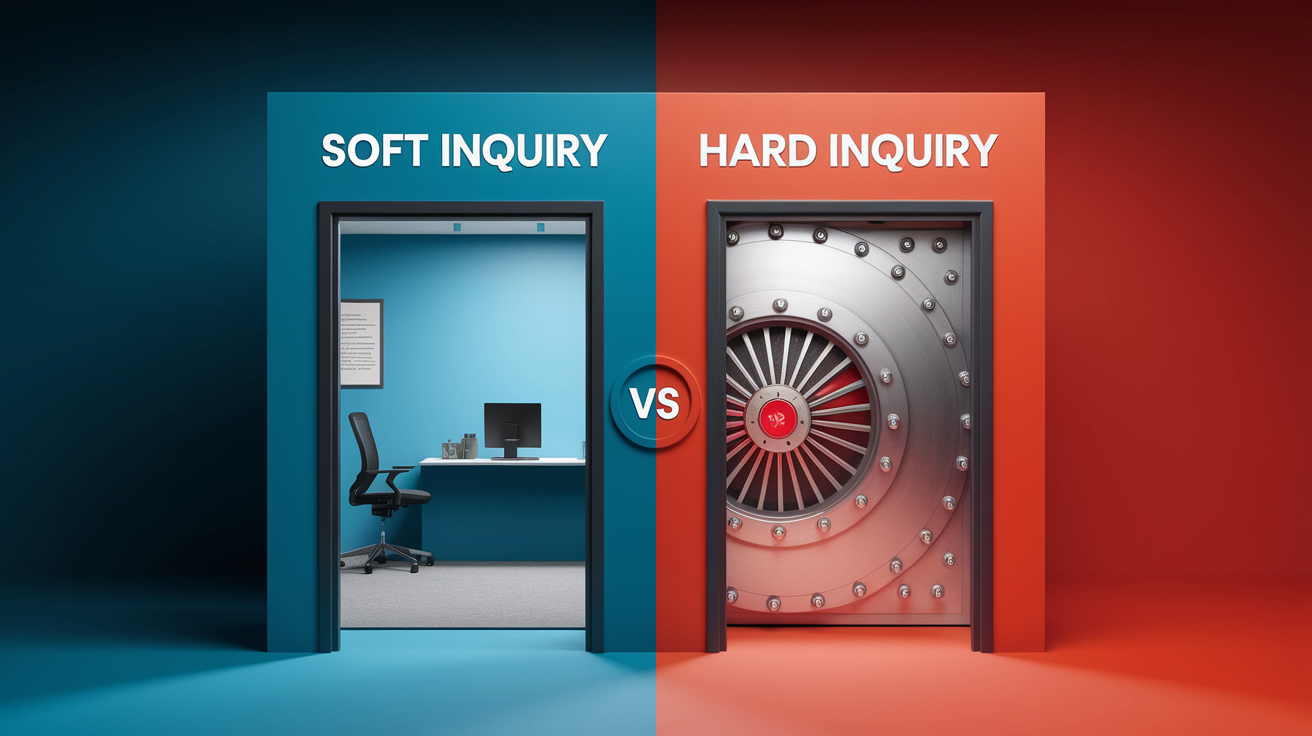
When you check your own credit score (through a bank app, credit monitoring service, or directly from a credit bureau), that’s a soft inquiry. Soft inquiries also include prequalification checks, background checks for employment, and insurance quotes. Soft inquiries appear on your credit report in a section visible only to you, and they have zero impact on your credit score. You can check your score daily without hurting it.
A hard inquiry happens when a lender or creditor pulls your credit report to make a lending decision after you submit a credit application. Hard inquiries are recorded on your credit report, visible to other lenders, and can lower your score slightly (typically by 2–5 points on average). The impact is usually temporary, fading over 12 months, but hard inquiries remain on your report for up to 2 years.
| Inquiry Type | Impact on Score | Duration on Report | Typical Point Change |
|---|---|---|---|
| Soft Inquiry | None | Visible only to you | 0 points |
| Hard Inquiry | Small, temporary drop | Up to 2 years | 2–5 points (average) |
Most credit scoring models include a rate-shopping feature that treats multiple hard inquiries for the same type of loan as a single inquiry if they occur within a limited time window. Many FICO models use a 45-day window for mortgages, auto loans, and student loans, while some VantageScore models use a 14-day window. If you’re shopping for the best mortgage rate and three lenders pull your credit within that window, your score typically treats those three pulls as one inquiry, minimizing the impact.
Free and Low‑Cost Ways to Check Your Credit Score
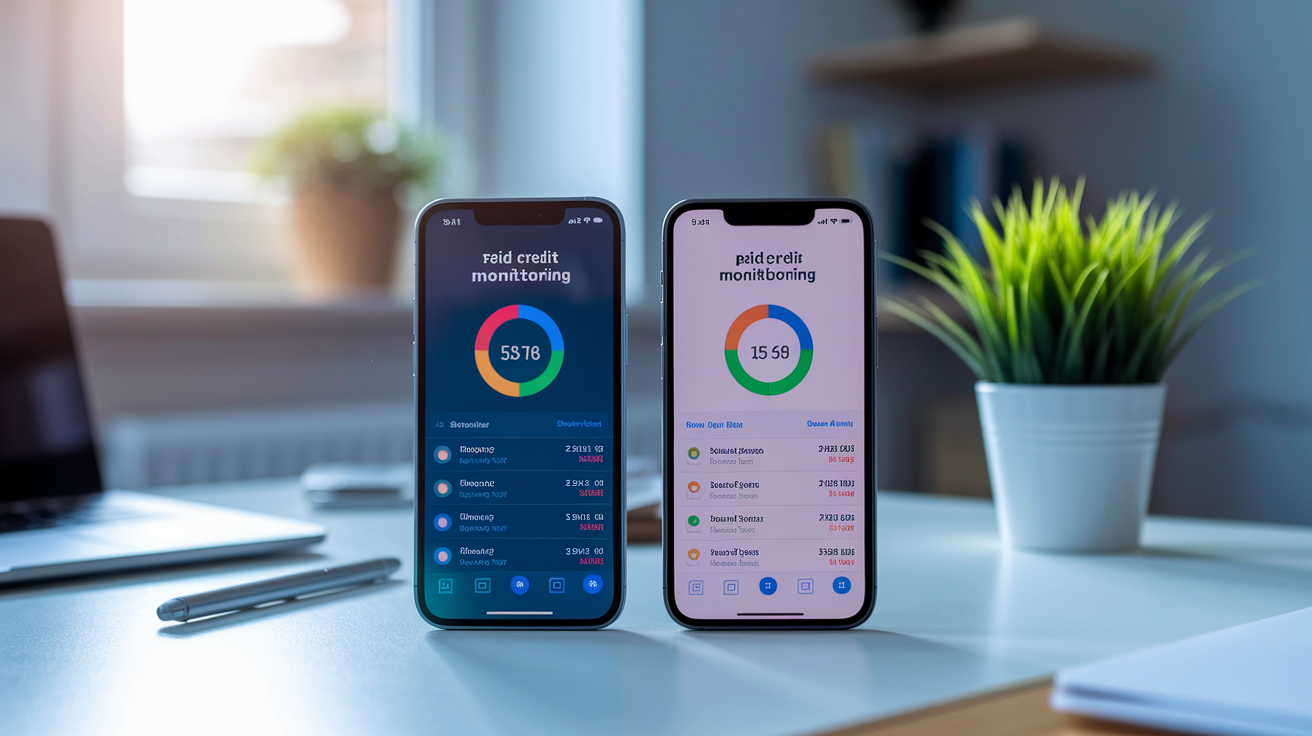
Many banks and credit card issuers provide free credit scores to customers, updated weekly or monthly, through online banking dashboards or mobile apps. These scores are typically VantageScore 3.0 or an educational score modeled on FICO scoring factors, and they’re soft inquiries that won’t affect your credit. If your bank or card issuer offers free scores, use them. They’re accurate enough to track trends, catch sudden drops, and monitor progress over time.
FICO scores and VantageScore scores can differ because they weigh factors slightly differently, but both models use the same underlying data: payment history, credit utilization, length of credit history, credit mix, and recent inquiries. FICO Score 8 is the most widely used scoring model for credit card and auto loan decisions, while FICO Score 2, 4, and 5 are common in mortgage underwriting. VantageScore 3.0 and 4.0 are often used in consumer-facing apps and free monitoring services. The exact number matters less than the trend. If your VantageScore is climbing, your FICO score is likely moving in the same direction.
Paid credit monitoring services start to make sense when you need broader protection or more detailed alerts. Free plans typically monitor one bureau and provide basic score tracking. Paid tiers (often $10 to $30 per month) add three-bureau monitoring, dark-web scans for your Social Security number, real-time alerts for new accounts or inquiries, credit report locks, and identity restoration assistance if fraud occurs. Weigh the cost against your risk level. If you’ve been through a data breach, have a history of identity theft, or manage credit for dependents, paid monitoring can offer peace of mind and faster fraud detection.
Key features to consider when choosing a monitoring tool:
Three-bureau coverage: Monitors Experian, Equifax, and TransUnion so you don’t miss fraud on a bureau your free app doesn’t track.
Real-time alerts: Notifies you within hours or days of a new inquiry, account, or significant balance change, not weeks later.
Score model transparency: Tells you which score you’re seeing (FICO 8, VantageScore 3.0, etc.) so you know how lenders will likely view your credit.
Dark-web and SSN monitoring: Scans for your personal information on underground markets and alerts you if your data appears in a breach.
Identity restoration support: Provides step-by-step help and sometimes assigned case managers if you become a victim of identity theft.
What to Do If You Notice Sudden Score Changes or Errors

When your credit score drops unexpectedly or you see an account or inquiry you don’t recognize, pull your full credit reports from all three bureaus immediately. A sudden 20- or 30-point drop usually has a clear cause: a missed payment, a new collections account, a maxed-out credit card, or a fraudulent account opened in your name. Monthly score monitoring catches these changes fast, but the score itself won’t tell you what happened. The credit report will.
How to Review Reports After a Drop
Start by comparing reports from Experian, Equifax, and TransUnion side by side. Look for new accounts you didn’t open, inquiries you didn’t authorize, balances that don’t match your records, or payment histories marked late when you paid on time. Not all creditors report to all three bureaus, so an error might appear on only one report. If you find a mismatch (one bureau shows a late payment and the other two don’t), that’s a red flag worth investigating. Check account opening dates, credit limits, and recent balance updates to confirm everything aligns with your actual financial activity.
Filing a Dispute and Protecting Yourself
Under federal law, credit bureaus must investigate disputes within 30 days of receiving your claim, though the timeline can extend to 45 days in certain circumstances if the bureau requests additional documentation. File disputes directly with each bureau that’s reporting the error, and keep copies of all supporting documents (bank statements, payment confirmations, correspondence with creditors). If the error is the result of fraud, place a fraud alert on your credit file (lasts 1 year, renewable) or initiate a credit freeze (blocks new credit applications until you lift it). Both are free.
If you’ve confirmed identity theft or fraud, take these steps immediately:
Freeze your credit at all three bureaus to prevent new accounts from opening in your name.
Collect evidence: screenshots, account statements, emails, and any correspondence that proves the account or activity isn’t yours.
File a dispute with each credit bureau reporting the fraudulent account, and submit a police report or FTC Identity Theft Report if required.
Monitor daily or enable real-time alerts for at least 3 months to catch any additional fraud attempts early.
Notify creditors and financial institutions where you have legitimate accounts, and consider changing passwords, enabling two-factor authentication, and reviewing recent transactions.
Sample Credit Score Monitoring Schedules

A consistent monitoring routine helps you detect problems early, track progress toward credit goals, and avoid surprises when you apply for new credit. Routines also make it easier to remember. Checking your score becomes a habit, not something you think about only when you need a loan. The right schedule depends on your credit situation, financial goals, and risk level, but most people benefit from a simple monthly check paired with an annual deep review.
Monitoring routines are especially valuable if you’re rebuilding credit after a late payment, collections account, or bankruptcy. Regular checks let you see incremental improvements (utilization dropping, on-time payments adding up, negative marks aging off), and those visible wins help you stay motivated and adjust your strategy if progress stalls. For people with stable credit who aren’t actively applying for new accounts, a lighter touch works fine. Quarterly reviews to confirm nothing unexpected appeared, and an annual audit to verify every account and tradeline.
High-risk situations (recent data breaches, past identity theft, or managing credit for elderly parents or minors) call for tighter monitoring. Daily or real-time alerts during the first few months after a breach can catch fraud before it does serious damage, and weekly checks during credit disputes ensure corrections post on time.
Monthly monitoring schedule: Check your credit score through your bank or credit card app once a month. Review recent alerts for new accounts, inquiries, or balance changes. Verify that your largest balances updated correctly and your utilization is where you expect it to be. If your score dropped more than 10 points without an obvious cause, pull a full report to investigate.
Quarterly review: Every 3 months, check for new inquiries, new accounts, or changes to existing accounts. Confirm that closed accounts updated correctly and no unexpected collections or public records appeared. This is also a good time to compare scores across bureaus if you have access to multiple reports.
Annual audit: Once every 12 months, pull your full credit report from Experian, Equifax, and TransUnion. Review every account, verify balances and credit limits, check payment histories for errors, and confirm that old negative items are aging off as expected. Dispute any errors immediately.
Pre-application plan: Starting 3–6 months before applying for a mortgage, auto loan, or major refinance, check your score monthly and review all three reports. In the final 30–60 days before submitting applications, switch to weekly checks to confirm corrections posted, balances dropped, and no new inquiries or accounts appeared unexpectedly.
Final Words
Start with a simple rule: check monthly for routine monitoring and at least once a year for a full report. Move to weekly checks in the 3–6 months before a big loan, and daily checks if you suspect fraud.
Scores update when lenders report—usually once a month—so use free monthly tools and your annual bureau reports. Soft checks (like looking at your own score) don’t hurt your score.
If you’re asking how often should you check your credit score, begin monthly and tighten the schedule around big moves. You’ll spot problems sooner and stay in control.
FAQ
Q: Can I get $50,000 with a 700 credit score?
A: You can often get a $50,000 loan or line with a 700 credit score, but approval and the interest rate depend on your income, debt-to-income ratio, loan type, and the lender’s underwriting.
Q: What is the 2 2 2 credit rule?
A: The 2 2 2 credit rule isn’t an industry standard; it’s a shorthand some advisers use for simple habits (examples include two payments per month, two cards, or two-year spacing). Check the source for exact meaning.
Q: What credit score do you need for a $400,000 house?
A: The credit score needed for a $400,000 home depends on the loan: conventional lenders often want 620–740, FHA can accept about 580, and your income, down payment, and DTI also determine approval and rate.
Q: How rare is a 900 credit score?
A: A 900 credit score is effectively impossible on mainstream scales—FICO and VantageScore top out at 850. A 900 reading usually means a nonstandard scale, an error, or a misread metric; verify the source.