

Think cash-back cards are free money? They’re not, but they can add up to real dollars if you use them right.
At their simplest, these cards return a percentage of eligible purchases — for example, 1.5% on $500 gives $7.50.
What matters most is the reward rate, how purchases are categorized, and how you redeem the rewards.
This post explains the earning types (flat, tiered, rotating), common exclusions, redemption choices, and the fees or interest that can wipe out gains.
Read on to learn the numbers to watch and the quick steps to protect your cash back.
Core Mechanics Behind Cash Rewards Credit Cards

Cash rewards credit cards give you back a percentage of what you spend. The math is simple: take your purchase amount, multiply it by the reward rate. Spend $500 on a card paying 1.5 percent and you get $7.50 back. Rewards usually show up at the end of your billing cycle, not right when you swipe.
Merchant classification decides what qualifies and at what rate. Your card issuer uses codes assigned by payment processors to sort each transaction. But here’s where it gets messy. Purchases made through digital wallets, third-party processors, or wireless readers can get tagged wrong if the merchant data doesn’t come through clean. Buy groceries through a payment app and it might register as “digital services” instead of “supermarket.” Your earning rate just dropped from 6 percent to 1 percent.
Not every transaction earns rewards. Cash advances, balance transfers, foreign currency purchases, money orders, crypto buys, lottery tickets, and gambling are standard exclusions. The exclusions section later on breaks down the full list and explains how merchant-category errors happen with digital wallets and third-party payment processors.
Cash Rewards Earning Structures Explained
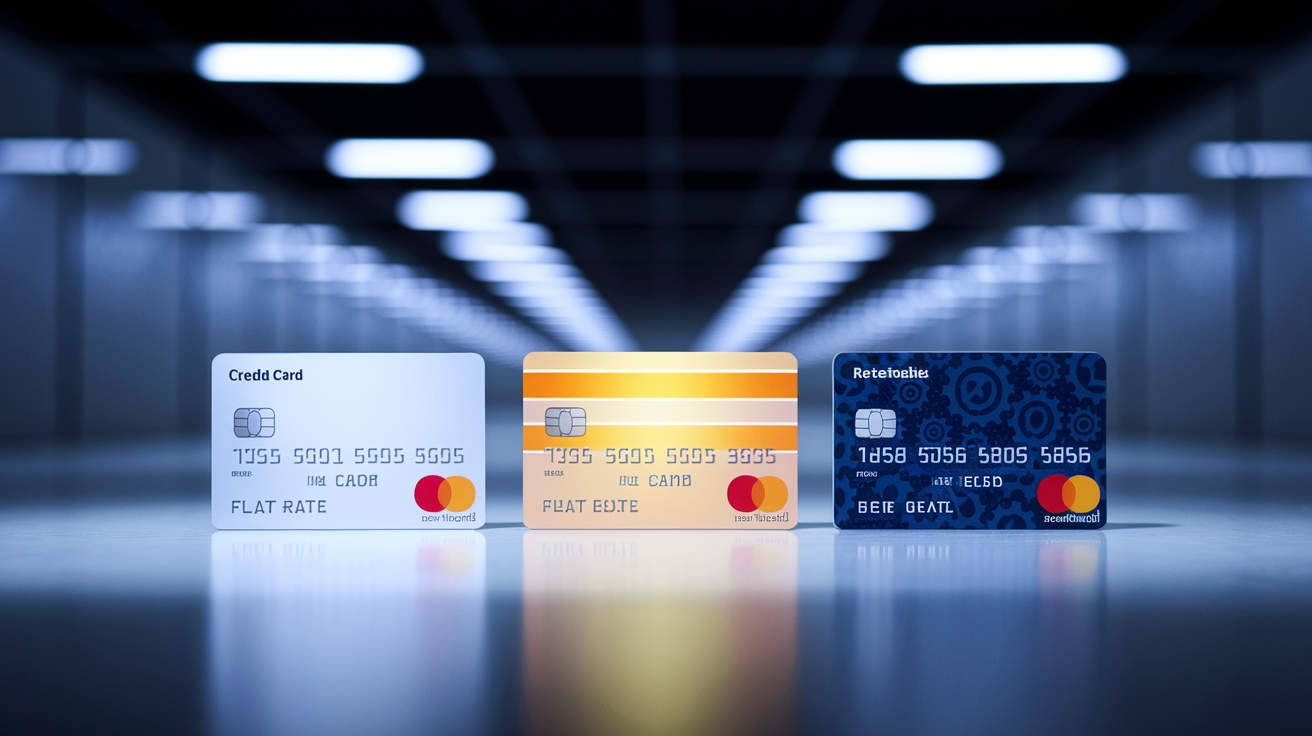
Three main structures define how you earn cash back: flat-rate programs that pay the same percentage on everything, tiered cards that assign different rates to specific categories, and rotating or customizable cards that switch bonus categories every so often.
Flat-Rate Rewards
Flat-rate cards pay one consistent percentage on all eligible purchases. You’ll see 1.5 percent on every dollar or 2 percent split into two stages. The 2 percent split works like this: earn 1 percent when the purchase posts, earn another 1 percent when you pay it off. Spend $1,000 and pay the full balance, you collect $20 total. Carry a balance and you only earn the second 1 percent on what you’ve paid. No category tracking, no activation steps.
Tiered or Elevated Categories
Tiered cards give you higher rates on specific spending categories and a lower base rate on everything else. Real examples: 6 percent cash back at U.S. supermarkets on up to $6,000 per year, then 1 percent after you hit the cap. Another pays 3 percent on U.S. gas stations, 3 percent at U.S. restaurants, 3 percent on U.S. online retail, each capped at $6,000 annually. Travel booked through the issuer’s portal can earn 5 percent. Some give 3 percent on streaming services with no listed cap. Once you blow through the annual or quarterly cap, that category drops to the base rate, usually 1 percent.
Rotating or Customizable Categories
Rotating-category cards pay elevated rates on categories that change each quarter. Common model: 5 percent cash back on rotating quarterly categories, capped at $1,500 in category spending per quarter. If Q2 is “gas stations” and you spend $1,500 at the pump, you earn $75 that quarter. Spend beyond $1,500 and you’re back to the base rate, typically 1 percent. Most rotating cards require quarterly activation. Forget to activate and all your spending earns only the base rate. Customizable cards let you pick one category from a preset list to earn 3 percent, sometimes limited to $2,500 per quarter in combined elevated spending. One model automatically assigns 5 percent to whichever eligible category you spend the most in each billing cycle, capped at $500 in spending per cycle.
| Earning Type | Common Rate | Example Cap |
|---|---|---|
| Flat-Rate | 1.5%–2% | None |
| Tiered Categories | 3%–6% | $6,000/year per category |
| Rotating/Customizable | 5% (quarterly) or 3% (custom) | $1,500/quarter or $2,500/quarter |
How Cash Rewards Are Redeemed

Most issuers give you multiple ways to turn earned cash back into actual value. Statement credits apply rewards directly to your card balance, cutting what you owe. Balance is $200, you redeem $50 in cash back as a statement credit, your new balance is $150. If your balance is already zero, the credit can create a negative balance that either refunds to you or sits there for future purchases. Direct deposits move cash back into your linked bank account. Some issuers send paper checks by mail. Gift cards and merchandise redemptions let you use rewards at specific retailers or for physical goods through the card’s rewards portal.
Retailer checkout partners like Amazon or PayPal let you apply cash back at the point of sale when shopping online. Redemption minimums vary. Some cards won’t let you cash out until you hit $25, others let you redeem any amount. Timing matters because most rewards post at the end of your billing cycle, so you won’t see them right after a purchase. One restriction worth knowing: statement credits can’t be used to satisfy your minimum payment due. Minimum payment is $35 and you redeem $50 in cash back, you still owe the $35 payment by the due date.
Statement credit reduces your card balance. Can create a negative balance if your account is paid in full.
Direct deposit or bank transfer moves cash to your checking or savings account. Minimum thresholds vary by issuer.
Check gets mailed. Typically processes within a billing cycle.
Gift cards are redeemable at participating retailers. May have different dollar-to-point conversion rates.
Merchandise can be ordered from the issuer’s rewards catalog. Value can be lower per dollar of cash back.
Retailer checkout through Amazon or PayPal lets you apply rewards during online checkout. Available balance updates after each use.
Limits, Exclusions, and Category Accuracy for Cash Rewards
Merchant Category Codes determine whether a purchase qualifies for bonus rates or earns rewards at all. Payment networks assign these codes to merchants based on their primary business. A hardware store coded as “home improvement” earns a home-improvement bonus. But if that same store processes payments through a third-party platform, the code might show “payment processor” instead. You just dropped to the base rate or the purchase got excluded entirely.
Digital wallets and wireless card readers create misclassification risk. Tap your phone to pay at a grocery store and the transaction data might route through the wallet provider’s payment system. If the wallet doesn’t pass along the merchant’s original code, your 6 percent supermarket bonus becomes 1 percent general spending. Cryptocurrency purchases, cash advances, balance transfers, money orders, foreign currency transactions, lottery tickets, and gambling-related purchases are standard exclusions that earn zero cash back.
Payment networks assign numeric codes to merchants. Your card matches those codes to reward categories.
Digital wallets, payment apps, and wireless readers can strip or alter merchant codes, reducing or eliminating bonus earnings.
Rotating-category cards require quarterly activation, usually by a date early in the quarter. Check your issuer’s portal or app for the exact deadline.
Fail to activate and all spending defaults to the base rate (commonly 1 percent) for that entire quarter, even in bonus categories.
Cash Rewards Expiration, Account Activity Rules, and Timing

Cash back rarely expires on its own, but inactivity can trigger forfeiture. Most issuers define an inactivity period, often 12 to 24 months, and will forfeit rewards if your account sits unused beyond that window. Close your account and you typically void unredeemed rewards, so redeem before you cancel. Some issuers allow a grace period to claim rewards after closure. Terms vary.
Statement credit rewards usually appear at the end of your billing cycle, not immediately after a transaction posts. Make a purchase on the fifth of the month and your cycle closes on the twentieth, the cash back for that purchase credits on the cycle-close date. Direct deposits and checks can take additional processing time, sometimes a few business days after you request redemption. Always check your card agreement for the issuer’s specific inactivity rules and redemption posting schedules to avoid losing earned rewards.
The True Value of Cash Rewards: APR, Interest, and Fees

Interest charges erase cash-back value fast. Card’s APR sits at 24.49 percent and you carry a $1,000 balance for a year, you’ll pay roughly $245 in interest. Earn 2 percent cash back on that same $1,000 in purchases and you get $20 back. You’re $225 worse off. Even a 6 percent grocery bonus can’t offset a 28.49 percent penalty APR triggered by a late payment.
Annual fees reduce net cash back. One structure charges $0 the first year, then $95 every year after. Spend $1,584 annually in a 6 percent grocery category, you earn roughly $95 in rewards, which exactly offsets the $95 fee. Spend less than that threshold and the fee costs more than you earn. Spend significantly more, say $6,000 per year at 6 percent, you get $360 back, netting $265 after the fee. Always calculate expected annual rewards minus the fee to confirm the card is worth keeping past the first year.
| Card Cost Factor | Impact on Net Cash Back |
|---|---|
| Interest on carried balance (18.49%–28.49% APR) | Can exceed all cash-back earnings; pay in full to preserve value |
| Annual fee (example: $95/year) | Reduces net rewards by fee amount; requires break-even spending threshold |
| Late or penalty fees | Single $40 late fee can wipe out months of cash back; penalty APR compounds losses |
Real-World Cash Rewards Calculations and Examples
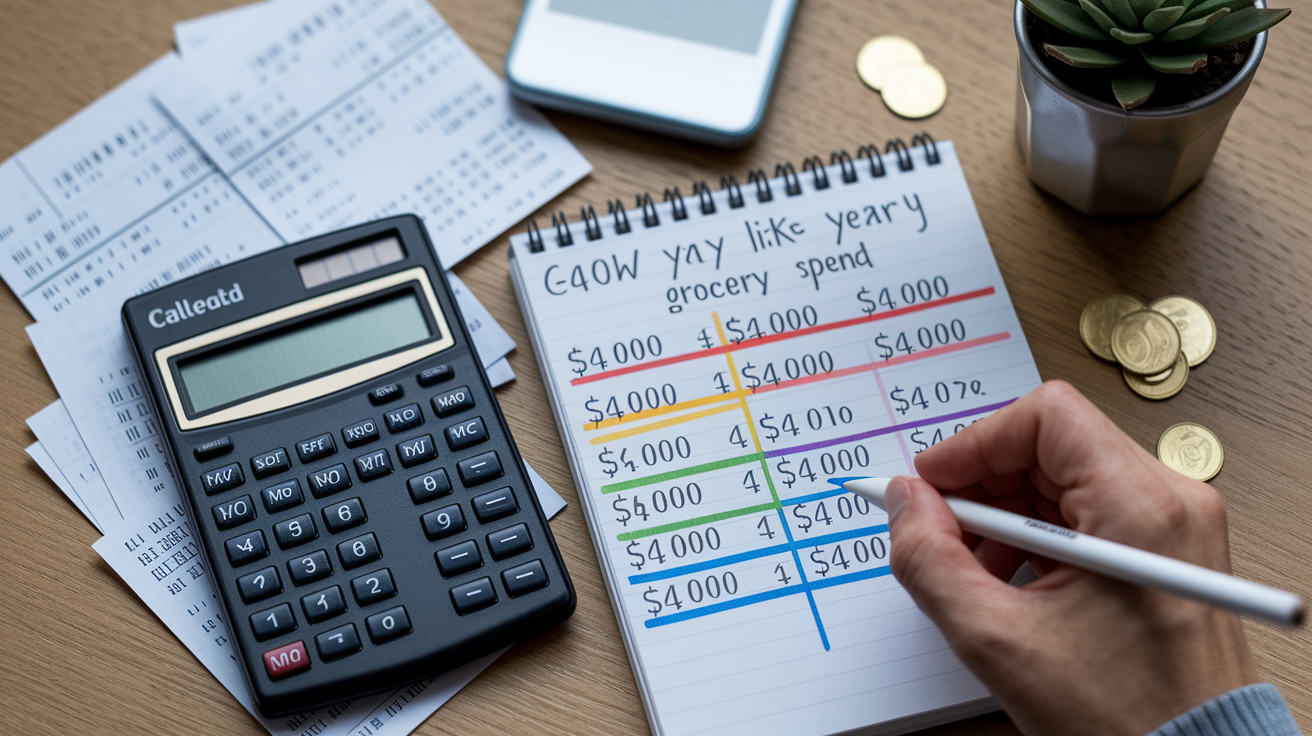
Run the numbers on actual spending to see how reward rates translate into dollars. Spend $6,000 per year on groceries and use a 5 percent rotating-category card, you earn $300 annually. Same $6,000 on a 1 percent flat-rate card returns $60. That’s a $240 annual difference. Dining rewards work similarly: $200 per month at restaurants totals $2,400 per year. At 3 percent, that’s $72 in cash back. At 1 percent, it’s $24. The gap is $48 per year just from one category.
Flat-rate cards offer predictable math. A 2 percent card (structured as 1 percent at purchase plus 1 percent when paid) returns $100 on $5,000 in total spending and $200 on $10,000. No caps, no activation, no category tracking. The simplicity costs you upside in high-spend categories but eliminates the risk of missing a quarterly activation or exceeding a cap.
Grocery example: $6,000 per year at 5 percent equals $300 cash back versus $60 at 1 percent. Net gain: $240.
Restaurant example: $200 per month ($2,400 per year) at 3 percent equals $72 versus $24 at 1 percent. Net gain: $48.
Flat-rate example: $5,000 total spend at 2 percent equals $100. $10,000 at 2 percent equals $200.
Capped grocery example: $8,000 per year at 6 percent up to $6,000 cap equals $360 (first $6,000) plus $20 (remaining $2,000 at 1 percent) equals $380 total.
Caps reduce your effective rate once you cross the threshold. Spend $8,000 in a category capped at $6,000 per year and only the first $6,000 earns the elevated rate. In the example above, the effective rate across all $8,000 drops to 4.75 percent ($380 divided by $8,000). High spenders hit caps faster, which can make flat-rate cards more valuable for year-round consistency.
Strategies to Maximize Cash Rewards Efficiently

Align your cards with your largest spending categories. Groceries are your top expense, prioritize a card offering 6 percent at supermarkets. Dining and gas dominate, choose a card with elevated rates in those categories. Track quarterly rotating categories and activate them as soon as the new quarter starts. Miss the activation window and you’re losing 4 percent per dollar in a 5 percent category.
Match bonus categories to habitual spending. Use a supermarket card for groceries, a gas card for fuel, and a dining card for restaurants to capture the highest rate in each area.
Activate rotating categories immediately. Set a calendar reminder for the first of each quarter. Activation often requires logging in to your account or app and clicking a button.
Pair a flat-rate card with a category card. Use the category card for bonus spending and a 2 percent flat-rate card for everything else to avoid leaving rewards on the table.
Use issuer shopping portals when available. Some issuers offer online portals that stack extra percentage points on top of your card’s base rate when you start shopping from their link.
Avoid overspending to chase rewards. Earning an extra $10 in cash back by spending $200 you didn’t need is a $190 net loss. Only spend what you planned to buy anyway.
Strategic card pairing lifts your overall return. A 6 percent grocery card plus a 2 percent flat-rate card for everything else beats a single 1.5 percent card across the board. Spend $500 monthly on groceries ($6,000 per year) and $1,000 monthly on other purchases ($12,000 per year), the two-card setup returns $360 (groceries) plus $240 (everything else) equals $600 total. A single 1.5 percent card on the same $18,000 returns $270. That’s a $330 annual difference.
Application Requirements, Credit Impact, and Cardholder Eligibility

Most cash rewards cards require good to excellent credit, typically defined as a FICO score of 670 or higher. Premium cards with the highest bonus rates or largest welcome offers often ask for scores above 700. Applying triggers a hard inquiry on your credit report, which can drop your score by a few points temporarily. Multiple applications within a short window compound the effect, so space out new-card requests unless you’re rate shopping for something like a mortgage, where inquiries are typically grouped.
Prequalification tools use soft pulls that don’t affect your credit score. Many issuers let you check whether you’re likely to be approved before submitting a formal application. A prequalification isn’t a guarantee, but it reduces the risk of a hard inquiry for an application that would be denied. If your score sits below the card’s typical approval range, improve your credit profile. Pay down balances, dispute errors, avoid new inquiries. Then apply to increase approval odds and secure better terms.
How Redemptions, Returns, and Disputes Affect Cash Rewards

Returned purchases trigger a reversal of the cash back you earned on that transaction. Buy a $200 item that paid 3 percent ($6 cash back) and later return it for a full refund, the issuer deducts $6 from your rewards balance. Partial returns adjust the reward proportionally. Dispute a purchase and the associated rewards can temporarily disappear until the dispute resolves. Dispute is decided in your favor and the rewards reappear. Merchant wins and the rewards stay removed.
Returns cause cash back to be reversed when a purchase is refunded. Partial refunds reverse a proportional amount of the reward.
Disputes can put rewards on hold or remove them while a chargeback is pending. Resolution determines whether rewards are reinstated or permanently removed.
Rounding rules matter. Some issuers round cash-back calculations to the nearest cent, which can slightly reduce precision on small transactions. Over thousands of purchases, rounding typically favors the issuer by a few cents.
Comparing Cash Rewards to Travel Points and Hybrid Cards
Cash rewards fix the value of every dollar earned at roughly 1 cent per point. A $500 purchase on a 2 percent card returns $10 in cash back, redeemable for exactly $10. Transferable travel points can reach 2 to 3 cents per point or more when moved to airline or hotel loyalty programs and redeemed for premium-cabin flights or high-value hotel stays. Same $500 purchase earning 2 points per dollar (1,000 points) might be worth $20 to $30 in travel value if transferred strategically.
Hybrid cards offer flexibility. Some cash-back cards earn points that can be redeemed as statement credits at 1 cent each or transferred to travel partners for higher value. This structure preserves simplicity for users who want cash while keeping the door open for premium travel redemptions. The tradeoff is complexity: getting the most out of travel points requires researching transfer partners, award charts, and availability. Cash rewards eliminate that research burden but cap your upside.
| Feature | Cash Rewards | Travel Points |
|---|---|---|
| Value per point | Fixed ≈1 cent | Variable, often 2–3+ cents when transferred |
| Redemption complexity | Low; direct cash payout or statement credit | High; requires partner research and award availability |
| Annual fees | Often $0; some premium cards charge $95+ | Commonly $95–$550+ for transferable-point cards |
| Best for | Everyday spenders seeking guaranteed, flexible value | Travelers optimizing premium redemptions and perks |
Best Practices for Managing and Redeeming Cash Rewards
Use your issuer’s tracking dashboard to monitor earned rewards, pending transactions, and upcoming category caps. Most mobile apps display your current cash-back balance and show which purchases qualified for bonus rates. Statement summaries break down earnings by category, helping you spot misclassified transactions or confirm that rotating-category activation worked. Set up email or push notifications for activation reminders, balance thresholds, and redemption minimums to avoid missing opportunities.
Check your rewards balance monthly. Review your statement or app to confirm rewards posted correctly and catch any merchant misclassifications early.
Redeem before account closure. Plan to cancel a card, redeem all rewards first. Most issuers forfeit balances once the account closes.
Track category spending against caps. Use a simple spreadsheet or budgeting app to monitor when you’re approaching annual or quarterly limits so you can shift spending to another card.
Set activation reminders. Add a recurring calendar event for the first day of each quarter to activate rotating categories. Missing activation costs 4 percent per dollar in a 5 percent category.
Compare redemption values. Some gift cards or merchandise redemptions offer bonus value (extra cents per point), while others offer worse value than statement credits. Always check the redemption rate before converting rewards.
Final Words
Cash rewards pay a percentage of eligible purchases (percentage × purchase amount) and usually post at the end of your statement cycle. Watch for excluded transactions and merchant misclassification, especially with digital wallets and third‑party processors.
Pick the earning structure that matches your biggest expenses, track activations and minimums, and compare net value after APR and fees.
If you want the quick answer to how do cash rewards credit cards work: they turn a percent of qualifying buys into redeemable cash — and with the right match to your spending you can come out ahead.
FAQ
Q: How does a cash rewards credit card work?
A: A cash rewards credit card works by returning a percentage of eligible purchases as cash (percentage × purchase amount). Rewards usually post at the end of the statement cycle; some transactions don’t qualify.
Q: How much is 1.5% cash back on $1000?
A: A 1.5% cash back on $1,000 is $15 in rewards; that $15 posts when the statement closes and may take a billing cycle to appear in your rewards balance.
Q: How much is 10,000 points worth in cash?
A: Ten thousand points is typically worth about $100 in cash at roughly 1 cent per point; some issuers value points differently, so check your card’s conversion rate.
Q: What are the disadvantages of cashback rewards?
A: The disadvantages of cashback rewards include low real value if you carry a balance (interest can exceed rewards), annual fees that wipe gains, earning caps/exclusions, and merchant misclassification risks.