


Think a secured card is just a locked savings account? Think again.
A secured card is a real credit line that reports to the three major credit bureaus and can rebuild your score when unsecured cards won’t approve you.
Use it for one or two small recurring charges, keep utilization under 30% (how much of your limit you’re using), and pay on time every month.
Do that, and you can add positive payment history and lower utilization, two of the biggest things that move your score, within a few billing cycles.
Core Strategy for Using Secured Credit Cards to Rebuild Credit Effectively
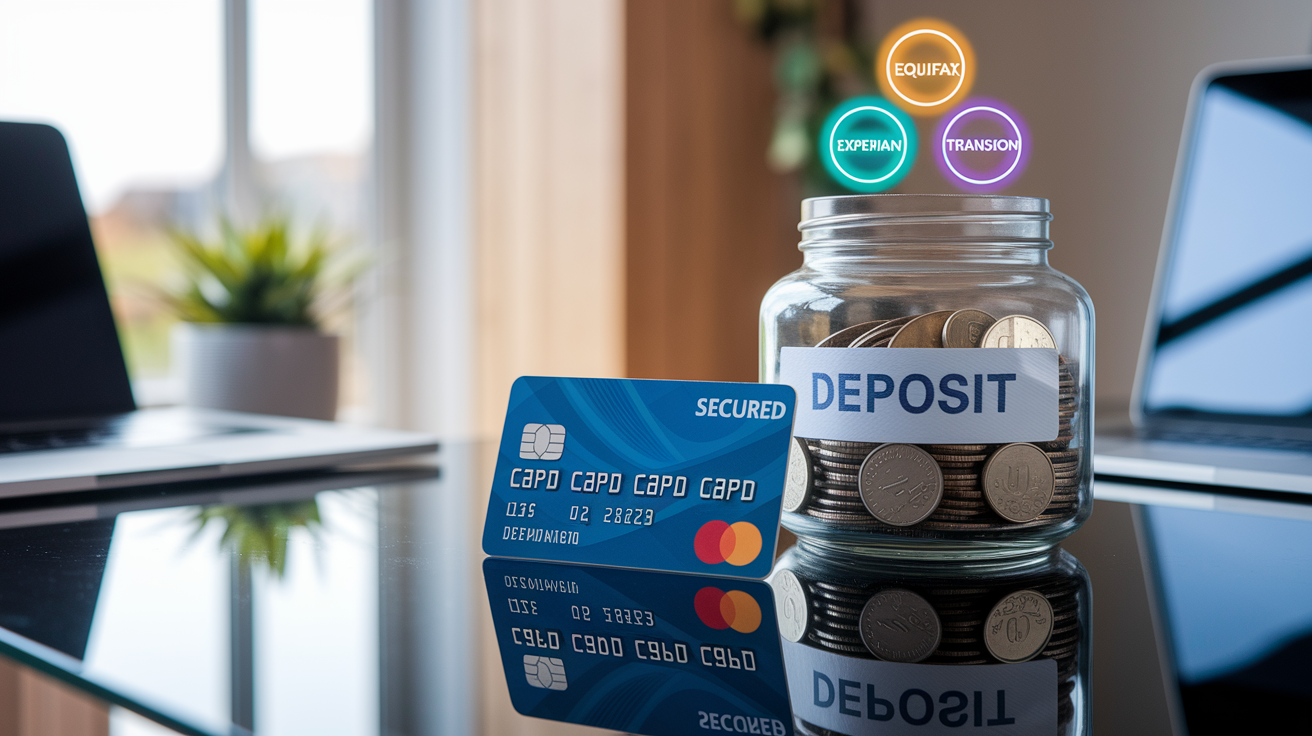
A secured credit card asks for a refundable cash deposit that usually becomes your credit limit. It’s a real credit line, not a prepaid card. The issuer checks your application, approves you based on income and how much you deposit, then reports your payment behavior every month to Equifax, Experian and TransUnion. That monthly reporting is what rebuilds your credit when unsecured cards won’t approve you.
Reporting to all three bureaus means your on-time payments show up on every credit report a lender might check. Payment history makes up 35 percent of your FICO score. Amounts owed, which includes utilization, is another 30 percent. A secured card lets you build or fix those two factors by charging small purchases and paying on time. Without reporting, the card does nothing for your credit no matter how well you manage it.
Rebuilding with a secured card is straightforward if you follow the full sequence from deposit to monthly review. Each step reinforces good habits and improves the factors that move your score.
- Pay the deposit after approval. Common amounts are $200 to $400, but some issuers let you go as low as $49 or as high as $10,000 depending on income and approval.
- Wait for the card to arrive, then activate it. A few issuers charge the deposit on your first statement instead of upfront.
- Use it for one or two small recurring charges each month. A streaming service, gas, groceries you can afford to repay.
- Keep your balance under 30 percent of the limit at all times. If you’ve got a $1,000 limit, stay under $300.
- Pay at least the minimum by the due date every single month. Late payments get reported and hurt the 35 percent payment history factor.
- Pay the full statement balance when you can to skip interest and show responsible use.
- Set up autopay for at least the minimum so you don’t miss a payment.
- Check your statement each month for mistakes or charges you don’t recognize before you pay.
- Track your score monthly using the issuer’s free tool or a credit monitoring service.
- Pull your free annual credit report from each bureau to confirm accurate reporting, and dispute anything wrong right away.
Secured cards work because they prove you can borrow and repay responsibly. The deposit protects the issuer from loss, which is why approval odds are better than unsecured cards. Your job is to use it regularly, keep balances low, and pay on time every month. Do that and you’ll create the positive history lenders want to see when they’re deciding whether to approve you for unsecured credit.
Understanding the Security Deposit and Credit Limit Relationship in Secured Credit Cards

The deposit you put down sets your initial limit in most cases. Deposit $200, get a $200 limit. Deposit $400, get $400. Some issuers let you go up to $10,000 if you want a higher limit and can afford the bigger deposit. A few offer minimums as low as $49 if you meet certain income or credit conditions. The deposit sits in a separate account and doesn’t get touched unless you stop paying or close the card.
Bigger deposits give you more usable credit and make it easier to stay under 30 percent utilization. A $1,000 deposit means a $1,000 limit, so you can charge up to $300 and stay under the threshold. A $200 deposit leaves you with a $200 limit, which means you’ve got to keep spending under $60 to hit that same 30 percent mark. If your budget allows it, a larger deposit gives you more room to handle daily expenses without spiking your utilization. Some issuers do a hard inquiry when you apply, others rely on income checks and a soft pull. Ask before you apply if you want to dodge the temporary score dip from a hard pull.
| Deposit Amount | Likely Credit Limit | Impact on Utilization | Issuer Notes |
|---|---|---|---|
| $200 | $200 | Keep balance under $60 to stay below 30% | Common starting point; some issuers charge it on first statement |
| $400 | $400 | Can charge up to $120 and keep 30% utilization | Popular for people with thin files or rebuilding |
| $1,000 | $1,000 | Allows up to $300 in spending at 30% threshold | Gives you meaningful room for bills and unexpected costs |
| $49–$10,000 | Usually matches deposit | Higher limits ease utilization pressure; lower deposits limit flexibility | Minimums require qualifying income; maximums depend on issuer policy |
Daily Usage Habits for Managing a Secured Credit Card Smoothly

Easiest way to use a secured card? Pick one small recurring bill you’re already paying every month. Lots of people charge their Netflix, Spotify, or a single gas station fill to the card, then pay the balance in full when the statement shows up. This keeps activity consistent, the balance low, and prevents the card from sitting there doing nothing. A dormant card can get closed by the issuer for inactivity, which erases the positive account age you’ve been building.
Check your statement every month before the due date to make sure all the charges are yours and the balance matches what you expect. Errors happen. Fraud happens. Duplicate charges happen. Catching them early protects your budget and your credit. Many issuers let you shift your due date to line up with payday or other bill cycles. Moving the due date to two days after payday means you’ve got cash available when the payment processes. Set up autopay for at least the minimum so you never miss a due date, even when you’re traveling or swamped.
If you can swing paying the full statement balance every month, do it. Paying in full kills interest charges and shows lenders you can borrow and repay without carrying debt. If cash is tight, pay at least the minimum by the due date and throw extra at it whenever possible. The card reports the balance that appears on your statement date, so paying it down before the statement closes can lower your reported utilization even if you carry a balance into the next cycle.
- Assign the card to one or two small recurring bills you can easily afford to repay.
- Review the statement in full before the due date to catch unauthorized charges or billing mistakes.
- Set up autopay for at least the minimum to kill the risk of a missed payment.
- Adjust the statement due date if you can to match your cash flow. Two days after payday works great.
- Pay the full balance when your budget allows to skip interest and prove responsible use.
- Keep the card active by using it at least once every few months to prevent closure for inactivity.
Monitoring Your Progress When Rebuilding Credit With a Secured Card
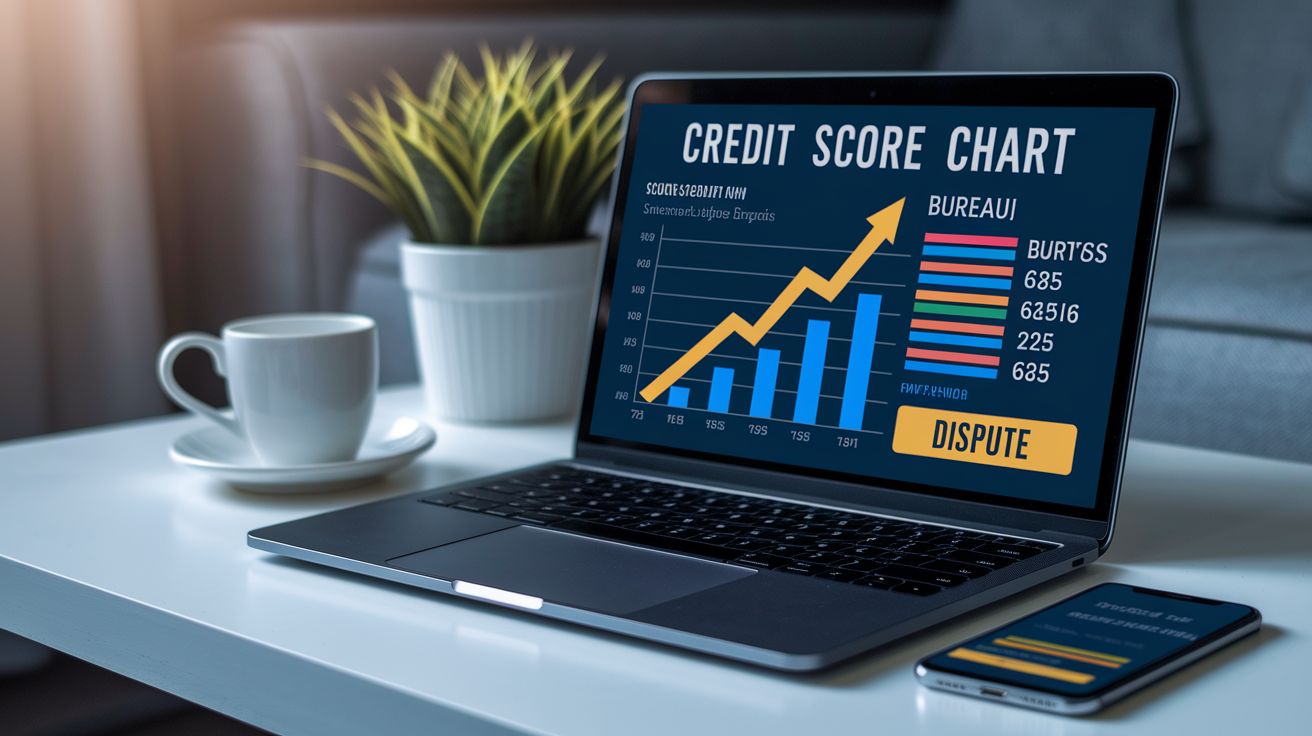
Most secured card issuers give you free monthly score updates through their app or online account. Check your score every month to watch for movement and confirm your activity is getting recorded. Score bumps usually show up within two to three billing cycles once the issuer starts reporting. If your score doesn’t budge after three months of on-time payments and low utilization, verify that the card is reporting to all three bureaus by pulling your free annual credit report.
You get one free credit report from Equifax, Experian and TransUnion every 12 months. Pull all three at once or stagger them every four months to monitor changes throughout the year. Review each report closely. Confirm your secured card account appears, payment history is correct, and there aren’t any errors or accounts you didn’t open. If you find an incorrect late payment, a balance that doesn’t match, or an account you never opened, file a dispute with the bureau right away. Disputes are free and bureaus have to investigate within 30 days.
- Check your issuer’s free monthly score tracker to confirm reporting is live and watch score movement.
- Request your free annual credit report from each of the three major bureaus to verify everything’s accurate.
- Review every account, payment entry, and balance listed on each report for errors.
- File a dispute with the bureau if you spot wrong information, unauthorized accounts, or reporting mistakes.
- Track improvements over time by saving screenshots of your score or writing down the number each month to see the trend.
Expected Timeline for Rebuilding Credit Using a Secured Credit Card

If you’ve got no credit history or a thin file, expect to see score movement within six to twelve months of consistent on-time payments and low utilization. Lots of cardholders report score increases of 50 points or more during the first year when they pay in full and keep balances under 30 percent. Some issuers review accounts after six months of positive behavior and may offer an unsecured upgrade or a higher limit. One cardholder who used a secured card with a $400 deposit got an unsecured card with a $2,000 limit after just six months of on-time payments.
Rebuilding damaged credit takes longer because late payments, charge-offs, collections and other negatives stick around on your report for seven years. Bankruptcies hang on for ten. A secured card helps by adding fresh positive payment history, but it can’t erase existing bad marks. If your report’s got multiple late payments or a recent bankruptcy, expect rebuilding to take several years. The secured card becomes one piece of a bigger recovery plan that includes paying down other debts, disputing errors, and avoiding new negatives. One cardholder recovering from a Chapter 7 bankruptcy seven years earlier added a spouse as an authorized user and used the secured card responsibly to push the score above 700 over time.
| Starting Situation | Expected Timeline | Typical Score Movement | Key Behaviors Needed |
|---|---|---|---|
| No credit history or thin file | 6–12 months | 50+ point increase common | On-time payments, utilization under 30%, regular small charges |
| Limited recent activity but no major negatives | 6–12 months | Moderate increases; may qualify for unsecured cards within six months | Consistent monthly usage, full statement payments, score monitoring |
| Recent late payments or collections | 12–24 months | Slower improvement; positive history dilutes recent negatives over time | Perfect payment streak, low utilization, dispute any errors, avoid new negatives |
| Bankruptcy, repossession, or multiple charge-offs | 2+ years | Gradual rebuilding; major negatives remain on report for 7–10 years | Long-term responsible use, additional tools, professional help if needed |
Upgrading From a Secured Credit Card to an Unsecured Card
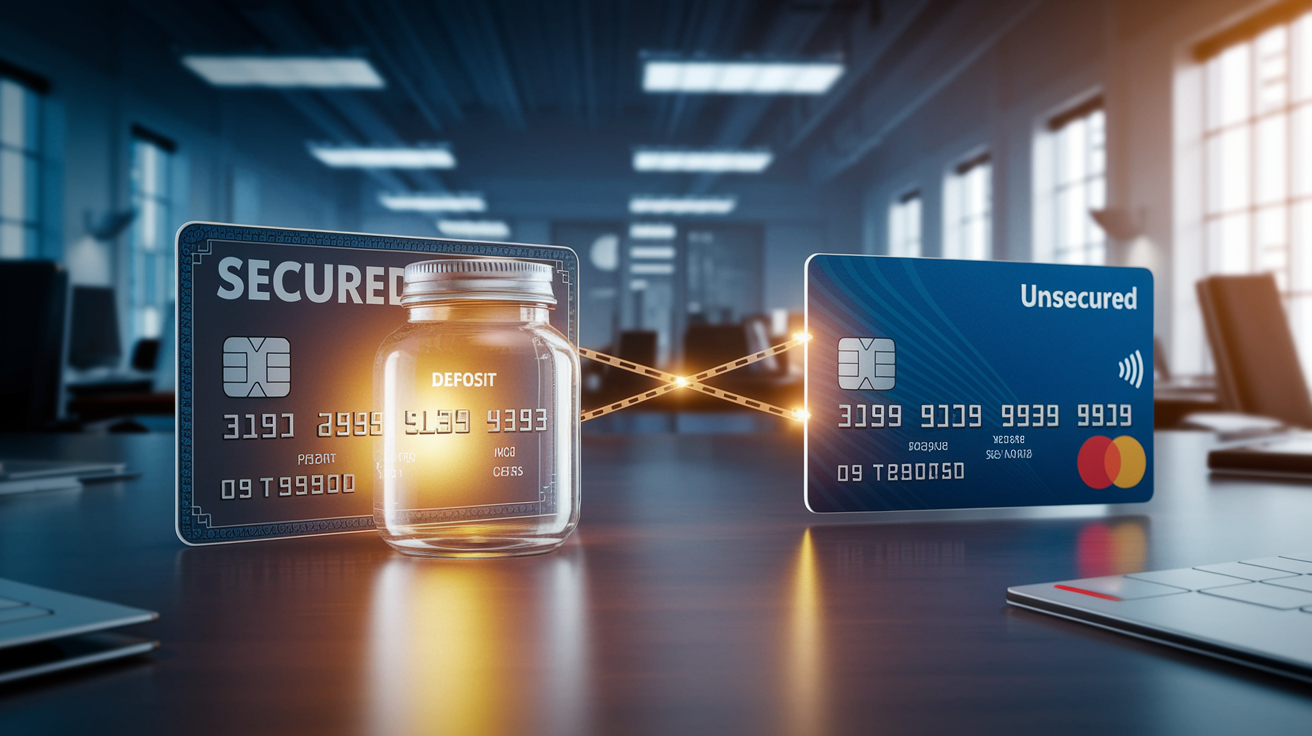
Lots of issuers review secured card accounts every six to twelve months to see if you qualify for an unsecured card. If you’ve made every payment on time, kept utilization low, and used the card responsibly, the issuer may automatically upgrade your account or send you an invite to apply for an unsecured card. When you graduate, the issuer refunds your original deposit in full. Some issuers convert the existing secured account into an unsecured line, keeping the account age and payment history intact. Others open a new unsecured account and close the secured card, which can temporarily shorten your average account age.
If your secured card is your oldest account, ask the issuer whether the upgrade keeps the original account or opens a new one. Keeping it open preserves your length of credit history, which makes up 15 percent of your FICO score. Some cardholders keep using the secured card for small recurring charges even after qualifying for unsecured cards because closing it would cut their total available credit and spike utilization across remaining cards. If the issuer refunds your deposit and closes the secured account automatically, the positive payment history stays on your report for up to ten years, continuing to help your score.
Graduation usually comes with a higher limit than your original deposit. One cardholder who started with a $200 secured card got a $2,000 unsecured limit after six months. Higher limits lower utilization pressure and give you more room for emergencies and everyday spending. Request a credit limit increase on your unsecured card after another six months of on-time payments to further cut utilization and boost your credit profile.
Avoiding Common Mistakes When Using Secured Credit Cards
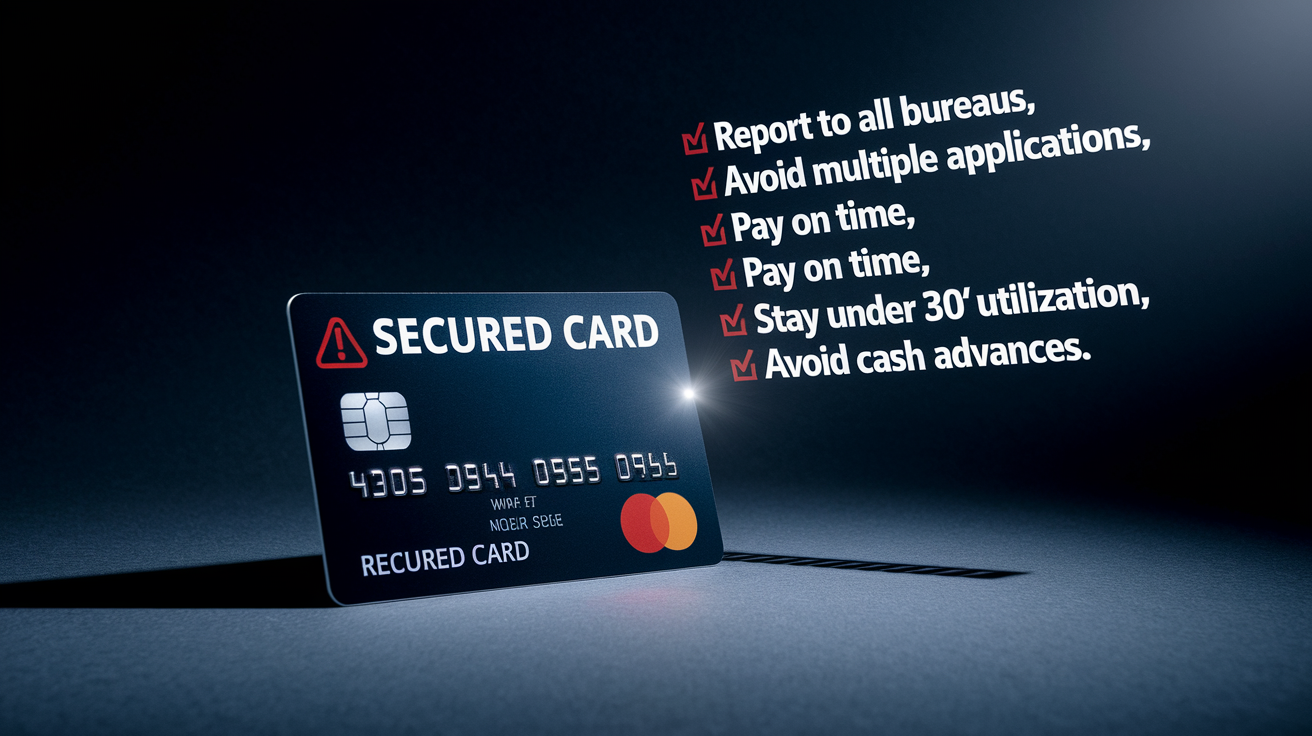
Biggest mistake rebuilders make? Choosing a secured card that doesn’t report to all three major credit bureaus. If the issuer only reports to one or two, lenders who pull your credit from the unreported bureau won’t see any improvement. Always confirm the card reports to Equifax, Experian and TransUnion before you apply. Another common error is applying for multiple secured cards within a short window, which triggers several hard inquiries and tells lenders you’re desperate for credit. Open one secured card, use it responsibly for six to twelve months, then think about adding another line if you need it.
- Choosing a card that doesn’t report to all three bureaus. Your activity is invisible to lenders checking unreported bureaus.
- Applying for multiple secured cards at once. Multiple hard inquiries drop your score and signal risk.
- Paying only the minimum each month. Extends payoff time, increases interest paid, keeps balances high.
- Maxing out the card or carrying balances above 30 percent. Spikes utilization and hurts the 30 percent amounts-owed factor.
- Missing payments or paying late. Late payments get reported immediately and can drop scores by dozens of points.
- Taking cash advances. Typically charged at higher APRs of 25–30 percent plus 3–5 percent fees.
- Closing the account right after upgrading. Shortens credit history and cuts total available credit, raising utilization.
Paying only the minimum keeps your balance high and racks up interest at APRs that often top 25 percent. A $500 balance paid at the minimum can take years to clear and cost hundreds in interest. If cash flow forces you to carry a balance, pay more than the minimum whenever you can and stop adding new charges until the balance drops. Cash advances should be a last resort because the fees and high APRs make them expensive. Most secured cards charge 3 to 5 percent of the advance as a fee, then slap a higher APR on that balance immediately with no grace period.
Choosing the Right Secured Credit Card for Rebuilding Credit

Not all secured cards are built the same. Some charge annual fees of $50 or more, others have no fee. Some require $200 minimum deposits, others accept $49, and a few allow deposits up to $10,000. Start by confirming the card reports to all three major bureaus. Then compare annual fees, interest rates, deposit requirements, and whether the issuer offers a clear path to upgrade to an unsecured card. Cards that pay interest on your deposit are rare but worth grabbing if available, since your deposit can earn a small return while it sits untouched.
Low or zero annual fees protect your budget and keep the card affordable over time. If you’re planning to pay your balance in full every month, the APR matters less, but a lower rate gives you a safety net if an emergency forces you to carry a balance. Flexible deposit minimums let you start rebuilding with less cash upfront, while higher maximums give you room to bump your limit as your income allows. A clear upgrade path means the issuer reviews accounts regularly and offers unsecured conversions or invites when you qualify.
| Card Feature | Why It Matters | What to Look For |
|---|---|---|
| Bureau reporting | Activity must show on all three major credit reports to get the most rebuilding benefit | Confirm issuer reports to Equifax, Experian and TransUnion before applying |
| Annual fee | High fees cut into affordability and eat your budget over time | Go for $0 annual fee or fees under $25; skip cards charging $50+ annually |
| APR | Lower rates cut interest costs if you carry a balance during an emergency | Look for APRs below 25%; less critical if you pay in full monthly |
| Deposit range | Flexible minimums let you start small; higher maximums allow limit increases later | Minimum $49–$200; maximum $1,000–$10,000 depending on issuer |
| Upgrade path | Automatic reviews and unsecured conversions reward good behavior and return your deposit | Choose issuers that review accounts every 6–12 months and offer clear graduation criteria |
Additional Credit-Building Tools to Use Alongside Secured Credit Cards

A secured card is powerful, but stacking it with other tools can speed up progress. Savings-secured installment loans let you borrow against a CD or savings account and repay in fixed monthly chunks. The loan reports to the bureaus and adds an installment account to your credit mix, which is 10 percent of your FICO score. Becoming an authorized user on a responsible family member’s or partner’s unsecured card can add years of positive payment history to your report immediately, though you’ll also inherit any negatives if the primary account holder misses payments.
Focus on budgeting and spending discipline so you never miss a payment or run high balances. Track income and expenses monthly, set aside cash for the secured card payment before you spend on anything else, and avoid opening new accounts until your score and habits stabilize. Limit new credit applications to cut down on hard inquiries and give your existing accounts time to age. Length of credit history is 15 percent of your score, and every new account lowers your average age temporarily.
- Open a savings-secured installment loan to diversify your credit mix and add an installment account next to your revolving secured card.
- Become an authorized user on a trusted primary cardholder’s account to inherit their positive payment history. Verify the issuer reports authorized users to all bureaus.
- Build and stick to a monthly budget so you can afford full statement payments and dodge missed due dates.
- Limit new credit applications to one or two accounts per year to keep your average account age up and minimize hard inquiries.
Final Words
Put the plan into action: pick a secured card that reports to all major bureaus, fund a refundable deposit you can afford, keep your balance low, and pay on time every month.
Track progress monthly, check your reports for errors, and expect steady gains over 6–12 months. Consider upgrading when your issuer reviews accounts.
If you want a clear playbook for how to use secured credit cards to rebuild credit, follow these steps, set autopay, and stick with it. You’ll see improvement if you stay consistent.
FAQ
Q: What is the best way to use a secured credit card to build credit, and are secured cards good for rebuilding credit?
A: The best way to use a secured credit card to build credit—and yes, secured cards are good for rebuilding—is to pick one that reports to all bureaus, use small recurring charges, keep utilization under 30%, and always pay on time.
Q: How to get a 700 credit score in 30 days fast?
A: Getting a 700 credit score in 30 days is rarely realistic, but you can improve fastest by fixing reporting errors, paying down balances (ideally below 10–30%), becoming an authorized user, and avoiding new credit inquiries.
Q: What is the biggest killer of credit scores?
A: The biggest killer of credit scores is late or missed payments—payment history accounts for about 35% of FICO; a single 30-day late can cause a large drop and stays on your report for years.