

Want travel rewards without paying an annual fee?
No-annual-fee travel cards let you earn points or miles on everyday spending and often skip foreign transaction fees, so you keep more cash when you travel.
You can score anywhere from about 1.25x to 5x rewards in useful categories, plus flexible ways to redeem and sometimes a welcome bonus that adds real value.
This post walks through the best no-annual-fee travel cards, what they earn, and which one fits your travel style.
Best No-Annual-Fee Travel Credit Cards (Quick Picks)
No-annual-fee travel cards let you rack up points or miles on everyday spending without the yearly fees that premium cards slap you with. You’ll typically see 1.5x to 5x rewards on travel purchases, flexible ways to cash in, and often zero foreign transaction fees. They’re solid picks for casual travelers, budget-conscious frequent flyers, and anyone who wants to build a travel rewards stash without paying upfront.
Here are five no-annual-fee travel cards worth looking at:
Chase Freedom Unlimited® pulls in unlimited 1.5% cash back (which turns into 1.5x Chase Ultimate Rewards points if you’ve got a Sapphire card), plus 5% back when you book through Chase Travel and 3% on dining and drugstores. No foreign transaction fees. It’s strongest when you pair it with a premium Chase card to unlock transfer partners like United, Hyatt, and Southwest. Welcome bonus: $200 after you spend $500 in three months.
Capital One VentureOne Rewards Credit Card gives you a flat 1.25x miles per dollar on everything. Those miles transfer to over 20 airline and hotel partners, including Turkish Airlines, Air France-KLM, and Marriott. Zero foreign transaction fees. Best if you want straightforward earning with flexible transfers and don’t feel like tracking categories. Welcome bonus changes depending on the promotion.
Chase Freedom Flex℠ offers rotating 5% cash back (5x points) on up to $1,500 in combined quarterly categories, plus 5% on Chase Travel, 3% on dining and drugstores, and 1% everywhere else. Points convert to Chase Ultimate Rewards. No foreign transaction fees. Works best if you don’t mind activating quarterly categories and keeping an eye on spending caps. Welcome bonus: $200 after $500 spend in three months.
Citi Double Cash® Card earns 2% cash back on everything: 1% when you buy, 1% when you pay off the purchase. You can redeem at the Citi Travel portal for 5% total cash back on hotels, car rentals, and attractions. Rewards come as Citi ThankYou points, which become transferable if you hold a Citi Premier or Prestige card. Zero annual fee, but you’ll pay a 3% foreign transaction fee. Best for simple, high-earning cash back that can turn into transferable points with the right card pairing. Welcome bonus: $200 cashback after $1,500 spent in six months.
Capital One Savor Cash Rewards Credit Card hands you 3% cash back on dining, groceries (excluding superstores), entertainment, and select streaming. You get 5% on hotels, vacation rentals, and rental cars booked through Capital One Travel, and 1% on everything else. Cash back converts to Capital One miles if you pair it with a Venture card. Zero annual fee, zero foreign transaction fees. Best for people who spend heavily on food and entertainment and want high category returns without an annual fee. Welcome bonus varies.
Side‑by‑Side Comparison of Top No‑Annual‑Fee Travel Cards
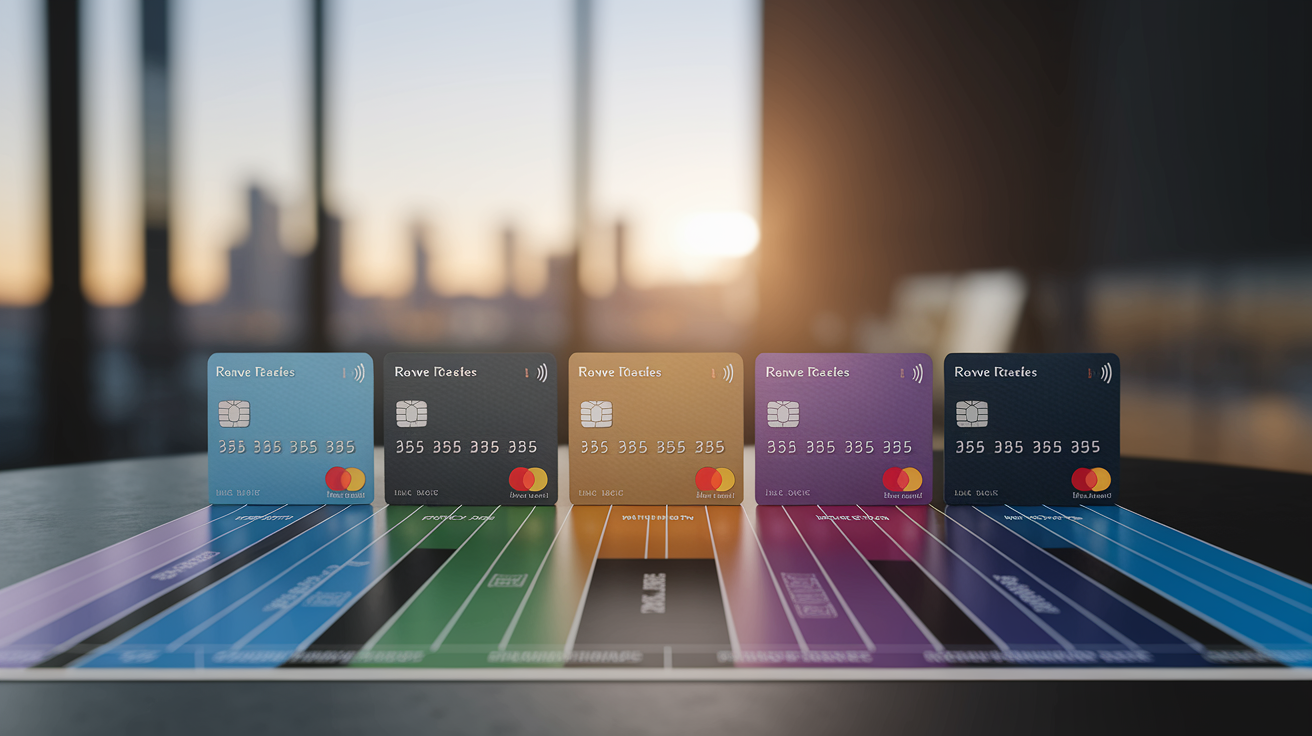
This table lays out the main features of six leading no-annual-fee travel cards so you can compare rewards, fees, and how you can use your points.
| Card Name | Rewards Rate | Foreign Transaction Fee | Redemption Options | Notable Perks |
|---|---|---|---|---|
| Chase Freedom Unlimited® | 1.5% on all purchases; 5% on Chase Travel; 3% on dining & drugstores | 0% | Cash back or convertible to Chase Ultimate Rewards points (transfer to 14 partners when paired with Sapphire or Ink card) | Trip cancellation insurance, purchase protection, cell phone protection (up to $600 per claim) |
| Capital One VentureOne Rewards | Flat 1.25x miles per $1 | 0% | Transfer to 20+ airline/hotel partners or redeem at 1¢ per mile for travel purchases | Automatic travel credits when redeeming miles; extended warranty coverage |
| Chase Freedom Flex℠ | 5% on rotating quarterly categories (up to $1,500 combined); 5% on Chase Travel; 3% on dining & drugstores; 1% elsewhere | 0% | Cash back or convertible to Chase Ultimate Rewards points | Quarterly category activation required; purchase protection, extended warranty |
| Citi Double Cash® Card | 2% total (1% on purchase + 1% on payment) | 3% | Citi ThankYou points (transferable to 18 airlines/hotels if paired with Citi Premier/Prestige); 5% total on Citi Travel portal bookings | $0 liability on unauthorized charges; balance transfer option at 0% intro APR |
| Capital One Savor Cash Rewards | 3% on dining, groceries, entertainment, streaming; 5% on Capital One Travel bookings; 1% elsewhere | 0% | Cash back or convertible to Capital One miles (transferable when paired with Venture card) | High category multipliers; extended warranty; purchase security |
| Hilton Honors American Express | 7x at Hilton properties; 5x at U.S. restaurants, supermarkets, gas stations; 3x elsewhere | 0% | Hilton Honors points (redeemable for free nights, upgrades, Amazon purchases at 0.5¢ per point) | Automatic Hilton Silver status; earn Gold status after $20,000 annual spend |
The biggest differences come down to redemption flexibility and how you earn. Chase cards turn cash back into Ultimate Rewards points when you pair them with a premium Sapphire or Ink product, which unlocks airline and hotel transfers valued at 1.5 to 2 cents per point. Capital One VentureOne gives you transferable miles right away without needing a second card, but you earn at a lower base rate. Citi Double Cash earns a flat 2% everywhere, making it the easiest high-earning option, though it carries a foreign transaction fee and you’ll need a Citi Premier or Prestige to access ThankYou transfer partners. Chase Freedom Flex and Capital One Savor reward you for tracking categories or activating bonuses, giving you higher returns if you’re willing to manage quarterly limits or watch your spending categories.
Detailed Breakdown of Each Featured Travel Card

Chase Freedom Unlimited®
Chase Freedom Unlimited works as both a standalone cash-back card and a flexible Ultimate Rewards builder when you pair it with a Sapphire or Ink card. You earn unlimited 1.5% back on everything, which converts to 1.5 Chase Ultimate Rewards points per dollar when you hold a qualifying partner card. The card also gives you 5% cash back (5x points) on travel booked through Chase Travel and 3% back (3x points) on dining and drugstore purchases. You can cash out rewards as a statement credit, check, or direct deposit at 1 cent per dollar, or convert them at the same ratio into Ultimate Rewards points if you add a Sapphire Preferred, Sapphire Reserve, or eligible Ink business card to your wallet.
Pros:
Unlimited 1.5% cash back with no category caps or activation steps. You can convert to Chase Ultimate Rewards points for transfer to 14 airline and hotel partners like United, Southwest, Hyatt, Marriott, Air France-KLM, and British Airways. The 5% back on Chase Travel portal bookings and 3% on dining and drugstores add meaningful category bonuses. Zero foreign transaction fees, trip cancellation/interruption insurance, and cell phone protection (up to $600 per claim, $25 deductible) come included.
Cons:
Base 1.5% earn rate falls behind the Citi Double Cash’s 2% on everything if you’re redeeming as cash back. Transfer-partner access and higher redemption values require pairing with a fee-based Sapphire or Ink card. Quarterly categories offered by Freedom Flex can deliver higher multipliers in rotating spend areas.
Capital One VentureOne Rewards Credit Card
Capital One VentureOne earns a flat 1.25 miles per dollar on every purchase. No category tracking, no activation steps, no spending caps. Miles transfer to more than 20 airline and hotel partners, including Turkish Airlines, Air Canada, Cathay Pacific, Wyndham, Choice Hotels, and Marriott. This makes it one of the few no-annual-fee cards that unlocks premium redemption options without needing a second card. You can also redeem miles for statement credits against travel purchases at 1 cent per mile, book through the Capital One Travel portal, or use miles for gift cards and merchandise (though at reduced value). The card carries zero foreign transaction fees and includes extended warranty and travel accident insurance.
Pros:
Transferable miles from day one without needing a fee-based Venture card. Flat 1.25x earning rate applies to everything with no caps or categories to manage. Zero foreign transaction fees make this strong for international travel. Access to 20+ transfer partners including high-value options like Turkish Airlines (Star Alliance) and Air France-KLM (SkyTeam).
Cons:
1.25x base earn rate is lower than many cash-back cards (Citi Double Cash earns 2%) and category-bonus cards (Freedom Unlimited offers 3 to 5% in select categories). No welcome bonus in many promotions, which cuts upfront value compared to Freedom Unlimited’s $200 offer. Miles redeemed for cash, gift cards, or non-travel purchases deliver lower value than transfers or travel portal bookings.
Citi Double Cash® Card
Citi Double Cash delivers straightforward 2% cash back on everything: 1% when you buy, 1% when you pay your balance. Rewards come as Citi ThankYou points, which you can redeem for statement credits, checks, or gift cards at 1 cent per point. If you pair the Double Cash with a Citi Premier or Prestige card, your ThankYou points become transferable to 18 airline and hotel partners (including JetBlue, Turkish Airlines, Singapore Airlines, Wyndham, and Choice Hotels), turning a simple cash-back card into a transferable-point engine. The card also offers 5% total cash back on hotels, car rentals, and attractions booked through the Citi Travel portal. Welcome bonus: earn $200 cashback (20,000 ThankYou points) after spending $1,500 in the first six months.
Pros:
Flat 2% cash back on everything with no categories, caps, or activation steps. ThankYou points become transferable to 18 airline and hotel partners when you hold a Citi Premier or Prestige card. 5% total return on Citi Travel portal bookings (hotels, car rentals, attractions) increases value on specific redemptions. $200 welcome bonus after $1,500 spend in six months adds immediate value.
Cons:
3% foreign transaction fee makes this a poor choice for international spending unless you’re earning enough bonus points to offset the cost. Transfer-partner access requires pairing with a fee-based Citi Premier ($95 annual fee) or Prestige ($495 annual fee). No travel-specific perks like trip insurance, rental car coverage, or airport lounge access.
Hilton Honors American Express Card
The Hilton Honors American Express Card delivers high multipliers on Hilton stays and everyday categories. You earn 7x Hilton Honors points per dollar at Hilton properties, 5x at U.S. restaurants, U.S. supermarkets, and U.S. gas stations, and 3x on all other eligible purchases. Cardholders get automatic Hilton Honors Silver status, and spending $20,000 in a calendar year bumps you to Gold status (which includes free breakfast at most Hilton brands and room upgrades when available). The card carries zero foreign transaction fees and includes limited purchase protection. Hilton points are valued around 0.4 to 0.6 cents each when redeemed for free nights, meaning the 7x earn rate at Hilton translates to roughly 2.8 to 4.2% back in hotel value.
Pros:
High category multipliers: 7x at Hilton, 5x on dining/groceries/gas, 3x everywhere else. Automatic Hilton Silver status with a path to Gold at $20,000 annual spend. Zero foreign transaction fees and no annual fee make this strong for Hilton loyalists who travel frequently. Points never expire as long as you earn or redeem at least once every 24 months.
Cons:
Hilton points are worth less per point than transferable currencies like Chase Ultimate Rewards or American Express Membership Rewards. No lounge access, free checked bags, or elite-night credits (benefits reserved for higher-tier Hilton Amex cards). Redemption limited to Hilton properties, Amazon purchases (at 0.5¢ per point), or other lower-value options.
How to Maximize Travel Rewards Without Paying an Annual Fee

Earning travel rewards without an annual fee means pairing the right cards, spending smart in bonus categories, and redeeming points where they’re worth the most. The basic idea is simple: use each card for its highest-earning categories, convert cash back into transferable points when you can, and skip low-value redemptions like gift cards or statement credits for non-travel stuff.
Here are six ways to get the most from no-annual-fee cards:
Pair a no-annual-fee card with a premium card in the same system. If you hold Chase Freedom Unlimited, add a Chase Sapphire Preferred to convert 1.5% cash back into 1.5x Ultimate Rewards points transferable to United, Hyatt, Southwest, and other partners. Your Freedom Unlimited cash back becomes worth 1.5 to 2 cents per point when transferred, doubling or tripling its value. Same strategy works for Capital One (pair Savor Cash Rewards with Venture X to transfer miles) and Citi (pair Double Cash with Premier to unlock ThankYou transfers).
Always book through issuer travel portals when they offer higher values. Chase Freedom Unlimited earns 5% back (5x points) on Chase Travel bookings, Citi Double Cash delivers 5% total on Citi Travel portal hotels and car rentals, and Capital One Savor earns 5% on Capital One Travel bookings. These portal bonuses often beat third-party booking sites and stack with your card’s base earning rate.
Use category-bonus cards for their highest multipliers, then switch to a flat-rate card for everything else. Run dining and drugstore purchases through Chase Freedom Unlimited (3%), groceries and restaurants through Capital One Savor (3 to 5%), and Hilton stays through the Hilton Honors Amex (7x). For all other spending, use Citi Double Cash (2%) or Chase Freedom Unlimited (1.5%) to maintain a strong baseline return.
Activate and track rotating quarterly categories on Chase Freedom Flex to capture 5% back. Chase Freedom Flex offers 5% cash back (5x points) on up to $1,500 in combined quarterly categories like gas stations, grocery stores, Amazon, PayPal, and wholesale clubs. Activate each quarter through the Chase app, load high-spend categories onto the card, and hit the $1,500 cap early to grab the $75 annual bonus potential per quarter.
Transfer points to high-value airline partners during transfer bonuses. Capital One, Chase, and Citi occasionally offer 20 to 50% transfer bonuses to specific partners (example: 20% bonus when transferring Capital One miles to Turkish Airlines or Air France-KLM). A 20% bonus turns 50,000 miles into 60,000 miles, often enough to book a round-trip business-class flight to Europe or Asia that would cost $3,000 to $5,000 in cash. Monitor transfer-bonus calendars and move points when the math works.
Skip redeeming points for cash, gift cards, or statement credits unless you have no travel plans. Cash redemptions typically deliver 0.5 to 1 cent per point, while transfer partners and portal bookings often return 1.25 to 2+ cents per point. A $500 statement credit requires 50,000 Chase Ultimate Rewards points at 1 cent each, but those same 50,000 points transfer to 50,000 United miles, enough for a round-trip domestic flight valued at $600 to $800.
Real example: a traveler spends $1,500 per month ($18,000 annually) split between dining ($400), groceries ($300), gas ($200), and other purchases ($600). By using Capital One Savor for dining and groceries (3%), Chase Freedom Unlimited for gas (3%), and Citi Double Cash for everything else (2%), they earn around 36,000 to 40,000 points per year. Pairing Savor with a Capital One Venture card converts cash back into transferable miles. Transferring 40,000 miles to Turkish Airlines during a 30% transfer bonus yields 52,000 miles, enough for a round-trip business-class flight to Europe valued at $3,500 to $4,500. Total annual fees paid: $0. Total out-of-pocket for the flight: taxes and fees (usually $100 to $300). The same $18,000 in spending on a flat 1% cash-back card would return just $180 in statement credits.
Eligibility and Approval Requirements for No‑Annual‑Fee Travel Cards

Most no-annual-fee travel cards want credit scores between 670 and 740, though some issuers approve applicants with scores as low as 650 if income is stable and credit use stays under 30 percent. Chase tends to approve Freedom Unlimited and Freedom Flex applicants with FICO scores around 690 to 700, while Capital One VentureOne and Savor often approve scores in the 670 to 690 range. Citi Double Cash typically wants scores above 680, and American Express Hilton Honors accepts a wider range, sometimes approving scores in the mid-600s. Approval odds go up when you have a clean payment history (no missed payments in the past 12 months), low balances relative to credit limits, and at least one year of credit history with a major issuer.
Issuer rules also matter. Chase enforces an informal 5/24 rule, declining applicants who’ve opened five or more personal credit cards (across all issuers) in the past 24 months. If you’re at or above 5/24, Chase will likely deny your Freedom Unlimited or Freedom Flex application no matter what your credit score looks like. Capital One pulls credit reports from all three bureaus (Equifax, Experian, TransUnion) during underwriting, so inquiries and new accounts visible on any report count against you. Citi requires at least six months since your last Citi card application and enforces an 8/65 rule (no more than one Citi card every eight days, and no more than two Citi cards every 65 days). American Express has no strict inquiry limits but may deny applications if you’ve opened multiple Amex cards in a short period or carry high balances on existing Amex products. Income matters less than debt-to-income ratio. Issuers care more about your ability to pay based on existing debts than raw salary figures.
FAQs About No‑Annual‑Fee Travel Credit Cards

Do points earned on no-annual-fee travel cards expire? Chase Ultimate Rewards points, Capital One miles, and Citi ThankYou points don’t expire as long as your account stays open and in good standing. Hilton Honors points expire after 24 months of no earning or redemption activity, but any transaction (earning or redeeming even one point) resets the clock.
Can I transfer points from a no-annual-fee card to airline or hotel partners? Only if you pair the card with a premium card in the same system. Chase Freedom Unlimited cash back converts to transferable Ultimate Rewards points when you hold a Sapphire or Ink card. Capital One Savor cash back converts to transferable miles when paired with a Venture card. Citi Double Cash ThankYou points transfer only when you hold a Citi Premier or Prestige. Capital One VentureOne miles are transferable on their own without a second card.
Do no-annual-fee travel cards include trip insurance or rental car coverage? Some do. Chase Freedom Unlimited and Freedom Flex include trip cancellation/interruption insurance, baggage delay insurance, and purchase protection. Capital One VentureOne includes travel accident insurance and extended warranty coverage but no trip cancellation insurance. Citi Double Cash offers no travel insurance. Hilton Honors Amex includes limited purchase protection but no trip or rental car coverage.
Are there spending caps on rewards earning? Chase Freedom Flex caps 5% quarterly-category earning at $1,500 combined per quarter. Chase Ink Business Cash caps 5% office-supply and internet/cable earning at $25,000 per account year. Blue Business Plus caps 2x Membership Rewards earning at $50,000 per calendar year. Most other no-annual-fee cards (Freedom Unlimited, VentureOne, Double Cash, Savor) have no earning caps.
Can I use these cards abroad without extra fees? Chase Freedom Unlimited, Freedom Flex, Capital One VentureOne, Capital One Savor, and Hilton Honors Amex charge zero foreign transaction fees. Citi Double Cash charges a 3% foreign transaction fee on all purchases made outside the U.S. or in foreign currencies. Chase Ink Business Cash and Ink Business Unlimited charge 3% foreign transaction fees despite being no-annual-fee business cards.
Do I need a business to apply for business travel cards with no annual fees? No. Chase Ink Business Cash, Ink Business Unlimited, and Blue Business Plus accept sole proprietorships, freelancers, and side-hustle income. You can use your Social Security number as your Tax ID and report business revenue as low as a few hundred dollars per year. Chase and American Express ask for business name, structure, and estimated annual revenue but rarely ask for documentation unless revenue figures seem off for your stated business type.
Final Words
In the action of picking a travel card, this guide gave quick top picks, a side-by-side comparison, deep card breakdowns, smart earning tactics, approval rules, and FAQs to answer common doubts.
Next step: shortlist 2–3 cards that match where you spend most (flights, dining, hotels), check foreign transaction fees and redemption value, and plan one simple strategy to earn and redeem points.
If you act on those steps, credit cards with travel rewards no annual fee can cut travel costs and make trips more rewarding.
FAQ
Q: What is the best credit card for travel rewards and no annual fee?
A: The best no-annual-fee travel card depends on your goals; common top picks are Capital One VentureOne and Discover it Miles, offering flat miles, no annual fee, and flexible redemption options.
Q: What is the best travel card with no fees?
A: The best travel card with no fees overlaps with no-annual-fee picks; look for cards that waive foreign transaction fees and give simple mile or point earnings, like VentureOne or Discover it Miles.
Q: Does Rachel Cruze use credit cards?
A: Rachel Cruze generally avoids using credit cards, recommending debit, cash, or paying any card balance in full to stay on budget and avoid interest charges.
Q: What is the $750 welcome bonus credit card?
A: The $750 welcome bonus credit card refers to cards offering a $750 sign-up bonus; these are usually limited-time or targeted offers, often require high minimum spending, and may carry an annual fee.