
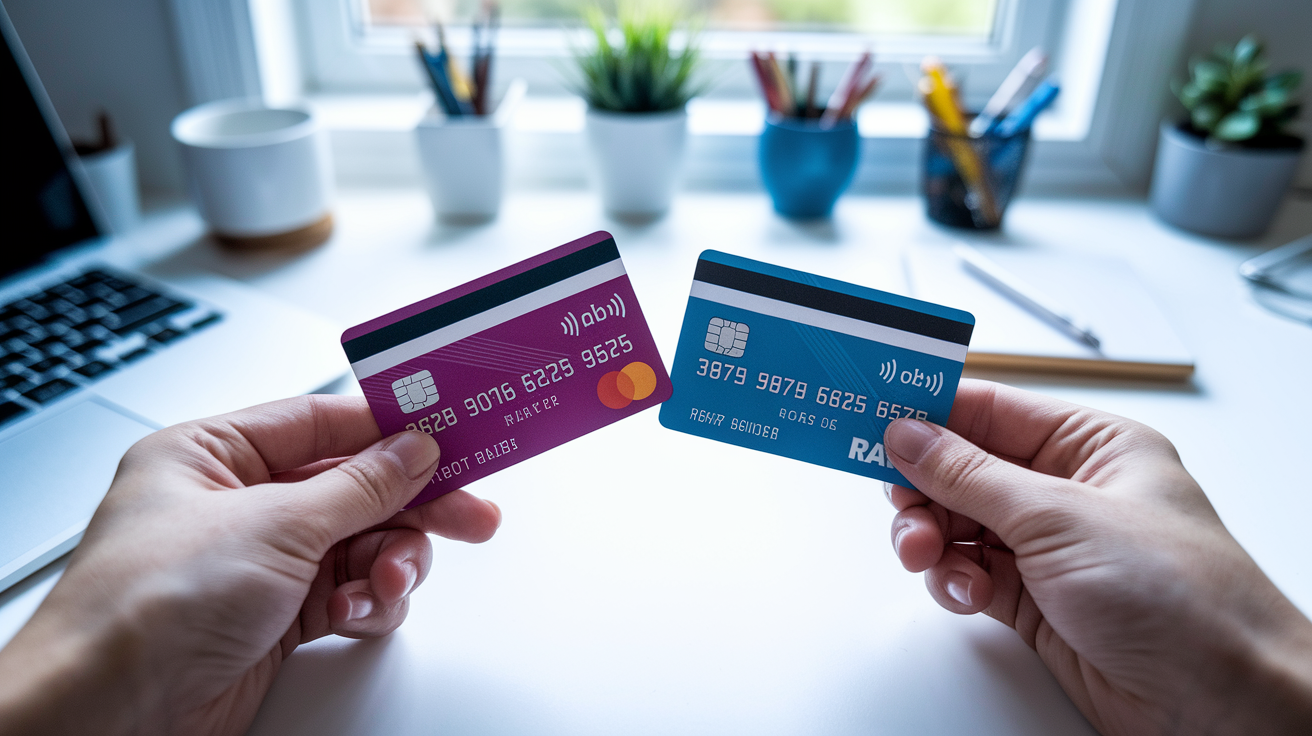

Think points always beat cash back?
They can — dramatically — but only when you redeem them the right way and accept more work, rules, and sometimes a hefty annual fee.
Cash back is simple and steady: 1 percent equals 1 cent per dollar, and flat-rate cards give predictable value.
Rewards points can be worth 1.5–7 cents each when transferred or used through portals, but that upside needs research and the right trips.
Which earns you more depends on your spending, willingness to manage redemptions, and whether you value simplicity over upside.
Key Differences in Rewards vs Cash Back Credit Cards Explained

Cash back is a type of rewards credit card. All cash back cards are rewards cards, but not all rewards cards offer cash back. That distinction matters when you’re comparing which card type will earn you more for the way you spend.
| Feature | Cash Back | Rewards Points/Miles |
|---|---|---|
| Rewards currency | Cash (statement credit, check, deposit) | Points or miles (transferable or co-branded) |
| Typical annual fee | Often $0, sometimes $95 after first year | $0 to $350+ depending on card tier |
| Redemption value per point | ~1 cent per point (fixed) | Variable, often 1–2+ cents via transfers |
| Redemption flexibility | High (simple statement credit or cash) | Moderate to high (portal, transfers, cash options) |
| Travel perks | Rare | Common (lounge access, credits, insurance) |
Cash back cards pay a percentage of every purchase back to you, typically as a statement credit or direct deposit. That percentage translates to a predictable dollar value. 1 percent cash back equals 1 cent per dollar you spend. Rewards points or miles work differently. You earn a certain number of points per dollar, and the value of those points depends on how you redeem them.
The main split? Simplicity versus upside. Cash back delivers straightforward, predictable value with minimal management. Rewards points and miles can exceed cash back’s value when you transfer them to airline or hotel partners or use issuer portal bonuses. But that requires more effort and sometimes higher annual fees.
How Cash Back Credit Cards Work and When They Make the Most Sense

Cash back credit cards return a portion of your purchases as cash. The percentage you earn is fixed at the time of purchase. Redemption is simple. Most issuers let you apply the cash back as a statement credit, deposit it to a bank account, or receive a check. One percent cash back on a $100 purchase equals $1 back, and that value doesn’t change based on how you redeem it.
Cash back cards come in several earning structures. The structure you choose should match how you spend:
Flat-rate cards pay the same percentage on every purchase, commonly 1.5 percent or 2 percent with no spending caps. Example: Citi Double Cash gives 2 percent overall, 1 percent when you buy and 1 percent when you pay the bill.
Category-bonus cards pay higher rates in specific categories like groceries, gas, or dining. Example: Blue Cash Preferred from American Express pays 6 percent cash back at U.S. supermarkets on up to $6,000 in purchases per calendar year, then 1 percent after that. 6 percent on select U.S. streaming services with no cap. 3 percent at U.S. gas stations and on transit, and 1 percent on everything else.
Rotating-category cards activate higher rates (often 5 percent) in categories that change each quarter, such as restaurants, grocery stores, or Amazon. Example: Chase Freedom Flex gives 5 percent cash back in rotating categories on up to $1,500 in combined purchases per quarter after you activate the category.
Tiered-bonus cards offer different rates across multiple fixed categories year-round. Example: a card might pay 3 percent on dining and 2 percent on groceries, with 1 percent on other purchases.
Sign-up bonus cards sometimes pay a one-time lump sum after you meet a minimum spend threshold in the first few months. Example: Capital One Quicksilver offers a one-time $200 bonus after you spend $500 in the first three months.
Flat-rate cards make the most sense for users who want predictable value with zero category tracking. Category-bonus and rotating-category cards reward higher spending in targeted areas but require you to pay attention to caps and quarterly activations. If your monthly grocery bill is high and stable, a card with a 6 percent supermarket rate up to $6,000 per year can deliver $360 in cash back from groceries alone before the cap kicks in.
Cash back works best when you value immediate liquidity, prefer simple redemption, or don’t travel enough to use points and miles effectively. Because cash back typically equals 1 cent per point and redemption is instant, you always know what you’re earning and what it’s worth.
How Rewards Points and Miles Work (and Why Value Can Exceed Cash Back)

Rewards credit cards that earn points or miles typically award one or more points per dollar spent. Unlike cash back, the value of those points isn’t fixed. How much they’re worth depends on how you redeem them. If you redeem for statement credits or cash, points often equal about 1 cent each, matching the value of 1 percent cash back. But when you use points for travel through an issuer’s portal or transfer them to airline and hotel partners, you can extract significantly higher value per point.
General-purpose travel cards let you transfer points to multiple airline and hotel loyalty programs. Those transfers can unlock redemptions that would cost thousands of dollars if you paid cash, but only tens of thousands of points if you book through a partner award chart. Example: 88,000 airline miles plus $59 in taxes for a one-way Lufthansa business class seat from Montreal to Munich that costs $6,428 in cash equals a value of roughly 7.2 cents per mile. Far above the 1 cent baseline of cash back.
Issuer portals also boost point value. Some cards let you redeem points through the issuer’s travel booking site at a multiplier. Chase Sapphire Preferred cardholders can redeem Ultimate Rewards points at 1.25 cents each (a 1.25X multiplier) when booking through Chase Travel. Chase Sapphire Reserve cardholders can redeem at 1.5 cents each (a 1.5X multiplier). If you hold 50,000 points and book a $500 flight through the portal at 1.25 cents per point, you’ll spend 40,000 points instead of 50,000. That leaves 10,000 points in your account.
Calculating Cents Per Point
To compare points to cash back, calculate cents per point using this formula: (cash price of the award minus taxes and fees you pay in cash) divided by number of points used = cents per point.
Example: A flight costs $250 in cash. You book it with 10,000 points and pay $50 in taxes and fees out of pocket. The calculation is ($250 minus $50) divided by 10,000 = $200 divided by 10,000 = 0.02, or 2.0 cents per point. That 2 cent value is double what you’d get from a 1 percent cash back card on the same purchase.
When points are worth 1.5 cents or more, they typically outperform flat-rate cash back cards. If you consistently redeem at 2 cents per point, a card earning 2 points per dollar effectively gives you 4 percent back. Double the return of a 2 percent cash back card. But if you redeem those same points for gift cards or statement credits at 1 cent each, you’re back to parity with cash back. And you may have paid a higher annual fee for no extra value.
Value Comparison: Rewards vs Cash Back Credit Cards Through Real Numbers

The clearest way to compare cash back and rewards is to run the same annual spending through both card types and calculate what you get back. Assume $24,000 in spending over a year. A flat-rate 2 percent cash back card returns $480 in cash (2 percent times $24,000). A travel rewards card earning 2 points per dollar gives you 48,000 points. If you redeem those points at 1 cent each, you get $480. Identical to the cash back card. If you redeem those points at 2 cents each through transfer partners or portal bonuses, you get $960. Double the cash back value.
Annual fees change the equation. If the travel card has a $95 annual fee and you redeem points at 2 cents each, your net value is $960 minus $95 = $865. The cash back card with no annual fee still delivers $480. The travel card wins by $385 in that scenario. But if you redeem the travel points at only 1 cent each, your net is $480 minus $95 = $385. The no-fee cash back card wins by $95.
| Scenario | Cash Back Value | Points/Miles Value | Notes |
|---|---|---|---|
| $24,000 annual spend, 2% cash back, no fee | $480 | — | Predictable, simple |
| $24,000 annual spend, 2X points (redeemed at 1¢ each), no fee | — | $480 | Parity with 2% cash back |
| $24,000 annual spend, 2X points (redeemed at 2¢ each), $95 fee | — | $960 − $95 = $865 | Higher upside if you use transfers |
| $24,000 annual spend, 2X points (redeemed at 1¢ each), $95 fee | — | $480 − $95 = $385 | Cash back wins by $95 |
Choosing the Better Card Type Based on Spending Habits and Goals

Your spending profile and willingness to manage redemptions determine which card type earns you more. Cash back works best when you want predictable value with minimal effort. Rewards points and miles deliver the most value when you can consistently redeem above 1.5 cents per point and you’re willing to research award charts, transfer partners, and portal bonuses.
If you rarely travel or prefer immediate liquidity, a flat-rate 2 percent cash back card is often the better choice. You get $2 back for every $100 you spend. You can apply that value as a statement credit or cash deposit right away. No redemption research required.
If you spend heavily in specific categories, category-bonus cash back cards can outperform flat-rate cards in those areas. Example: if you spend $500 per month on groceries ($6,000 per year), a card offering 6 percent cash back on supermarkets up to $6,000 annually returns $360 from groceries alone. Plus 1 percent on other purchases. A flat 2 percent card on the same $6,000 would return only $120.
For travelers who book flights and hotels multiple times per year and who will use transfer partners to get the most out of their points, rewards cards typically win. If you can redeem points at 2 cents each and you’re willing to pay a $95 to $350 annual fee for perks like lounge access, travel credits, and purchase protections, the higher redemption value usually offsets the fee and exceeds what you’d earn from cash back.
Here’s a quick breakdown by spender type:
Minimal travelers or simplicity seekers: Flat-rate 2% cash back card (Citi Double Cash or similar).
High grocery spenders (at least $6,000 per year): 6% supermarket cash back card (Blue Cash Preferred), watch the $6,000 annual cap.
Rotating-category users willing to activate quarterly: 5% rotating cash back card (Chase Freedom Flex), track the $1,500 quarterly cap.
Frequent diners and entertainment spenders: 3% or higher category cash back or travel card with dining multipliers.
Frequent travelers who optimize award bookings: Transferable-points travel card (Chase Sapphire Preferred, American Express Membership Rewards programs).
High-spend travelers seeking premium perks: Premium travel card with $350+ annual fee, lounge access, and travel credits (Chase Sapphire Reserve, Amex Platinum examples).
Users unsure or with mixed spending: Pair a no-fee 2% cash back card with a flexible travel rewards card to cover both simplicity and travel upside.
Comparing Annual Fees, Perks, and Redemption Ease Across Card Types

Cash back cards typically have low or no annual fees. Many flat-rate and category-bonus cash back cards charge $0 annually, though some premium cash back cards charge $95 after an introductory first year. Travel rewards cards range more widely. No-fee options exist, but many premium travel cards cost $95 to $350 or more per year. That fee usually buys access to perks and protections that cash back cards rarely offer.
Redemption ease favors cash back. Most cash back cards let you redeem for statement credits with one click, and the value is always the same. 1 percent equals 1 cent. Points and miles require more decisions: redeem through the issuer portal at a multiplied rate, transfer to a partner program for potentially higher value, or cash out at a lower fixed rate. The flexibility is powerful, but it takes research and planning to get the most out of it.
Common perks on travel rewards cards include:
Annual travel credits (example: $300 credit applied automatically to travel purchases).
Airport lounge access through Priority Pass or proprietary lounges.
Global Entry or TSA PreCheck fee credits (typically $100 every four to five years).
Primary rental car insurance (covers damage without requiring you to file with your personal auto insurance first).
Trip cancellation, delay, and baggage insurance.
No foreign transaction fees (standard on most travel cards, saving 3 percent on international purchases).
Cash back cards usually include basic purchase protections like extended warranties and return protection, but they rarely offer lounge access, travel insurance, or fee credits. If you don’t use those travel perks, paying $350 for them makes little sense. If you fly often, spend time in airports, and rent cars regularly, those perks can easily offset the annual fee.
When Annual Fees Are Worth Paying
An annual fee is worth paying when the perks, credits, and higher redemption value exceed the cost. Example: a $350 annual fee card that includes a $300 annual travel credit, Priority Pass lounge access (valued at $35 per visit if you use it three times per year = $105), and a Global Entry credit every four years (worth $25 per year when amortized) delivers roughly $430 in annual value. If you also redeem points at 2 cents each instead of 1 cent, the effective return on your spending can double compared to a no-fee cash back card. Run your own math: add up the perks you’ll actually use, subtract the fee, and compare the net value to what a no-fee cash back card would earn on the same spending. If the travel card wins by $100 or more, the fee is justified.
Tips for Getting More Value With Rewards or Cash Back Cards

Getting the most value starts with matching cards to your actual spending patterns and being realistic about how much effort you’ll put into redemptions. A card that earns 5 percent in rotating categories is only valuable if you activate the categories each quarter and spend enough in those categories to justify the effort. A travel card earning 3 points per dollar on dining is only better than 3 percent cash back if you redeem those points above 1 cent each.
Sign-up bonuses can deliver hundreds to over $1,000 in value in the first year. Example: a card offering 75,000 bonus points after $5,000 in spending within three months, with those points worth $750 to $1,500 depending on redemption method. If you’re planning a large purchase or can shift routine spending to a new card, timing a sign-up bonus to coincide with that spend gets you the bonus without forcing unnecessary purchases. Just make sure you can meet the minimum spend threshold, $500, $4,000, or $12,000 are common examples, without carrying a balance. Interest charges will erase any rewards value.
Combining cards is common and effective. Pair a no-fee 2 percent flat-rate cash back card for everyday purchases with a flexible travel rewards card for dining, travel, and transfer-partner redemptions. That combination gives you predictable cash back on most spending and higher upside on categories where travel cards shine. Without forcing you to track too many cards or categories.
Follow these steps to build your card strategy:
- Estimate your annual spending by category: groceries, dining, gas, travel, and everything else. Use bank statements or budgeting apps to get accurate totals.
- Calculate expected cash back or points for each card you’re considering: multiply your category spending by the card’s earning rate, accounting for any caps (example: 6% on the first $6,000 of groceries = $360 max, then 1% after that).
- Convert points to expected cash value: use conservative estimates (1 to 1.25 cents per point if you’ll redeem through portals, 1.5 to 2 cents if you’ll use transfer partners).
- Subtract annual fees from your expected rewards value to get net annual value for each card.
- Factor in sign-up bonuses for the first year, then recalculate net value for year two and beyond to see if the card still makes sense after the bonus.
- Review and adjust annually: if your spending patterns change or you stop using perks, switch to a no-fee card or downgrade to a lower-tier product to avoid paying fees for value you’re not using.
Frequently Asked Questions About Rewards vs Cash Back Credit Cards

Common questions about rewards versus cash back come down to how redemption works, what happens to unused rewards, and whether you can switch between the two.
Is cash back taxable? No. The IRS treats credit card rewards, including cash back, as rebates or discounts on purchases, not taxable income. As long as you don’t receive the rewards without making purchases (such as a sign-up bonus earned solely by opening an account with no spending requirement).
Can I convert cash back to points or points to cash? Some issuers let you convert between currencies, but the conversion rate is often worse than redeeming directly. Example: converting cash back to points for a transfer partner usually gives you fewer points than the cash back was worth. Check your issuer’s redemption options before converting.
Do points and miles expire? Depends on the program. Many transferable-points programs (like Chase Ultimate Rewards and Amex Membership Rewards) keep points active as long as your account is open and in good standing. Airline and hotel points often expire after 12 to 24 months of account inactivity. Cash back typically doesn’t expire as long as your account remains open.
Can I get better value redeeming cash back for gift cards? Sometimes. Some cash back programs offer a small bonus when you redeem for gift cards. Example: $25 in cash back redeems for a $27.50 gift card. Compare the gift card value to statement-credit value before redeeming to see if the bonus is worth it.
What’s a realistic cents-per-point value for travel rewards? Conservative baseline: 1 cent per point for statement credits or cash. Moderate: 1.25 to 1.5 cents per point when using issuer travel portals. Optimistic: 1.5 to 2+ cents per point when transferring to airline or hotel partners and booking award travel. Anything above 2 cents requires finding “sweet spot” redemptions and flexible travel dates.
Should I pay an annual fee for a cash back card? Only if the additional cash back you earn (or the perks you use) exceeds the fee. Example: a $95 annual fee card that earns 6% on groceries up to $6,000 per year returns $360 from groceries, versus $120 from a no-fee 2% card. A $240 difference. After the $95 fee, you net $145 more per year. If your grocery spending is lower, the math may not work.
Final Words
Compare cash back and rewards fast: cash back is simpler and predictable, while rewards points and miles can deliver higher value through transfer partners and travel perks.
This post explained cash back mechanics, how points can outpace cash back, side by side numbers, choosing by spending habits, fee vs perk tradeoffs, and tactics to maximize returns.
Use those steps to pick the right card for your goals. Knowing rewards vs cash back credit cards makes choosing easier, and more rewarding for your wallet.
FAQ
Q: Which credit card is better, cash back or rewards?
A: The better card depends on your goals: choose cash back for simple, predictable statement credits and usually no annual fee; choose rewards points/miles if you travel often and can extract extra value via transfers and perks.
Q: What is the 2 3 4 rule for credit cards?
A: The “2 3 4 rule” for credit cards isn’t a single standard; people use it differently—often to mean spacing applications, limiting hard pulls, or suggested account-age thresholds. Tell me which version you saw for a specific answer.
Q: What is better, 5x points or 5% cash back? Is 2X points the same as 2% cash back?
A: Whether 5x points or 5% cash back is better depends on each point’s redemption value; 2X points equals 2% only if a point is worth 1¢, while travel redemptions can make points worth more.