


Are you leaving hundreds of dollars on the table by using the wrong credit card for your everyday spending?
You don’t need a wallet full of cards to earn top cashback.
There are three simple card types—flat-rate (1.5–2% on everything), category (3–6% in groceries, dining, or streaming), and rotating 5% quarterly cards—and each wins in different wallets.
This guide ranks the seven leading cashback cards for 2026, shows the break-even math (like when a $95 fee makes sense), and tells you whether to pick one set-and-forget card or a small combo to squeeze the most cash back.
Top-Ranked Cashback Cards Overview for Immediate Comparison
The cashback credit card market in 2026 breaks down three ways: flat-rate cards that pay the same on everything, category cards that push earnings higher in specific spending areas, and rotating quarterly cards that change their bonus categories every few months. Flat-rate cards deliver 1.5% to 2% on every purchase. You don’t think about it. Category cards hit 3% to 6% in places like groceries or streaming, usually with annual spending caps. Rotating cards offer 5% in changing quarterly categories but you’ve got to activate each period or you lose the bonus.
Most households earn a few hundred to a few thousand dollars annually in cashback. It depends on how much you spend and whether you bother optimizing. A simple 2% flat-rate card on $25,000 annual spending returns $500. Add a 6% supermarket card for $6,000 in grocery spending and you get another $360, minus any annual fee. The best approach depends on whether you want one card that works everywhere or a small collection tailored to where your money actually goes.
The comparison below shows seven leading cards. Annual fees only appear when bonus category rates justify the cost at typical household spending levels. Cards earning 5% in rotating categories cap bonus spending at $1,500 per quarter, which equals $500 monthly, then drop to 1% after that.
| Card | Base Rate | Bonus Categories | Annual Fee | Best For |
|---|---|---|---|---|
| Wells Fargo Active Cash | 2% | None (uncapped flat-rate) | $0 | Set-and-forget simplicity |
| Blue Cash Preferred (Amex) | 1% | 6% supermarkets + streaming (capped $6,000/year each), 3% gas + transit | $0 first year, then $95 | High grocery and streaming spenders |
| Discover it Cash Back | 1% | 5% rotating quarterly categories ($1,500 cap/quarter), first-year cashback match | $0 | Active category trackers who activate each quarter |
| Chase Freedom Flex | 1% | 5% rotating quarterly ($1,500 cap), 3% dining + drugstores, 5% Chase travel | $0 | Rotating users who also dine out regularly |
| Capital One Savor Cash Rewards | 1% | 3% dining + entertainment + streaming + groceries, 8% Capital One Entertainment | $0 | Restaurant and entertainment regulars |
| Prime Visa | 1% | 5% Amazon + Whole Foods, 2% restaurants + gas + transit | $0 (requires Prime membership) | Amazon loyalists with existing Prime |
| Citi Double Cash | 2% total (1% purchase + 1% payment) | None | $0 | Simple earners who pay balances monthly |
Deep Dive Into Flat-Rate Cash Back Cards
Flat-rate cards earn the same percentage on every purchase. Groceries, gas, streaming, hardware stores, all of it. The Wells Fargo Active Cash Card pays 2% on everything with no cap, no categories to track, and no quarterly activation. The Citi Double Cash Card also delivers 2%, but it’s structured as 1% when you buy and 1% when you pay the bill. That split matters if you carry a balance, since the second 1% only shows up after payment. The Synchrony Premier World Mastercard automatically applies 2% as a statement credit within two billing periods, removing any redemption step.
Capital One Quicksilver earns a lower 1.5% flat rate but adds 5% on hotels, vacation rentals, and car rentals booked through Capital One Travel. That bonus works if you travel occasionally but don’t want a dedicated travel card.
Flat-rate cards compete on pure simplicity. One rate, all purchases, no mental overhead. The trade shows up when you compare rates: a 2% card on $1,000 grocery spending earns $20, while a 6% category card on the same spending earns $60. That $40 gap grows with volume.
Flat-rate cards don’t have spending caps. You earn the same rate on $100 or $100,000. There’s no category tracking, no merchant coding issues, no bonus activation. Predictable value on every transaction. They work equally well for diverse spending when there’s no single dominant category. Lower mental overhead and simpler portfolio management too.
High-Value Category Bonuses in Cashback Cards

Category cards concentrate higher earning rates on specific spending areas where households typically spend hundreds or thousands annually. The Blue Cash Preferred Card from American Express offers 6% cashback at U.S. supermarkets on up to $6,000 annually (then drops to 1%), plus 6% on select U.S. streaming subscriptions and 3% at U.S. gas stations and on transit. That $6,000 supermarket cap yields $360 in cashback before the annual fee. The card charges $95 annually after a $0 introductory first year, so break-even occurs around $1,583 in annual supermarket spending compared to a flat 2% card.
The Blue Cash Everyday Card from American Express delivers 3% at U.S. supermarkets, U.S. gas stations, and U.S. online retail purchases, each capped at $6,000 annually per category, with no annual fee. Three separate $6,000 caps mean a household could earn bonus rates on $18,000 total spending across those three areas. Capital One Savor Cash Rewards earns 3% at grocery stores (excluding Walmart and Target), restaurants, entertainment, and on streaming services, plus 8% on Capital One Entertainment purchases. No annual fee and no spending caps on the 3% categories make it strong for dining-heavy households.
Grocery
Blue Cash Preferred leads grocery earning at 6% but requires $1,583 annual supermarket spending to justify the $95 fee versus a 2% flat-rate card. Below that threshold, Blue Cash Everyday at 3% with no fee or Capital One Savor at 3% (excluding Walmart and Target) deliver better value. The $6,000 annual cap on Amex cards equals $500 monthly grocery spending. Realistic for families but high for individuals.
Bank of America Customized Cash Rewards offers 3% in a choice category including grocery stores, with a $2,500 quarterly cap across all bonus categories combined. Preferred Rewards members get up to 75% more, pushing the effective rate to 5.25%.
Dining
Capital One Savor pays 3% on all dining with no cap and no annual fee. Chase Freedom Unlimited earns 3% at restaurants as a permanent bonus category alongside 1.5% everywhere else. Chase Freedom Flex also provides 3% on dining year-round, on top of its 5% rotating quarterly categories.
For households spending $400 monthly on restaurants (that’s $4,800 annually), the Savor card delivers $144 in cashback. A 2% flat-rate card on the same spending returns $96. That’s a $48 annual difference without factoring in the Savor’s additional 3% on groceries, streaming, and entertainment.
Gas
Blue Cash Preferred earns 3% at U.S. gas stations with no separate cap (it falls under the overall card limits). Blue Cash Everyday also pays 3% on gas within its $6,000 annual category cap. Customized Cash Rewards from Bank of America allows gas as a monthly choice category at 3% (or higher with Preferred Rewards). The Prime Visa offers 2% at gas stations when combined with its 5% Amazon and Whole Foods rate.
At $200 monthly gas spending ($2,400 annually), a 3% card earns $72 versus $48 on a 2% card. That’s a $24 gain that doesn’t justify an annual fee on its own but adds value when stacked with other bonus categories.
Rotating Category and Quarterly Bonus Cashback Programs

Rotating category cards shift their 5% bonus areas every three months, typically across merchant types like Amazon, wholesale clubs, grocery stores, gas stations, restaurants, or PayPal purchases. Both Discover it Cash Back and Chase Freedom Flex operate this model. Each quarter brings new categories, and you’ve got to activate the bonus online or through the mobile app before the quarter starts. Miss activation and you earn only the 1% base rate for that period. The $1,500 quarterly spending cap on 5% earnings equals $500 per month, or about $16.67 daily.
Discover it Cash Back adds a first-year benefit: the issuer matches all cashback earned in the first 12 months. If you earn $300 in year one, Discover adds another $300 at the end of the year, effectively doubling your return. Chase Freedom Flex layers permanent 3% rates on dining and drugstores on top of the rotating 5% categories, plus 5% on travel purchased through Chase. That combination makes it stronger for dining-focused households even in quarters when restaurants aren’t the featured 5% category.
Here’s how to squeeze more value out of rotating category cards.
Set quarterly activation reminders. Categories reset January 1, April 1, July 1, and October 1. Activate within the first week of each quarter or you forfeit the 5% rate for three months.
Track the $1,500 cap closely. Once you hit $1,500 in combined spending across all 5% categories in a quarter, additional purchases earn only 1%. Plan high-ticket purchases in that category early in the quarter if you’ll exceed the cap.
Match categories to natural spending. A household that rarely uses Amazon won’t benefit from an Amazon quarter. Look at historical quarterly categories (they often repeat year-over-year) and confirm at least two quarters align with your regular spending.
Stack with merchant offers when possible. Retailers sometimes run their own promotions during quarters when they’re featured 5% categories. Combining a 5% card quarter with a 10% off sale yields more total savings.
Use non-category spending elsewhere. Rotating cards typically pay only 1% outside bonus categories. Keep a 2% flat-rate card for everything that doesn’t match the current quarter’s 5% focus.
Customizable Cashback Categories and Choose-Your-Own Cards
Choose-your-own cards let you pick which spending category earns the highest rate, either monthly or quarterly. Bank of America Customized Cash Rewards offers 3% in one of six eligible categories: gas stations, online shopping, dining, travel, drugstores, or home improvement and furnishings. You can change your choice category monthly, adapting to shifting spending patterns. The card also earns 2% at grocery stores and wholesale clubs, with a combined $2,500 quarterly cap across all bonus categories. Preferred Rewards members receive a 25% to 75% bonus on all cashback, pushing the effective 3% rate to 3.75% or 5.25%.
TD Cash Credit Card allows selection of two categories, one earning 3% and one earning 2%, switchable every quarter. Categories include grocery, gas, dining, travel, streaming, home improvement, and more. That flexibility works when spending concentrates in two areas but shifts seasonally. A household might choose grocery and gas in winter, then switch to travel and dining in summer.
Who benefits most from customizable cards?
Households with seasonal spending shifts do well here. Higher utility bills in winter, more travel in summer. Switch categories to match where money flows each period.
People testing new spending habits can adapt as they go. Trying meal kits instead of dining out? Change the category from restaurants to online shopping or grocery to see where the spending actually lands.
Couples or families pooling spending often have different patterns. One partner handles most grocery shopping while the other covers gas and transit. Choose-your-own cards let you dial in for whoever uses the card most.
Users who want category flexibility without tracking quarterly calendars appreciate the control. Unlike rotating cards with issuer-chosen categories, you control the selection and timing.
Understanding Cashback Redemption Value and Options

Cashback typically converts to real money through statement credits, direct deposits to a linked bank account, or paper checks mailed to your address. Statement credits subtract rewards from your card balance. If you have a $400 balance and redeem $50 cashback, your new balance is $350. Direct deposit moves the cash into checking or savings, usually processed within a few business days. Paper checks take longer, often one to two weeks from redemption request to delivery.
Some issuers automatically apply cashback as a statement credit after a set period. The Synchrony Premier World Mastercard applies 2% cashback automatically within two billing periods. You don’t redeem manually. Apple Card credits rewards daily to your Apple Cash balance, available for spending through Apple Pay, bank transfer, or to pay down the card balance. Most programs set minimum redemption thresholds, commonly $20 to $25, meaning you’ve got to accumulate that amount before cashing out.
Point-based systems assign a value to each point, typically $0.01 per point for cashback redemption. A card earning “2 points per dollar” that values points at one cent each equals 2% cashback. Some issuers let you redeem points for gift cards or travel, occasionally at higher or lower values than the standard cash rate. Citi ThankYou points from the Double Cash Card can transfer to airline partners for potentially higher value, though the base cashback redemption remains $0.01 per point. Chase Ultimate Rewards points from Freedom cards can transfer to travel partners or pool with premium cards like Sapphire Preferred for better travel redemption, but the direct cashback value stays at one cent per point.
| Redemption Type | Typical Value | Notes |
|---|---|---|
| Statement credit | $0.01 per point or 1:1 cash value | Reduces current balance, processes within one billing cycle |
| Direct deposit | $0.01 per point or 1:1 cash value | Transfers to linked bank account in 3-5 business days |
| Paper check | $0.01 per point or 1:1 cash value | Mailed within 7-14 days, can be lost or delayed |
| Gift cards | Variable, sometimes bonuses or discounts | Occasionally offers $25 gift card for $20 in cashback; locks value to one merchant |
| Amazon checkout or PayPal | $0.01 per point | Applied at purchase; convenient but limits flexibility |
Annual Fees, APR, and Break-Even Math for Cashback Cards
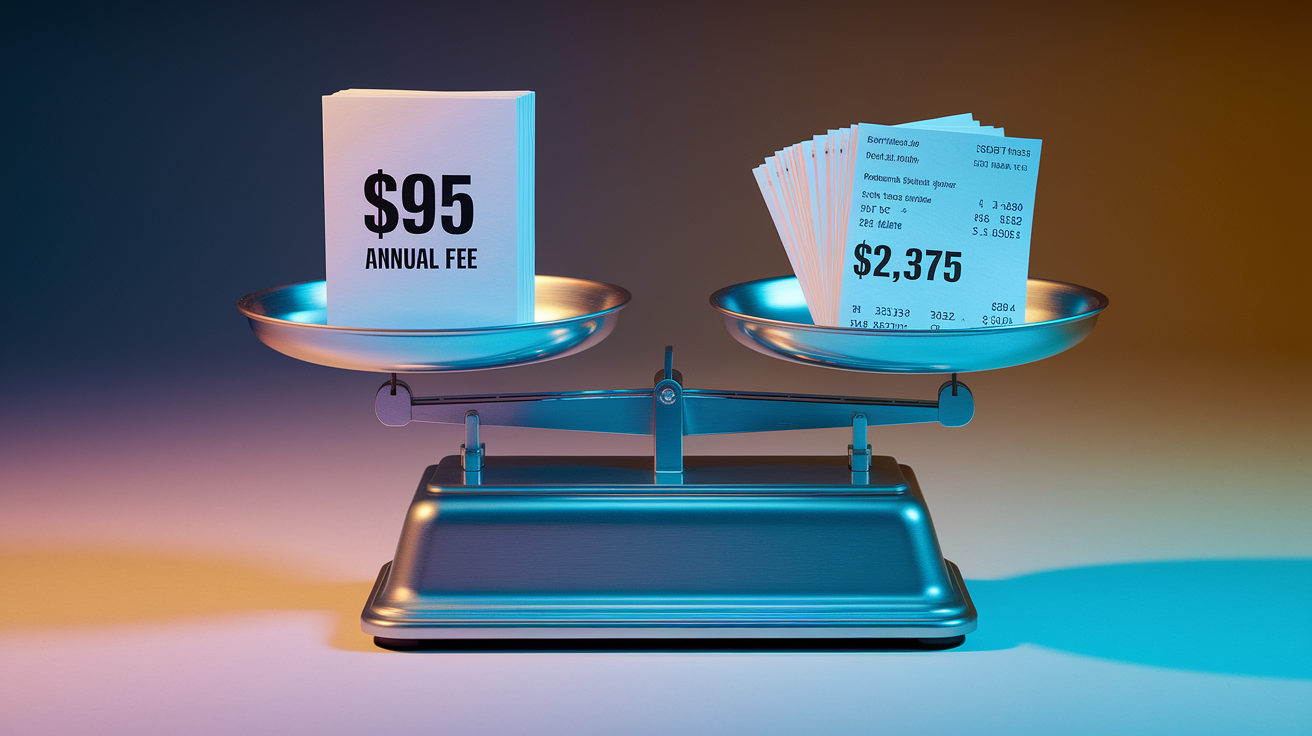
Blue Cash Preferred from American Express charges $0 the first year, then $95 annually. At 6% on supermarkets versus 2% on a no-fee card, you gain 4 percentage points of extra earning. To justify the $95 fee, you need $2,375 in annual supermarket spending ($95 ÷ 0.04 = $2,375). Below that threshold, a no-fee card delivers better net value. Adding the card’s 6% streaming rate and 3% gas rate lowers the break-even point if you use those categories heavily, but the supermarket cap at $6,000 annually limits maximum bonus earning.
Most cashback cards range from 17% to 28% variable APR depending on creditworthiness. Interest charges on carried balances erase rewards fast. A $2,000 balance at 24% APR costs roughly $40 monthly in interest if you make only minimum payments. Even a 5% cashback card earning $100 on $2,000 spending loses money once you pay $40 in interest, and that’s just one month. The math only works when you pay balances in full every billing cycle.
Here’s how to calculate effective cashback value after fees.
Identify your annual spending in each bonus category. Pull three to six months of transaction history and annualize it. If you spent $1,800 on groceries in six months, estimate $3,600 annually.
Multiply category spending by the card’s bonus rate. $3,600 groceries × 6% = $216 in cashback from that category alone.
Add up all category bonuses and subtract the annual fee. If groceries earn $216, streaming earns $72, and gas earns $60, total cashback is $348. Subtract the $95 fee to get $253 net cashback.
Compare to a no-fee flat-rate card at 2%. $3,600 + $1,200 + $2,000 = $6,800 total spending across those categories. At 2%, a flat-rate card earns $136. The annual-fee card nets $253, a $117 advantage. If you carry any balance and pay interest, recalculate including those costs. They likely eliminate the gain.
Best Cashback Cards for Specific Lifestyles and Spending Profiles

Families with high grocery spending benefit most from Blue Cash Preferred if annual supermarket purchases exceed $2,375, or Blue Cash Everyday if spending is lower but still concentrated at grocery stores. The 6% and 3% rates target the largest household budget line for many families. Adding Capital One Savor for dining and entertainment captures another major family expense: restaurants, movie tickets, streaming subscriptions, all at 3% with no annual fee. That two-card setup covers groceries, dining, gas, and streaming, leaving a 2% flat-rate card for everything else.
Frequent Amazon shoppers gain immediate value from the Prime Visa, which earns 5% on Amazon.com and Whole Foods purchases plus 2% at restaurants, gas stations, and on transit. If you already pay for Amazon Prime ($139 annually as of 2026), the card has no additional annual fee. A household spending $3,000 annually on Amazon earns $150 cashback at 5% versus $60 on a 2% card. That’s a $90 gain that offsets most of the Prime membership cost. The 10% rotating selection bonuses on certain Amazon products increase value further but require checking which items qualify before purchase.
Urban commuters using public transit, ride-sharing, or frequent gas fill-ups should consider cards with transit and gas bonuses. Blue Cash Preferred offers 3% on transit, while Prime Visa pays 2% on transit and gas combined with its Amazon bonus. Chase Freedom Unlimited earns 3% at drugstores, useful for commuters picking up essentials near transit stations. The Kroger Rewards World Elite Mastercard pays 5% on mobile wallet purchases (Apple Pay, Google Pay) with an annual spending cap, which works well for tap-to-pay commuters in cities with extensive contactless payment infrastructure.
Casual travelers who book a few trips yearly can use Capital One Quicksilver’s 5% rate on hotels and car rentals booked through Capital One Travel, combined with 1.5% on everything else. Chase Freedom Unlimited pays 5% on travel purchased through Chase’s portal. Neither card requires an annual fee, and both avoid the complexity of transferable points or airline partnerships. For travelers who prefer cashback simplicity over trying to squeeze maximum cents-per-point in airline programs, these cards deliver straightforward value on a few annual trips without requiring deep knowledge of transfer partners.
Here are card pairings by lifestyle.
High-grocery families: Blue Cash Preferred (groceries, streaming) + Savor (dining, entertainment) + Wells Fargo Active Cash (everything else)
Amazon loyalists: Prime Visa (Amazon, Whole Foods, gas, dining) + Discover it or Freedom Flex (rotating categories when not overlapping with Prime Visa)
Urban commuters: Blue Cash Preferred (transit, gas, supermarkets) + Freedom Unlimited (drugstores, dining)
Dining-focused households: Savor (dining, streaming, groceries) + Wells Fargo Active Cash (non-bonus spending)
Frequent road-trippers: Blue Cash Everyday (gas) + Quicksilver (rental cars, hotels) + flat-rate for lodging and food outside bonus categories
Optimization enthusiasts: Rotating card (Freedom Flex or Discover it) + category cards (Preferred for groceries, Savor for dining) + flat-rate base card, tracking spending monthly to align purchases with highest-rate card
Credit Requirements, Approval Odds, and Application Steps

Most top-tier cashback cards require good to excellent credit, typically FICO scores of 670 or higher, with the best approval odds above 720. Cards offering 5% to 6% bonus categories, substantial welcome bonuses, or introductory 0% APR periods usually target applicants with strong credit histories and low debt-to-income ratios. Some flat-rate cards and entry-level cashback options approve applicants with fair credit (scores in the 580 to 669 range), though rates and credit limits tend to be lower.
Welcome bonuses often require meeting a minimum spending threshold within the first three months. Common targets range from $500 to $3,000. A card offering $200 cashback after spending $1,000 in three months delivers value only if you’d naturally spend that amount without forcing purchases. Buying items you don’t need or accelerating purchases just to hit the bonus threshold costs more than the bonus is worth. The safest approach: apply for cards with welcome bonuses only when you have planned large purchases (appliances, travel, home repairs) that align with the spending requirement and timeline.
Here’s the application process.
Choose the card that matches your top spending categories and credit profile. Review your last three months of spending by category. If groceries dominate, pick a grocery-focused card. If no single category stands out, choose a 2% flat-rate card. Check the issuer’s stated credit requirements or use pre-qualification tools (soft pull, no impact on score) to estimate approval odds.
Apply online through the issuer’s secure website. Provide your legal name, Social Security number, date of birth, home address, employment status, employer name, annual income, and monthly housing payment. The issuer will conduct a hard credit inquiry, which can lower your score by a few points temporarily. Applying for multiple cards in a short period compounds the impact, so space applications at least three to six months apart unless you’re consolidating for a specific strategy.
Use the card responsibly and meet any welcome bonus thresholds without incurring debt. Set up autopay for at least the minimum payment to avoid late fees. Track spending toward the bonus requirement but don’t carry a balance. Interest charges negate the bonus value. Activate any required features like rotating quarterly categories within the first week of issuance.
Maximizing Earnings Across Multiple Cashback Cards
Starting with one 2% flat-rate card creates a reliable base for all spending. That card handles purchases that don’t fall into any bonus category on other cards you might add later. Once you’re comfortable managing one card (paying on time, tracking spending, redeeming rewards), add a second card targeting your highest spending category. If you spend $500 monthly on groceries, a 6% or 3% grocery card earns $30 to $18 per month versus $10 on the 2% card. That $8 to $20 monthly gain ($96 to $240 annually) justifies the minor increase in complexity.
Rotating category cards require quarterly activation and category tracking. Set calendar reminders for January 1, April 1, July 1, and October 1 to activate each quarter’s categories. Check which categories appear before activating. If a quarter features categories you rarely use, the rotating card becomes a 1% card for that period. In those quarters, default to your 2% flat-rate card for general spending and use category-specific cards for groceries, dining, or gas.
Merchant category codes determine whether a purchase qualifies for bonus rates. A grocery store classified as a supermarket earns the grocery bonus, but a Walmart or Target Supercenter often codes as a general merchandise retailer, earning only base rates on many grocery-focused cards. Capital One Savor explicitly excludes Walmart and Target from its 3% grocery rate for this reason. Check issuer terms or test small purchases to confirm coding for your most-visited merchants.
Here are optimization strategies from simple to advanced.
Simple: One 2% flat-rate card for everything. Redeem cashback annually or when balance exceeds $100. Total cards in wallet: 1.
Moderate: 2% flat-rate card + one category bonus card matching your top spending area (groceries, dining, Amazon). Track which card to use for each purchase type. Total cards: 2.
Active: Flat-rate + two category cards + one rotating card. Activate rotating categories quarterly, use category cards for targeted spending, default to flat-rate for everything else. Total cards: 4.
Enthusiast: Flat-rate + three to five category cards + rotating card + merchant-specific cards (Amazon, Kroger). Track monthly spending by category to dial in card usage. Set up calendar alerts for activations and annual cap resets. Total cards: 6 to 8.
Maximizer: Full portfolio of 10+ cards covering every major spending category, rotating bonuses, and merchant-specific programs. Use spreadsheets or apps to track optimal card per transaction, quarterly caps, annual limits, and fee break-even points. Regularly audit and replace underperforming cards. Total cards: 10+.
Common Cashback Card Mistakes and How to Avoid Them
Missing quarterly activation on rotating category cards costs 4 percentage points per purchase, earning 1% instead of 5%. That’s $40 lost on $1,000 spending in a featured category. Set recurring calendar reminders for the first day of each quarter and activate within the first week. Some issuers send email or app notifications, but relying solely on those reminders risks missing the window if notifications go to spam or you’re traveling without reliable email access.
Exceeding category spending caps without realizing it drops your earning rate mid-month. The Discover it Cash Back and Chase Freedom Flex cap 5% earnings at $1,500 per quarter. Once you hit that limit ($500 monthly equivalent), the card earns only 1%. If you continue using it thinking you’re still earning 5%, you’re losing 4% on every dollar over the cap. Track spending in bonus categories weekly if you’re close to caps, and switch to your flat-rate card once you exceed limits.
Here are frequent pitfalls to avoid.
Carrying a balance to “maximize rewards” doesn’t work. Interest at 20%+ APR erases any cashback earned. A $1,000 balance at 22% APR costs about $18 monthly in interest. Even 5% cashback on $1,000 spending earns only $50 once, while interest charges repeat monthly and compound.
Ignoring annual fee break-even math costs you money. Annual fee cards require minimum spending in bonus categories to justify the fee. Calculate your actual annual spending in each category before applying, not aspirational spending. If you realistically spend $1,500 on groceries annually, a card requiring $2,375 to break even loses money.
Assuming all grocery stores code as supermarkets leads to surprises. Walmart, Target, and wholesale clubs often code as general merchandise. Smaller local grocers, Kroger, Safeway, Publix, and similar chains typically code as supermarkets. When in doubt, make a small test purchase and check how it appears on your statement or in the mobile app.
Redeeming cashback for gift cards assuming higher value rarely pays off. Some programs advertise “up to 10% more value” on gift card redemptions, but this usually applies only to specific merchants or limited-time promotions. Direct cash redemption (statement credit or bank deposit) offers guaranteed value and flexibility. A $100 gift card to a store you rarely visit delivers less real value than $100 in cash.
Final Words
Compare flat-rate, category, rotating, and customizable cards to match your spending. This roundup uses the 2026 snapshot of 14 cards—from 2% flat-rate staples to 5% rotating categories and high-value grocery options—to show the trade-offs fast.
Start with one simple 2% card, add a category or rotating card only if you’ll track caps and activations, and run quick break-even math on any annual fee. Don’t carry a balance.
Use this guide to narrow the best cashback rewards credit cards for your habits and start earning more with less hassle.
FAQ
Q: What is the best credit card for rewards and cash back?
A: The best credit card for rewards and cash back is context-dependent: Active Cash (2% uncapped) for simplicity, Prime Visa (5% at Amazon/Whole Foods) for Prime shoppers, and Blue Cash Preferred (6% groceries/streaming, caps) for families.
Q: What credit cards offer 5% cash back?
A: Cards offering 5% cash back include rotating-category cards like Discover it and Chase Freedom Flex (5% on eligible categories, $1,500 quarterly cap) and the Amazon Prime Visa (5% at Amazon and Whole Foods for Prime members).
Q: Is there a credit card that gives 10% cashback?
A: A credit card that gives 10% cashback as a standard rate doesn’t exist; occasional limited-time merchant promotions or card-linked offers can boost returns to about 10% for specific purchases.
Q: Which credit card pays the best cashback?
A: The credit card that pays the best cashback depends on your spending mix: flat 2% cards like Active Cash win for general spend, while category cards (6% grocery, 5% rotating) beat them in targeted categories.