


Want to earn real cash back without a yearly fee eating into your gains?
You can, if you pick the right no-annual-fee card and use it well.
This post compares top no-annual-fee cash rewards cards — 2% flat options like Citi Double Cash, rotating 5% cards like Chase and Discover, and category-heavy picks for groceries and gas.
I’ll show which card wins for different spending patterns, where signup bonuses move the needle, and the simple math to tell if a card truly boosts your pocket after fees and interest.
Top No-Annual-Fee Cash Rewards Card Picks for Immediate Comparison
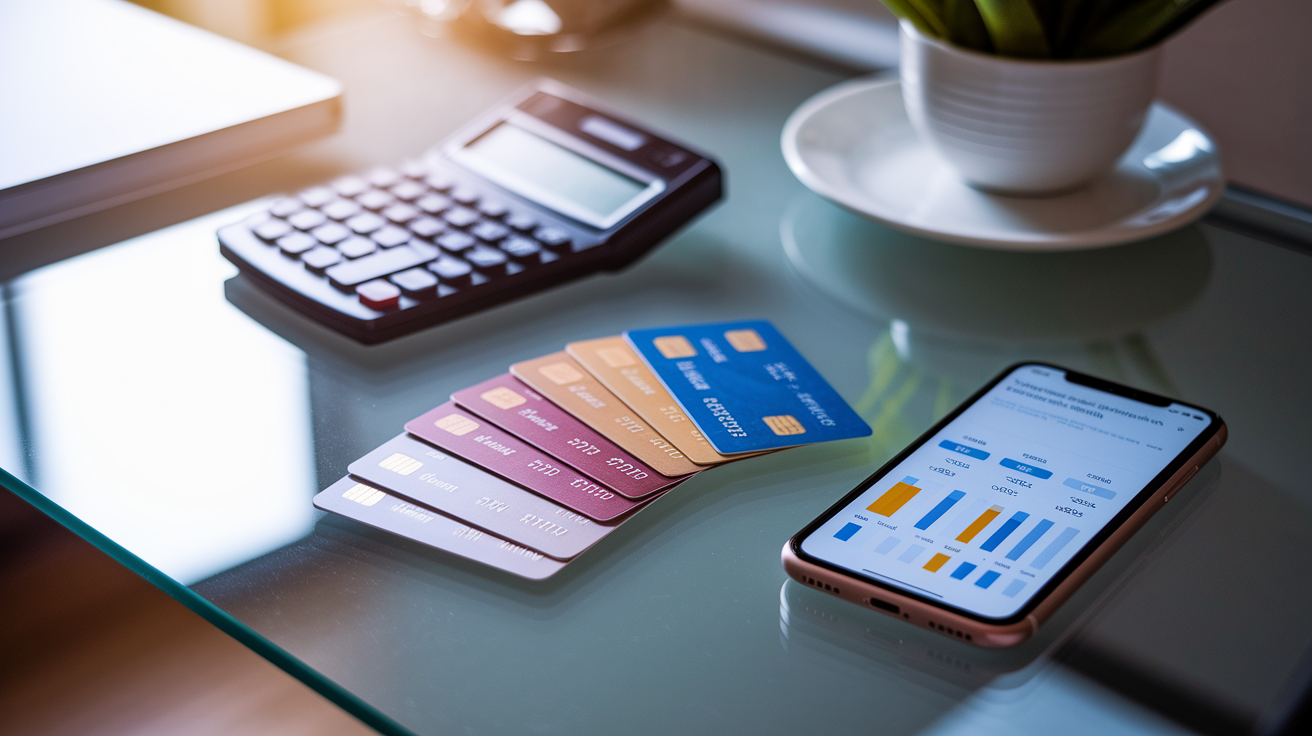
The best no-annual-fee cash rewards cards give you value without forcing you to wonder if your rewards actually beat a $95 subscription. The Citi Double Cash Card keeps things simple: 2% on everything (1% when you buy, 1% when you pay). The Chase Freedom Flex rotates up to 5% in quarterly categories, plus 3% on dining and drugstores all year. If you shop groceries regularly, the Blue Cash Everyday Card from American Express pays 3% at U.S. supermarkets on up to $6,000 per year, then 1% after that.
Sign-up bonuses matter too. The Capital One Quicksilver usually includes a cash bonus after you spend around $500 in three months. The Discover it Cash Back matches all the cash back you’ve earned at the end of your first year, which doubles your rewards for 12 months. These cards work whether you’re rebuilding credit or sitting above 700, and every dollar you earn stays with you instead of paying down a fee.
| Card Name | Cash-Back Rate(s) | Welcome Bonus | Redemption Options | Typical Credit Score Range |
|---|---|---|---|---|
| Citi Double Cash | 2% flat (1% buy, 1% pay) | None | Statement credit, direct deposit | Good to Excellent (670+) |
| Chase Freedom Flex | 5% rotating, 3% dining/drugstores, 1% other | $200 after $500 spend in 3 months | Statement credit, direct deposit, Amazon, PayPal | Good to Excellent (670+) |
| Discover it Cash Back | 5% rotating, 1% other; first-year match | First-year cashback match | Statement credit, direct deposit, Amazon, charity | Good to Excellent (670+) |
| Capital One Quicksilver | 1.5% flat | $200 after $500 spend in 3 months | Statement credit, direct deposit, Amazon | Good to Excellent (670+) |
| Blue Cash Everyday (Amex) | 3% U.S. supermarkets (up to $6k/yr), 2% gas/select dept. stores, 1% other | $200 after $2,000 spend in 6 months | Statement credit, direct deposit, gift cards | Good to Excellent (670+) |
| Bank of America Customized Cash | 3% in choice category (up to $2,500/qtr), 2% grocery/wholesale, 1% other | $200 after $1,000 spend in 90 days | Statement credit, direct deposit | Good to Excellent (670+) |
Understanding No-Annual-Fee Cash Back Card Structures and Rewards Potential

Flat-rate cards earn the same percentage on every purchase. Category cards pay higher rates in specific buckets like groceries, gas, or dining. Rotating-category cards cycle through 5% bonus buckets every quarter. A 2% flat-rate card gives you $240 back on $12,000 of annual spending. A rotating 5% card earns $250 on the first $5,000 in activated categories, then 1% everywhere else. If you max the bonus and spend $12,000 total, you earn $320. The difference shows up when you actually use the categories.
Category cards take more attention but usually deliver better annualized returns. Spend $400 a month on groceries? A 3% grocery card earns $144 per year just in that category. A 2% flat card would give you $96 on the same spend. The gap gets bigger if you also capture 3% on gas and dining. The tradeoff is simplicity. Flat-rate cards need zero mental effort, while category cards make you check which stores code correctly and whether you’ve hit the cap.
Flat-Rate vs Category-Based Rewards Comparison
Flat-rate cards suit people who want autopilot rewards. You don’t track merchant codes or remember to activate quarterly categories. Category cards reward intentional spending. If you consistently spend in high-reward buckets, you’ll come out ahead. The Citi Double Cash at 2% beats a 1% everything card without question. A 5% rotating card beats both, but only in the active categories and only if you remember to opt in.
Caps and limits change the math. The Blue Cash Everyday from American Express pays 3% on U.S. supermarkets up to $6,000 per year, then drops to 1%. If you spend $8,000 on groceries, you earn $180 on the first $6,000 and $20 on the final $2,000. Total: $200. A 2% flat card would’ve paid $160 on all $8,000. The category card still wins, but the margin shrinks after you cross the threshold. Rotating 5% cards often cap bonus earnings at $1,500 per quarter in activated categories. That’s $75 maximum per quarter, $300 per year if you max every quarter and activate on time.
Cash Rewards Categories: Groceries, Gas, Dining, Streaming, and Everyday Needs Without Fees

The highest cash-back percentages cluster around everyday recurring spend. Groceries, gas stations, restaurants, and streaming subscriptions. Most bonus categories pay 3% to 5%, compared to the 1% to 2% baseline on general purchases. A household spending $500 per month on groceries earns $180 per year at 3%, or $60 more than a 1% card. Gas spending follows the same pattern. $200 monthly at the pump becomes $72 annual cash back at 3%, versus $24 at 1%.
Dining rewards range from 3% year-round on cards like the Chase Freedom Flex to 5% during rotating quarters on the Discover it Cash Back. If you average $300 per month eating out, a 3% card returns $108 per year in that category alone. Streaming and subscription services sometimes fall into broader “digital entertainment” or “select streaming” buckets, typically earning 2% to 3%. A $50 monthly streaming and software bill delivers $18 back annually at 3%. Small individually, but meaningful when stacked with other bonus categories.
Common high-value bonus categories:
- U.S. supermarkets (3% to 6%, often capped at $6,000 per year)
- Gas stations (3% to 5%, sometimes capped quarterly)
- Restaurants and dining (3% to 5%, usually uncapped or high-ceiling)
- Drugstores (3% year-round on select cards)
- Streaming services and online entertainment (2% to 3%, varies by issuer)
Sign-Up Bonuses and Intro Offers on Cash Rewards No-Fee Cards

Welcome bonuses on no-annual-fee cards usually require you to spend a minimum amount within the first three months. The Capital One Quicksilver and Chase Freedom Flex both offer $200 cash back after $500 in purchases during that window. The Bank of America Customized Cash Rewards card asks for $1,000 spend in 90 days for the same $200 bonus. If you’re planning a larger purchase or shifting regular bills to the new card, hitting the threshold costs nothing extra.
The Discover it Cash Back takes a different path. It matches all the cash back you earn in your first year. If you collect $350 in rewards over 12 months, Discover adds another $350 at the end of year one. That doubles your rate to 10% in rotating categories and 2% on everything else. This structure rewards higher spenders and makes quarterly category activation critical during the match period. Some cards pair a cash bonus with a 0% intro APR on purchases or balance transfers for 12 to 15 months, letting you carry a balance interest-free while earning rewards. But only if you pay off the balance before the promo ends.
| Bonus Type | Typical Minimum Spend | Timeframe |
|---|---|---|
| Flat cash bonus | $500–$2,000 | 3–6 months |
| First-year rewards match | No minimum, based on earned rewards | 12 months |
| Combined bonus + 0% APR | $500–$1,500 | 3 months (bonus), 12–15 months (APR) |
APR, Fees, and Costs That Can Reduce Cash Back

Most no-annual-fee cash rewards cards carry APRs between 18% and 29%, depending on your credit profile. Carry a $2,000 balance at 24% APR for a full year? You’ll pay roughly $480 in interest. That’s far more than the $40 you’d earn back at 2% on that $2,000 of spending. The moment you carry a balance, interest charges erase rewards and then some. Intro 0% APR offers delay that math for 12 to 18 months, but only if you clear the balance before the promotional period ends.
Foreign transaction fees usually run 3% of each purchase made outside the U.S. or in a foreign currency. Spend $1,000 abroad and a 3% foreign transaction fee costs $30, which offsets the rewards you’d earn on that same spending. Cards like the Capital One Quicksilver and Discover it Cash Back charge no foreign transaction fees, preserving your rewards on international purchases. Balance transfer fees typically sit at 3% to 5% of the transferred amount. Moving a $5,000 balance at 3% costs $150 upfront. Important to factor when calculating net savings from a 0% balance transfer offer.
Common fees that reduce net cash back:
- APR (purchase): 18% to 29%, erases all rewards if you carry a balance
- Foreign transaction fees: 3% per international purchase on most cards (some charge $0)
- Balance transfer fees: 3% to 5% of transferred amount
- Late payment fees: $30 to $40, plus potential penalty APR increase to 29.99%
Eligibility, Credit Score Expectations, and Approval Odds for No-Annual-Fee Cash Back Cards

The strongest no-annual-fee cash rewards cards (Citi Double Cash, Chase Freedom Flex, Discover it Cash Back, and Blue Cash Everyday) generally require a FICO score of 670 or higher. That places you in the “good” to “excellent” range. Approval odds improve significantly above 700. Issuers look at more than your score. Recent credit inquiries, current debt-to-income ratio, payment history, and whether you already hold cards from the same bank all influence the decision.
Prequalification tools let you check approval likelihood without a hard inquiry. Capital One, Discover, and American Express all offer prequalification pages that run a soft pull on your credit. They show which cards you’re likely to be approved for and estimated credit limits. If you’re rebuilding credit or have a thin file, starting with a card from your existing bank or a secured card can strengthen your profile before applying for premium cash-back offers.
Four steps to improve approval odds before applying:
- Check your credit report for errors and dispute inaccuracies that could lower your score.
- Pay down existing balances to reduce credit utilization below 30%, ideally below 10%.
- Avoid opening multiple new accounts in a short window. Space applications at least three months apart.
- Use issuer prequalification tools to identify which cards you’re most likely to be approved for before submitting a formal application.
Maximizing Rewards with No-Fee Cash Back Cards

Rotating-category cards require quarterly activation. Both Chase Freedom Flex and Discover it Cash Back publish bonus categories three months in advance, but you must log in and click “activate” before the quarter starts. Miss the activation and you earn the base 1% rate instead of 5%. Set a calendar reminder for the last week of each quarter so the next period’s categories go live the moment they’re available.
Stacking rewards multiplies value. If an online retailer runs a 10% cashback promotion through a shopping portal like Rakuten or Chase Offers, and you pay with a 5% rotating-category card during a quarter when online shopping is active, you collect 15% total. A $200 purchase earns $10 from the card and $20 from the portal. That’s $30 back. Pair category bonuses with manufacturer rebates, store sales, and credit card shopping portals whenever possible. The percentages add, not multiply, but the combined savings can reach 20% or more.
Practical tactics to increase real-world cash back:
- Activate rotating categories on the first day of each quarter
- Check which merchant category codes trigger bonuses (grocery delivery sometimes codes as “online shopping,” not “groceries”)
- Load gift cards at grocery stores or gas stations during 5% quarters to earn bonus rates on future purchases
- Use shopping portals for online purchases and stack with card bonuses
- Pay recurring bills (internet, phone, streaming) with category cards when those services match active bonus buckets
- Monitor annual caps. Once you hit $6,000 at a supermarket on a 3% card, switch to a 2% flat-rate card for the rest of the year
If you spend $12,000 annually and capture $3,000 in 5% rotating categories, $3,000 in 3% fixed categories (dining, gas), and $6,000 at the 1% base rate, your total rewards equal $150 + $90 + $60 = $300. A flat 2% card on the same $12,000 would return $240. The category approach earns $60 more per year, a 25% lift, assuming you activate and stay within caps.
Redemption: Statement Credits, Deposits, Gift Cards, and More
Statement credits reduce your card balance directly. Most issuers let you apply cash back as a statement credit in increments as small as $1, though some require a $25 minimum. The credit appears on your next billing cycle and lowers what you owe. Functionally the same as cash if you’re carrying a balance or want to offset a recent purchase.
Direct deposit moves cash back into your checking or savings account. Capital One, Discover, and Citi all support bank transfers, usually within one to two business days of requesting redemption. Minimum transfer amounts range from $0.01 to $25 depending on the issuer. This option makes rewards liquid immediately and works well if you want to route cash back into savings or use it for expenses outside your credit card.
Gift cards and other redemption paths sometimes offer bonuses. Discover occasionally runs promotions where redeeming for select retailers gives you 5% to 10% extra value. $25 in cash back becomes a $27.50 gift card. American Express Membership Rewards (when linked to Blue Cash Everyday) can be redeemed for statement credits, gift cards, or charitable donations, though the cash-back version of the card doesn’t tie into the transferable points program. Charity redemptions usually match dollar-for-dollar with no bonus or penalty.
Long-Term Value: When No-Fee Cash Rewards Cards Outperform Annual-Fee Cards

A $95 annual fee card needs to deliver at least $95 more in rewards each year than a comparable no-fee card just to break even. If a premium card pays 3% on travel and dining with a $95 fee, and you spend $4,000 in those categories annually, you earn $120 in rewards. That’s $25 net after the fee. A no-fee card paying 3% on dining returns $60 on $2,000 of restaurant spending with zero fee, leaving you $60 ahead. The fee card wins only if your bonus-category spending is high enough to cover the annual cost and still pull ahead.
Moderate spenders (those charging $12,000 to $18,000 per year) often see better net returns with no-annual-fee cards. A flat 2% card on $15,000 in spending returns $300 with no fee. A premium card offering 4x points on dining and travel might deliver $450 in value if you spend heavily in those categories and redeem points for maximum value. But after a $95 fee, your net is $355. Only $55 more for significantly more complexity. If your spending is spread across many categories or you value simplicity, the no-fee card wins.
When no-fee cards outperform premium cards:
- Total annual spending is under $20,000 and spread across multiple categories with no single dominant bucket.
- You want guaranteed cash value instead of navigating point-redemption rules, transfer partners, or blackout dates.
- You’re comparing a 2% flat-rate no-fee card to a 1.5-point-per-dollar fee card where points redeem at 1 cent each. The no-fee card delivers higher effective return without the annual cost.
Final Words
Compare the top no‑annual‑fee cash cards side-by-side and pick the one that matches where you spend most; the table gives a fast starting point.
Understand reward structures—flat, tiered, rotating—and check caps so you know realistic earnings. Weigh welcome bonuses against required spend and watch APRs and fees that can wipe out rewards.
Prequalify when possible. Activate rotating categories, stack offers, and redeem smartly to raise your net return.
Compare your shortlist of cash rewards credit cards no annual fee options before applying. You’ll be earning value without extra cost.
FAQ
Q: What credit card has the best rewards with no annual fee?
A: The credit card with the best rewards and no annual fee depends on your spending: flat-rate 1.5–2% cards suit broad spenders, while rotating 5% cards beat them for targeted categories; match to your habits and credit score.
Q: What is the best cash rewards credit card?
A: The best cash rewards card depends on your spending mix: choose a 1.5–2% flat-rate card for simplicity or a category/rotating 3%–5% card if your spending fits those bonus categories.
Q: What is the $750 welcome bonus credit card?
A: The $750 welcome bonus card gives $750 in cash, statement credit, or travel value after you meet a minimum spending requirement within a set period (commonly 3 months); always compare the spend threshold and terms.
Q: What is the 15-3 rule?
A: The 15-3 rule is not a universal industry rule; it can mean different things in specific programs or issuer policies—ask which program they mean and read that card’s terms to see how it applies.