


Do you want to catch identity thieves after they strike or stop them before they can open accounts?
Credit monitoring watches your files and alerts you when something changes.
A credit freeze locks most lenders out so new accounts usually can’t be opened.
If your goal is to block new-account fraud, a freeze usually protects better.
If you want early detection, dark-web checks, and recovery help, monitoring adds value.
For many people a freeze is the stronger single defense; for higher-risk situations, use a freeze plus monitoring.
Core Comparison of Credit Monitoring and Credit Freezes for Identity Protection

Credit monitoring watches your credit files at one or more of the three major bureaus (Equifax, Experian, TransUnion) and pings you when something changes. You’ll get alerts within minutes to a couple days after a new account pops up, someone pulls your credit, your address shifts, your score moves, or a public record gets filed. Some monitoring is free through your bank or credit card. Paid versions run $10 to $30 a month and throw in dark web scans, Social Security number tracking, and identity theft insurance that can cover anywhere from $25,000 to a million dollars.
A credit freeze blocks most creditors from seeing your report, which shuts down most new account openings before they happen. You place freezes separately with all three bureaus and get a PIN or passcode to turn each one on and off. Freezes don’t stop fraud on accounts you already have. They won’t block landlord checks, preapproved card offers, debt collectors, or your current lenders. And they don’t keep out employers (with your permission), child support agencies, or government agencies with court orders.
Monitoring tells you fraud happened. A freeze stops it from happening in the first place. If you rarely open new credit and want strong protection you can set and forget, freeze your files. If you need alerts and apply for credit often, go with monitoring. High risk folks (like identity theft survivors) should use both. The freeze blocks new accounts while monitoring catches everything else.
| Feature | Credit Monitoring | Credit Freeze |
|---|---|---|
| Protection Type | Detection and alerts after changes occur | Prevention by blocking lender access |
| Effect on New Credit Applications | None—alerts you but doesn’t interfere | Blocks most new account openings until you lift freeze |
| Cost | Free (limited) or $10–$30/month (paid) | Free to place, lift, and remove |
| Bureau Coverage | Depends on service (1 or all 3 bureaus) | Must be placed separately with all 3 bureaus |
How Credit Monitoring Works and What It Tracks

Credit monitoring services plug into your files at one or more bureaus and scan for activity. When something triggers an alert, you get an email, text, or app notification. Most services are fast. You’ll see alerts within minutes to a few hours, though some take up to 48 hours. You check the alert, decide if it’s real, and act if it’s not. Spot a fraudulent account? Contact the creditor to dispute it, file a fraud report with the bureaus, and consider freezing your credit to stop more damage.
Monitoring can’t prevent an account from opening. It just tells you it happened. Paid monitoring adds features beyond basic file surveillance. Premium plans usually include dark web monitoring (scans of underground sites where stolen data gets sold), Social Security number tracking (alerts when your SSN shows up in applications or transactions), identity theft insurance, and access to fraud resolution specialists who walk you through recovery. Insurance limits on paid plans typically sit between $25,000 and a million bucks, depending on the plan.
You’ll see alerts for things like:
- New account opened in your name
- Hard inquiry (someone applied for credit)
- Social Security number used in an application or transaction
- Address or phone number change on file
- Public records added (bankruptcy, tax lien, civil judgment)
- Your credentials spotted on the dark web (email, SSN, card numbers)
How a Credit Freeze Works and Who It Protects

A credit freeze keeps most creditors from pulling your report. When you apply for new credit, the lender usually requests your file to check your risk. If it’s frozen, they can’t see it and will probably deny you. To open legitimate new credit, you need to lift or remove the freeze using your PIN or login. Lifting online or by phone takes up to an hour. Mail requests take up to three business days.
Freezes don’t block everyone. Current lenders can still review your accounts. Landlords can run tenant screenings. Debt collectors can view your report. Card issuers can prescreen you for offers. Employers can run background checks if you’ve given the OK. Child support agencies and government agencies with court orders also get through.
A freeze stays put until you lift it. You can thaw it temporarily by setting a date range (one day, one week, whatever) or by granting access to a specific creditor. You can also remove it permanently if you don’t want it anymore. Freezes are free to place, lift, and remove at all three bureaus. That’s been federal law since 2018.
To freeze your files with each bureau:
- Contact Equifax, Experian, and TransUnion separately through their online portals, by phone, or by mail.
- Give them your full name, date of birth, Social Security number, and two years of addresses, plus ID proof like a driver’s license or utility bill.
- Get confirmation and a PIN or passcode for each freeze. Store these somewhere secure, like a password manager.
- Check activation timing. Online and phone requests activate within one business day (often instantly). Mail takes up to three business days.
- Keep your confirmation numbers and timestamps on file.
Nuanced Decision-Making: When Each Tool Makes More Sense

Monitoring works best when you need visibility without hassle. If you’re shopping for a mortgage, auto loan, or credit card soon, monitoring gives you early warnings without the friction of lifting a freeze over and over. Monitoring also catches stuff freezes don’t, like someone using your Social Security number for a job, medical fraud, or tax refund theft. If you value early detection and don’t mind paying for extras like restoration help, a paid plan might fit.
A freeze works best when you want prevention and aren’t planning to apply for new credit anytime soon. Freezes are free, crazy effective at blocking new account fraud, and don’t need much upkeep. If you’ve been hit by identity theft, a freeze stops fraudsters from opening more accounts while you clean up the mess. If you’re older or have a kid whose Social Security number is at risk, freezing the file gives strong protection at zero cost.
| Scenario | Best Choice | Why |
|---|---|---|
| Actively shopping for a mortgage or auto loan | Credit monitoring | Avoids hassle of lifting freezes for each lender; alerts catch misuse |
| Recent data breach exposed your SSN | Credit freeze + monitoring | Freeze blocks new accounts; monitoring detects other misuse |
| High-risk occupation or public profile | Credit freeze + paid monitoring | Maximum protection; restoration services speed recovery |
| Low credit activity, not planning new accounts | Credit freeze | Free, strong protection; little need to lift freeze |
| Frequent credit applicants or job seekers | Credit monitoring | No interference with applications; alerts give peace of mind |
| Tight budget, cost-sensitive | Credit freeze + free monitoring from bank/card | Zero cost; freeze does heavy lifting; basic alerts catch changes |
Pros and Cons of Using Credit Monitoring
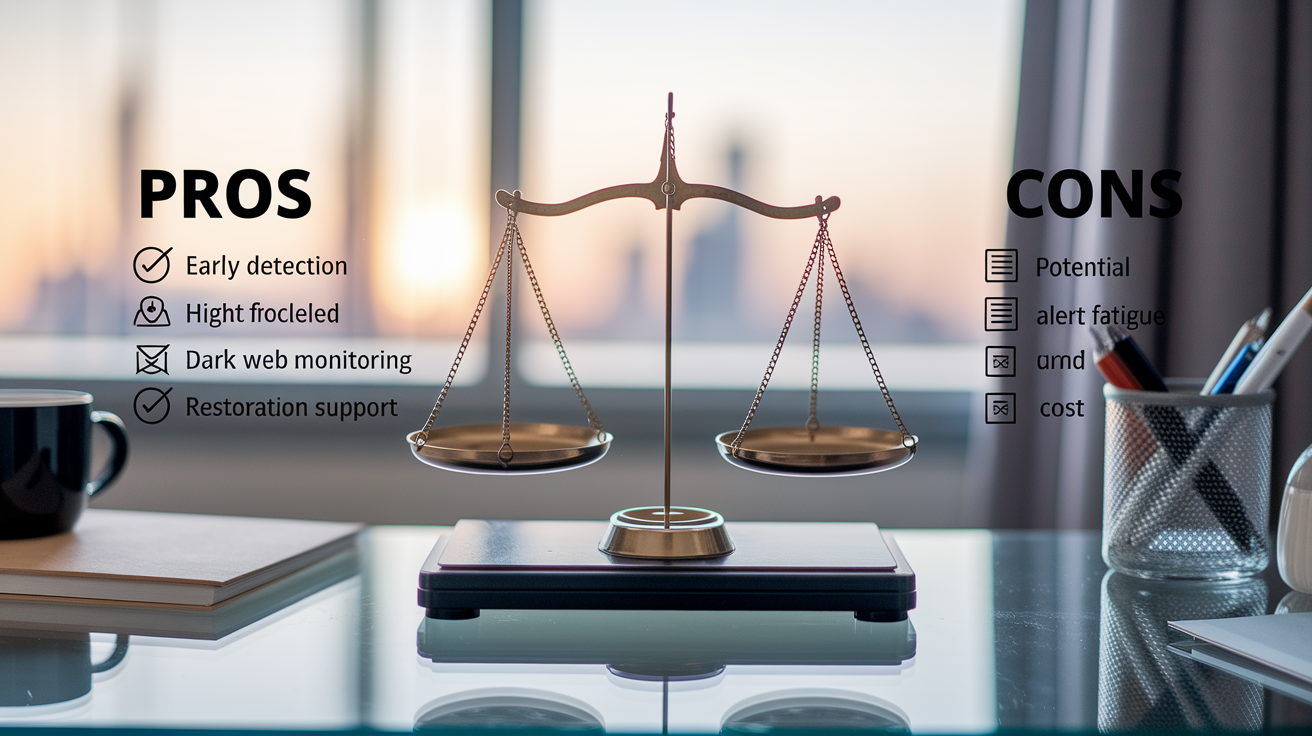
Credit monitoring gives you real-time or near-real-time visibility into changes on your reports and, with paid plans, broader identity activity. It works alongside other protections and doesn’t mess with your ability to apply for credit, rent an apartment, or switch providers.
Pros:
- Early detection of new accounts, inquiries, and report changes within minutes to 48 hours
- Paid plans often throw in dark web monitoring, SSN tracking, identity theft insurance, and restoration support
- Zero impact on your ability to apply for credit or pass background checks
- Catches non-credit identity misuse like employment fraud or tax refund theft
Cons:
- Can’t prevent a fraudulent account from opening; only tells you after it’s done
- Paid services cost $10 to $30 a month, which adds up to $120 to $360 a year
- Free monitoring usually covers just one bureau or offers limited alert types
- Can produce false positives or alert fatigue, especially if you’ve got a lot of legitimate credit activity
Pros and Cons of Using a Credit Freeze

Credit freezes give you the strongest single defense against new credit identity theft because most lenders need your file before they’ll approve an account. Freezes are free, backed by federal law, and stay active until you lift them.
Pros:
- Prevents most new account fraud by blocking lender access to your reports
- Free to place, lift, and remove at all three bureaus since 2018
- No expiration; stays active until you choose to lift or remove it
Cons:
- Adds friction when you apply for legit new credit; you’ve got to lift the freeze first (takes up to an hour online, longer by mail)
- Doesn’t stop fraud on existing accounts or prevent account takeovers
- Doesn’t block landlords, employers, prescreening offers, debt collectors, or government agencies
- You need to take separate actions at each of the three bureaus to get full protection
Costs: Free vs Paid Identity Protection Options
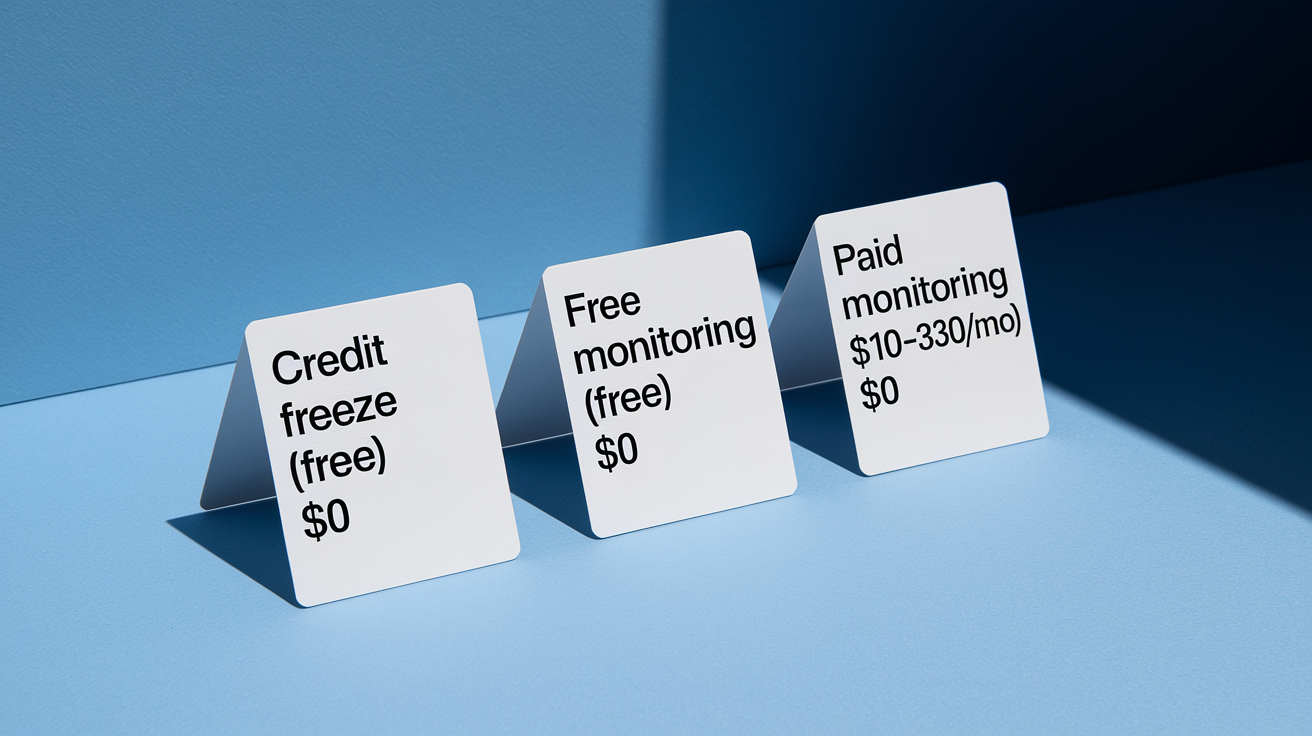
Credit freezes have been free to place, lift, and remove since 2018. You don’t pay anything to protect your files at Equifax, Experian, and TransUnion. Free monitoring comes from lots of banks, credit card issuers, and limited bureau offerings, but these usually cover only one bureau or give you basic alerts for new accounts and inquiries.
Paid monitoring runs from about $10 a month for single-bureau coverage with basic alerts to $30 or more for three-bureau monitoring, dark web scans, Social Security number tracking, and identity theft insurance. Premium bundles often include fraud resolution with dedicated case managers and insurance coverage from $25,000 to a million. Annual costs for paid monitoring typically hit $120 to $360, though family or enterprise plans can go higher.
| Option | Cost | What You Get |
|---|---|---|
| Credit Freeze | $0 | Strongest new account fraud prevention; must be placed at all 3 bureaus |
| Free Monitoring | $0 | Basic alerts (often 1 bureau); limited features; no insurance |
| Paid Monitoring | $10–$30/month ($120–$360/year) | Three-bureau alerts, dark web scans, SSN monitoring, insurance, restoration support |
Step-by-Step: Setting Up Credit Monitoring
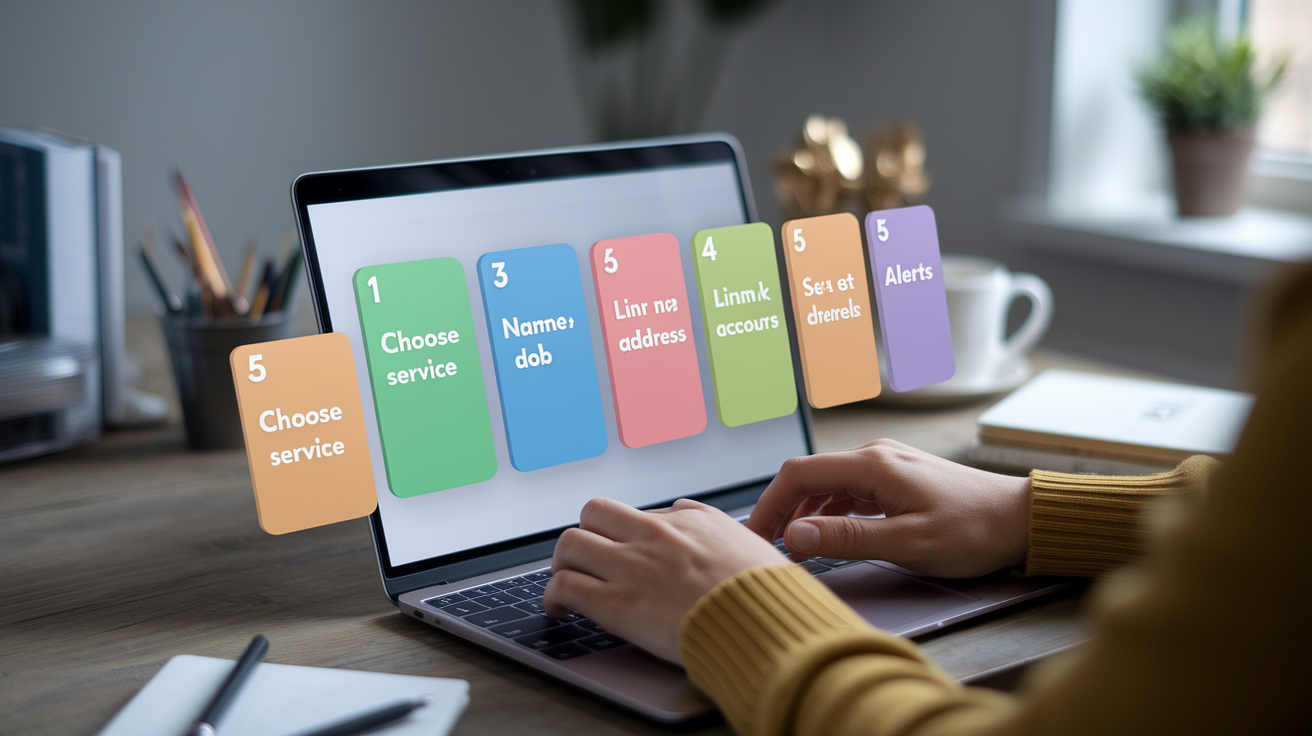
Setting up credit monitoring is pretty straightforward. You pick a service, hand over your info, set your alert preferences, and jump on it when you get notified. Paid services usually need more detailed setup to link accounts and turn on extras like dark web monitoring or Social Security number tracking.
- Pick a monitoring service: free alerts from your bank or card, a bureau service, or a paid identity protection subscription.
- Provide your name, date of birth, Social Security number, and current address. Some services ask you to link credit accounts or upload a copy of your ID.
- Set up how you want to get alerts: email, text, or app push notifications. Turn on all available channels so you don’t miss time-sensitive alerts.
- Review alert categories and flip on notifications for new accounts, hard inquiries, Social Security number use, address changes, public records, and dark web findings (if the service offers it).
- Respond fast to alerts. If it’s legit activity, note it and move on. If it’s fraud, contact the creditor to dispute the account, notify the credit bureaus, and think about placing a fraud alert or freeze.
Step-by-Step: Placing, Lifting, and Removing a Credit Freeze
Placing a freeze means contacting each of the three major bureaus separately. Online and phone requests are fastest. Activation usually happens within one business day and often immediately. Mail requests take up to three business days. Each bureau gives you a PIN, passcode, or online login that you use to manage the freeze.
When you need to apply for new credit, you temporarily lift or permanently remove the freeze. Lifting online or by phone gets done within one hour. Mail requests take up to three business days. You can set a specific date range for the thaw (like lifting the freeze for three days while you shop for an auto loan) or authorize access for a single creditor if the bureau lets you. Store your confirmation numbers and timestamps somewhere secure in case you need them later.
Lifting a Freeze Quickly
Temporary lifts work great when you know your application timeline. Log in to each bureau’s freeze portal, enter your PIN or credentials, and pick a start and end date for the thaw. The freeze kicks back in automatically when the window closes. If you’re applying with one creditor and the bureau allows creditor-specific lifts, you can give the creditor’s name to grant access without opening your file to everyone. Both methods take up to an hour to process online or by phone.
You’ll need this info to place a freeze:
- Full legal name
- Two years of addresses (current and previous)
- Social Security number
- Date of birth
- Copy of government ID or proof of address (driver’s license, utility bill, bank statement)
When to Use Monitoring, a Freeze, or Both

If you’re an identity theft victim or your Social Security number got exposed in a data breach, place freezes with all three bureaus right now and sign up for comprehensive monitoring that includes identity theft restoration. The freeze blocks new accounts while you work to clean up the fraudulent activity, and monitoring catches any attempts to misuse your identity in ways freezes don’t cover, like employment fraud or tax refund theft.
Kids and minors should have their credit files frozen if they’ve got Social Security numbers. Fraudsters target minors because the fraud can hide for years. Parents can freeze a child’s credit at each bureau by providing the child’s info and proof of guardianship. Seniors who don’t plan to apply for new credit benefit from freezes because they cut the risk of new account fraud without adding real friction to daily life.
Frequent credit applicants, job seekers, and renters might find freezes too annoying. If you’re shopping for a mortgage, auto loan, or apartment, or if you switch cellphone or internet providers a lot, monitoring gives you peace of mind without needing to lift and replace freezes repeatedly. In these cases, think about pairing free or low-cost monitoring with strong password habits and regular credit report reviews.
Your best approach depends on who you are:
- Identity theft victims: Freeze all three bureaus and get paid monitoring with restoration support. Keep detailed records of fraud reports and disputes.
- Parents of minors: Freeze children’s credit files at all three bureaus. Use monitoring for your own accounts to catch misuse early.
- Seniors with low credit activity: Place freezes and keep basic free alerts from your bank or card. Review reports once a year.
- Frequent credit applicants: Use monitoring instead of freezes. If you prefer a freeze, use temporary lifts or look at a credit lock product for faster toggling (just know that locks might cost money and aren’t federally regulated like freezes).
Protection Beyond Credit Files: Preventing Fraud Not Covered by Freezes
Credit freezes are crazy good at blocking new credit fraud, but they don’t stop all types of identity theft. Freezes won’t prevent account takeovers on your existing credit cards, bank accounts, or investment accounts. If a fraudster grabs your online banking credentials, they can move money, change your contact info, or lock you out of your account whether your credit is frozen or not.
Freezes also won’t stop non-credit identity crimes. Someone can use your Social Security number to file a fake tax return, collect unemployment in your name, or get a job. Medical identity theft, where a fraudster uses your insurance to get treatment, is another risk freezes don’t touch. Paid monitoring that includes Social Security number tracking and dark web scans offers broader protection by alerting you when your info shows up in these situations.
To protect against fraud freezes don’t cover:
- Use strong, unique passwords for all financial accounts and turn on two-factor authentication wherever you can.
- Watch your bank and investment accounts for unauthorized transactions. Set up alerts for large withdrawals or transfers.
- Review your Social Security earnings statement once a year to catch unauthorized employment use of your SSN. File your tax return early to cut the risk of refund fraud.
Annual Review Checklist for Ongoing Credit Protection
Even if you’ve placed freezes or set up monitoring, review your protections at least once a year to make sure they’re still active and working. Check that your PINs and passcodes are stored securely, that your monitoring alerts are still going to the right email or phone, and that your credit reports stay accurate.
Annual review checklist:
- Verify freezes are still active at all three bureaus. Log in to each portal or call to confirm status.
- Review stored PINs and passcodes. Update your password manager or secure storage if credentials changed.
- Pull your free annual credit reports from AnnualCreditReport.com and review them for errors, unfamiliar accounts, or signs of fraud.
- Confirm monitoring alerts are still getting delivered. Update your contact info if you changed email addresses or phone numbers.
- Check the status of any fraud alerts you placed. Standard one-year alerts expire and need renewal (extended alerts last seven years for identity theft victims).
- Reassess your protection strategy. If your situation changed (new job, recent breach, planning a major credit application), adjust how you’re using freezes and monitoring.
Final Words
Choose the protection that fits your risk: a credit freeze blocks most new‑account fraud, while credit monitoring sends fast alerts and helps with recovery.
This post explained both tools, how monitoring alerts and freezes work, the costs, step‑by‑step setup, pros and cons, and practical scenarios for when to freeze, monitor, or use both.
For many people, combining both is safest; for light users, monitoring may be enough. The credit monitoring vs credit freeze decision is reversible, so pick the option that lowers your risk today and adjust as needed.
FAQ
Q: Is there a downside to credit monitoring, and what is the downside to freezing your credit?
A: The downside to credit monitoring is it detects but doesn’t stop new-account fraud, can cost $10–$30/month, and produces false positives. The downside to a freeze is it can delay legitimate credit and needs PINs to lift.
Q: Can someone use my SSN if my credit is frozen?
A: Someone can still use your SSN even if your credit is frozen, but a freeze blocks most lenders from opening new credit tied to your reports; it doesn’t stop account takeovers or non-credit ID misuse.
Q: What is the biggest killer of credit scores?
A: The biggest killer of credit scores is late or missed payments, because payment history drives most scoring models; even one 30-day late payment can lower your score noticeably.