

Relying on a single free app to protect your credit is a risky bet.
Many apps just show a score; the best ones act like an alarm—watching all three bureaus, sending instant alerts, and helping you recover if someone steals your identity.
We ranked the top credit score monitoring apps by bureau coverage, alert speed, security, clear pricing, and identity-restoration support.
This guide shows which apps work for casual tracking, which are worth paying for, and what to check before you subscribe.
Best Credit Monitoring Apps (Ranked)

Credit monitoring apps break into two groups: free tools that track your score and send basic alerts, and paid services that watch multiple bureaus, include identity theft insurance, and help you fix fraud. Most apps pull from Experian, TransUnion, or Equifax and update your score monthly or weekly. A few refresh daily and push alerts the minute something changes on your report.
We ranked apps by bureau coverage, alert speed, identity features, clear pricing, security, app store ratings, and whether they’re still getting updates. The best apps watch all three bureaus, alert you within minutes when something changes, encrypt with AES-256 or stronger, and offer two-factor login. Paid plans usually add $500,000 to $5 million in identity theft insurance, fraud help lines that run 24/7, and dark web scans for your Social Security number and email.
Your budget and what you need most drive the list. Free apps work if you check your score monthly and you’re okay seeing just one bureau. Paid apps earn their keep when you want eyes on all three bureaus, instant alerts, and backup insurance if someone steals your identity.
- Aura – Monitors three bureaus, up to $5 million identity theft insurance, monthly VantageScore 3.0 updates. Starts at $9.99/month.
- myFICO Advanced – Multiple FICO scores that mortgage and auto lenders actually use. Three bureau monitoring at $29.95/month.
- Credit Karma – Free TransUnion and Equifax VantageScore 3.0. Weekly updates, no signup cost, product suggestions based on your profile.
- Capital One CreditWise – Free TransUnion FICO Score 8, dark web monitoring for SSN and email, open to any U.S. adult.
- Experian – Free Experian FICO score and report. Premium at $24.99/month adds all three bureaus, identity insurance, and dispute tools.
Key Features to Look for in a Credit Monitoring App

Features decide whether an app just shows you a number or actually protects you. At minimum, you want instant push alerts when your score moves, new accounts show up, or hard inquiries hit your report. The best apps add dark web monitoring (automated scans of breach databases and illegal sites where stolen logins are sold) and tie that to your Social Security number, email, phone, and bank details.
Identity restoration services matter after fraud lands. Apps with 24/7 fraud specialists or licensed investigators help you file police reports, freeze accounts, dispute charges, and fix credit file damage. Insurance coverage (usually $500,000 to $5 million) reimburses legal fees, lost wages, and recovery costs tied to identity theft, though it won’t replace stolen money.
- Real-time alerts – Push, email, or SMS within minutes of score changes, new accounts, or hard inquiries.
- Multi-bureau monitoring – Coverage of Experian, TransUnion, and Equifax. Single bureau apps miss fraud on the other two reports.
- Dark web scans – Automated searches for your SSN, email, passwords, and financial accounts on illegal sites.
- Credit report access – Full report view, not just a score. Shows account balances, payment history, and public records.
- Identity theft insurance – Reimbursement for fraud expenses. Common limits run $500k to $5M.
- Fraud resolution support – 24/7 call centers, case managers, or access to licensed investigators who walk you through recovery.
Credit Bureau Data Sources and Update Frequency

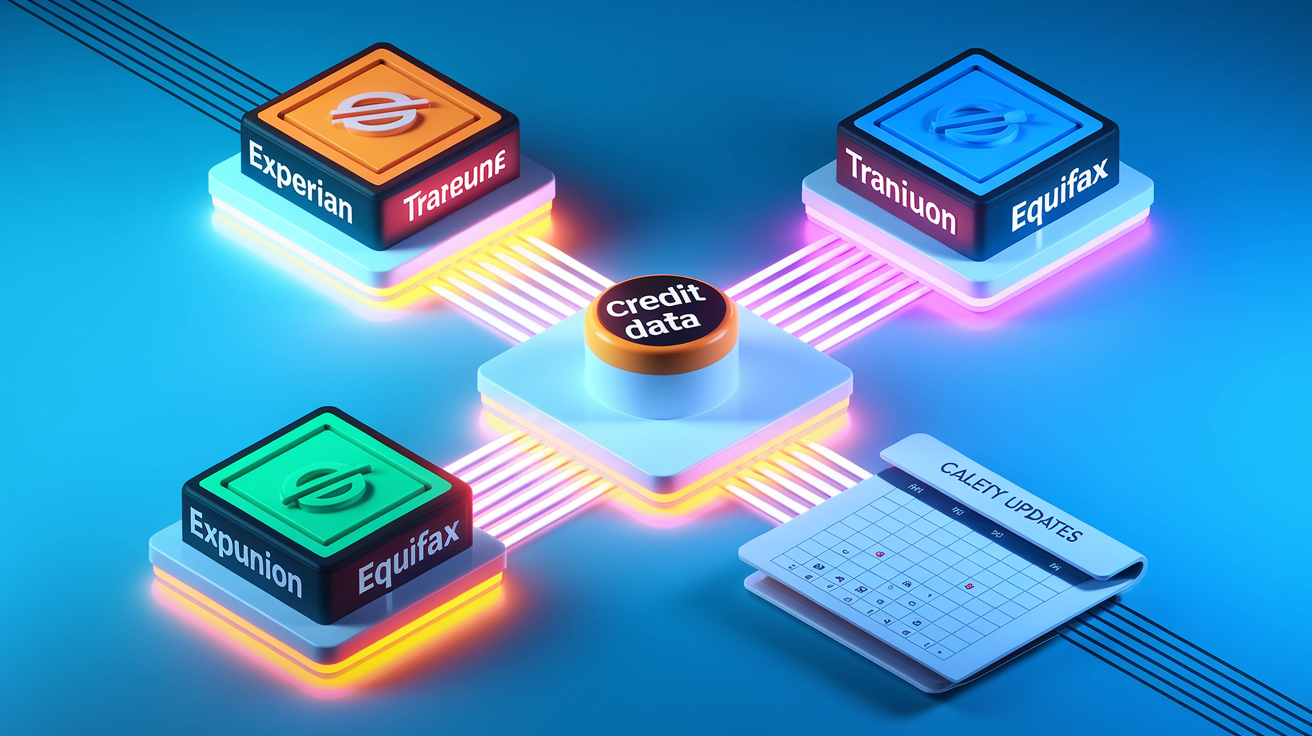
Every credit monitoring app pulls from at least one of the three major bureaus: Experian, TransUnion, and Equifax. Lenders report your payments to one, two, or all three, so watching only one bureau leaves blind spots. An identity thief might open a fake account reported to Equifax while your app only watches Experian.
Update frequency runs from real time to monthly. Free apps usually refresh weekly or monthly. Paid services often update daily or send alerts the moment the bureau posts new data. If you apply for credit often or suspect fraud, daily or instant updates catch problems faster. Monthly updates work fine if you’re just tracking score trends before a mortgage or car loan.
| App | Bureau Coverage | Update Frequency |
|---|---|---|
| Aura | Experian, TransUnion, Equifax | Monthly |
| Credit Karma | TransUnion, Equifax | Weekly |
| Capital One CreditWise | TransUnion (score), TransUnion + Experian (report monitoring) | Weekly (score), event-driven (report alerts) |
| myFICO Advanced | Experian, TransUnion, Equifax | Monthly |
Pricing and Subscription Options
Free credit monitoring apps make money by suggesting credit cards, loans, and insurance. You see your score and basic alerts for free, but the app uses your credit profile to match you with offers and collects a commission when you apply. Capital One CreditWise, Credit Karma, and the basic Experian tier work this way.
Paid tiers drop product ads, add multi-bureau monitoring, and bundle identity theft protection. Entry plans run $3 to $10 a month and usually add one or two extra bureaus or faster alerts. Full service plans ($15 to $30 monthly) include all three bureaus, dark web scans, identity insurance, and fraud resolution call centers. Family plans cover multiple adults and unlimited kids under one subscription, typically priced $15 to $25 monthly.
Trial periods stretch from seven to sixty days. Most premium apps offer a 14 or 30 day free trial. Aura gives you a 60 day money back guarantee on annual subscriptions. Cancel before the trial ends to dodge charges. Read the cancellation terms. Some services make you call or submit account closure requests days before renewal.
Types of Alerts and Why They Matter
Alerts turn a passive score checker into an early warning system. The fastest apps send push notifications within minutes when a bureau posts new data. Slower services batch alerts and email you summaries daily or weekly. Speed matters most for fraud detection. Immediate alerts let you freeze your credit or call the lender before a fake account fully opens.
Different alert types catch different problems. New account alerts flag identity theft. Hard inquiry alerts reveal unauthorized credit applications. Score change alerts highlight payment mistakes or utilization spikes. Address change alerts detect account takeovers. The more alert categories an app offers, the broader your fraud protection.
- New account opened – Tells you when a lender reports a newly opened credit card, loan, or line of credit. Critical for catching identity theft. Example: “A new auto loan was added to your Equifax report on May 3.”
- Hard inquiry posted – Alerts you when a lender pulls your credit for an application. Unauthorized inquiries signal fraud attempts. Example: “TransUnion recorded a hard inquiry from ABC Bank yesterday.”
- Significant score change – Fires when your score rises or falls by a threshold (often 10 to 25 points). Helps track the impact of payments, balances, or new accounts.
- Public record or collection added – Warns you of bankruptcies, liens, judgments, or debt sent to collections. Often the first sign of legal or billing problems.
- Personal information change – Detects updates to your name, address, phone, or employer on file. Flags account takeovers or clerical errors that could block credit applications.
Pros and Cons of Credit Monitoring Apps

Apps deliver convenience and speed you can’t get from manual credit checks. You get instant alerts instead of discovering fraud weeks later when you pull a free annual report. Most apps explain score factors in plain language, show which accounts hurt or help your score, and offer simulators that guess the impact of paying down debt or opening a new card.
Drawbacks include data accuracy, limited FICO access, and privacy tradeoffs. Many free apps show VantageScore instead of the FICO scores lenders use, so your app score might differ from what a mortgage broker sees. Security varies. Some apps skip two-factor authentication or sell anonymized user data to marketing partners. Free apps fund themselves by recommending products, which can feel pushy if you get constant loan or insurance offers.
| Pros | Cons |
|---|---|
| Real-time or daily alerts catch fraud early | Many apps show VantageScore, not the FICO scores most lenders use |
| Free or low cost access to credit scores and reports | Free apps fund operations with product recommendations that can feel pushy |
| Educational tools explain score factors and improvement strategies | Single bureau apps miss fraud on the other two reports |
| Dark web scans and identity insurance on premium plans | Some apps lack two-factor authentication or strong encryption |
| Score simulators estimate impact of financial decisions | Apps can’t prevent fraud. They only alert you after it appears on your report |
How to Compare Credit Monitoring Apps Effectively

Start by listing which bureaus the app monitors and which score model it shows. If you’re applying for a mortgage or auto loan in the next year, pick apps that show FICO scores or cover all three bureaus. Single bureau apps are fine for casual tracking but risky if you need real fraud protection.
Next, check alert features and speed. Look for apps that send push notifications within minutes of report changes, not daily email digests. Make sure the app alerts you to new accounts, hard inquiries, address changes, and public records, not just score changes. Read the privacy policy to see whether it shares your data with third party marketers and whether you can opt out.
Finally, weigh cost against features. Free apps work well if you accept weekly updates, single bureau visibility, and product recommendations. Paid apps earn their price when you need all three bureaus, dark web monitoring, identity insurance, and 24/7 fraud support. Compare trial lengths and cancellation rules before subscribing.
- Bureau coverage – One bureau leaves gaps. Three bureau monitoring catches fraud on any report.
- Score model – FICO scores match what lenders see. VantageScore is educational and might differ by 20 to 50 points.
- Alert speed – Real time or daily alerts beat weekly summaries for fraud detection.
- Identity protection – Dark web scans, insurance limits ($500k to $5M), and remediation services (24/7 call centers, licensed investigators).
- Security measures – AES-256 encryption, two-factor authentication, SOC 2 or ISO 27001 certification, clear privacy policy opt outs.
- Pricing and trials – Free tier capabilities vs. paid add-ons. Trial length (7 to 60 days) and cancellation terms.
Best Apps for Different User Needs

Budget users can combine free apps to cover multiple bureaus without monthly fees. Pair Credit Karma (TransUnion and Equifax, weekly VantageScore updates, no cost) with Capital One CreditWise (TransUnion FICO Score 8, dark web monitoring for SSN and email, also free). This combo gives you two bureau visibility, different score models, and basic identity alerts for zero dollars. Accept weekly updates instead of daily refreshes and ignore product recommendations if they bug you.
Advanced users who apply for credit often or carry high balances should pay for multi-bureau FICO access. myFICO Advanced ($29.95 monthly) delivers multiple FICO score versions (mortgage scores, auto scores, and credit card scores) across all three bureaus, updated monthly. Experian’s premium tier ($24.99 monthly) adds cross bureau score comparisons, subscription cancellation tools, and identity insurance. These apps help you see the exact scores lenders pull and track utilization changes across all reports.
Identity protection focused users need dark web scans, high insurance limits, and 24/7 fraud support. Aura starts at $9.99 a month, monitors all three bureaus with monthly VantageScore updates, scans the dark web for your SSN and financial accounts, and includes up to $5 million in identity theft insurance. The app provides U.S. based support around the clock and covers five adults plus unlimited children on family plans. IDShield ($19.95 monthly for three bureau monitoring) offers access to licensed private investigators and up to $3 million in insurance, though its app ratings and feature integration lag behind Aura.
Final Words
We started by ranking the top credit monitoring apps and explained the criteria: features, bureau coverage, update speed, price, and identity protection.
Then we broke down must-have features, data sources, alert types, pricing tiers, pros and cons, and a simple comparison checklist to guide your choice.
Use that checklist to match an app to your needs—budget, identity protection, or multi‑bureau tracking. Pick a credit score monitoring app with fast alerts and the bureau coverage you need. Small steps now can prevent big headaches later.
FAQ
Q: What is the best credit monitoring app?
A: The best credit monitoring app depends on your needs; top, widely recommended picks are Experian (free FICO score option and alerts), Credit Karma (two‑bureau tracking), Credit Sesame, myFICO, and SoFi.
Q: Which credit score does SoFi use?
A: SoFi uses the VantageScore 3.0 based on TransUnion credit data rather than a FICO score; check SoFi’s app to confirm the bureau and score version shown for your account.
Q: How to get a 700 credit score in 30 days fast?
A: You can’t reliably reach 700 in 30 days; speed improvement by lowering balances to under 30% utilization, disputing errors, asking for higher limits, avoiding new inquiries, and paying on time.
Q: How rare is an 820 credit score?
A: An 820 score is rare; it sits in the exceptional range—typically among the top 10–20% of consumers—and usually qualifies you for the lowest interest rates and best loan offers.