

Think free credit monitoring is useless?
Experian gives you a free FICO® Score 8 (the score lenders use in roughly 90 percent of credit decisions), your full Experian credit report, and real-time alerts, all without entering a credit card.
This post cuts through the marketing to show what Experian tracks, what paid tiers add, and how much you might expect to pay.
You’ll get a simple five-minute sign-up walk-through and clear tradeoffs so you can decide whether Experian monitoring fits your needs.
Key Features and Value of Experian’s Credit Score Monitoring Services

Experian’s free credit monitoring gets you instant access to a FICO® Score 8, your full Experian credit report, and continuous tracking without asking for a credit card. You register, and right away you see your three-digit FICO® Score (the one lenders use in roughly 90 percent of credit decisions) plus the factors helping or hurting that number. Checking your own score through Experian is a soft inquiry, so you can look as often as you want with zero impact to your credit.
The free version delivers ongoing monitoring with real-time alerts when your credit file or score shifts. You’ll know about new accounts, balance updates, or hard inquiries the same week they show up.
Beyond score visibility, Experian builds identity protections right into your monitoring account. Depending on which tier you pick, you might get dark web scans searching for your Social Security number, phone number, email, and other personal details on sketchy data markets. Experian also offers fraud alerts and can help you request removal of your contact info from people-search sites that publish your address and phone number. These identity tools run alongside your credit monitoring, so one account handles both credit health and identity risk.
Your Experian dashboard breaks down all five FICO credit factors and shows you which ones need work. You see line-item detail on payment history (including missed payments by creditor and month), current balances and utilization percentages across every revolving account, the age of your oldest and newest accounts, recent hard inquiries, and the number of account types in your mix. When your score drops or jumps, Experian flags the specific change that caused it, like a newly reported late payment or a sudden decrease in total balances. That factor-level detail helps you prioritize which accounts to pay down, which late payments to dispute, and when your score might have improved enough to apply for better terms.
How Experian Evaluates the Credit Factors That Influence Score Changes

Experian uses the FICO® Score 8 model for your free score. FICO® Score 8 runs on a 300 to 850 scale, with good credit generally starting at 670 and excellent at 800. Each time Experian pulls your credit file to calculate a fresh score, the FICO algorithm reads your current data (payment history, balances, account ages, recent inquiries, account types) and assigns point values weighted by the five scoring categories.
Lenders report new information to Experian throughout the month, so your credit file can change daily. Experian recalculates your score every time you request it or a lender runs a hard inquiry.
Experian monitors each scoring factor in real time and logs every change touching your credit file. When a creditor reports a new balance, Experian records the update, recalculates your utilization percentage, and fires an alert if you’ve turned on balance-change notifications. If a new hard inquiry appears, Experian notes the date, creditor name, and inquiry type, then adjusts your “new credit” factor. This continuous tracking means your Experian dashboard always reflects the latest version of your file, even if one creditor reported this morning and another won’t report until next week.
FICO® Score 8 factor weights and impact examples:
Payment history (35 percent): Late payments reported after 30 days past due can drop your score by 50 to 100 points. Defaults, charge-offs, repossessions, foreclosures, collections, and bankruptcies all fall into this category and may lower your score for years.
Amounts owed and credit utilization (30 percent): Experian calculates per-card utilization and total revolving utilization. Borrowers with excellent credit often keep total utilization under 10 percent, while using more than 30 percent tends to lower scores.
Length of credit history (15 percent): Experian tracks the age of your oldest account, your newest account, and the average age of all accounts. Closing an old card can shorten your average age and reduce this factor’s contribution.
New credit (10 percent): Opening multiple accounts in a short window or racking up several hard inquiries signals higher risk. But rate-shopping for auto or mortgage loans within a 14 to 45 day window typically counts as a single inquiry event.
Credit mix (10 percent): Managing different account types (credit cards, auto loans, mortgages, student loans) shows broader credit experience. Holding only one account type may limit this factor’s benefit.
Experian Credit Score Monitoring Plans and Pricing Breakdown

Experian’s free basic account delivers unlimited access to your FICO® Score 8, your full Experian credit report, ongoing score and report tracking, and customized alerts when your file or score changes. You don’t need to enter a credit card number to open a free account. You can check your score as many times as you want without lowering it.
The free tier includes factor-level insights explaining which of the five credit categories are helping or hurting your number. You get email or push alerts when Experian detects a new inquiry, a balance change, a new account, or a public record. This free package covers everything most people need to monitor their Experian credit file and track improvement.
Experian’s paid premium memberships add features beyond the free single-bureau view. Premium tiers give you access to credit scores and reports from all three major bureaus (Experian, Equifax, and TransUnion), so you can compare how each bureau’s file affects your score. Premium accounts may also unlock industry-specific FICO scores (like the FICO Auto Score or FICO Bankcard Score that lenders use for car loans or credit card approvals), identity-theft insurance that reimburses certain expenses if your identity is stolen, bill-negotiation services that contact your service providers to lower recurring costs, and stronger dark-web and data-breach monitoring.
Experian doesn’t publish exact premium pricing on every product page, but upgrade prompts appear inside your free account dashboard and on the checkout screens when you request additional features.
Competitors offer different pricing and score models. Equifax provides a free Equifax credit report plus a VantageScore 3.0 that updates once per month. Equifax’s Credit Monitor service, which adds alerts and the ability to lock your Equifax credit file, costs $4.95 per month. TransUnion sells a credit-monitoring service that includes your TransUnion report and a VantageScore 3.0 for $29.95 per month. Unlike Experian’s free FICO® Score 8, these competitors deliver VantageScore instead of FICO, and their free tiers (if any) offer less frequent updates or fewer features.
| Service | Cost | Score Model Included | Key Monitoring Features |
|---|---|---|---|
| Experian (free tier) | $0 | FICO® Score 8 (unlimited access) | Credit report access, real-time alerts, factor insights, dark-web scans (basic) |
| Equifax Credit Monitor | $4.95/month | VantageScore 3.0 (monthly update) | Alerts, credit lock, single-bureau report |
| TransUnion Credit Monitoring | $29.95/month | VantageScore 3.0 | Report access, VantageScore updates, monitoring alerts |
Step-by-Step Guide to Setting Up Experian Credit Monitoring

Setting up Experian credit monitoring takes about five minutes and requires basic personal information to verify your identity. Once your account is active, you immediately see your FICO® Score 8, your complete Experian credit report, and the dashboard that tracks changes over time.
You can turn on email and mobile alerts so Experian notifies you the same day a creditor reports a new balance, a late payment appears, or a lender runs a hard inquiry. Experian also offers a mobile app that mirrors the web dashboard and lets you check your score or review alerts from your phone.
-
Start registration by visiting Experian’s free credit-score page and selecting “Check your FICO® Score for free.”
-
Enter the last four digits of your Social Security number and your current mobile phone number. Experian uses this combination to send a one-time verification link.
-
Open the text message from Experian and click the confirmation link. This step confirms you control the phone number on file.
-
Enter your full Social Security number, date of birth, full legal name, and current home address. Experian matches these details against public and credit-bureau records to verify your identity.
-
Create login credentials by choosing an email address and a secure password. Your email becomes your username for future logins.
-
Access the dashboard, view your FICO® Score 8 and credit report, and turn on monitoring alerts in the account settings. Enable notifications for new inquiries, balance changes, and score updates so you get real-time alerts whenever your file changes.
Comparing Experian Credit Score Monitoring With Other Credit Bureaus
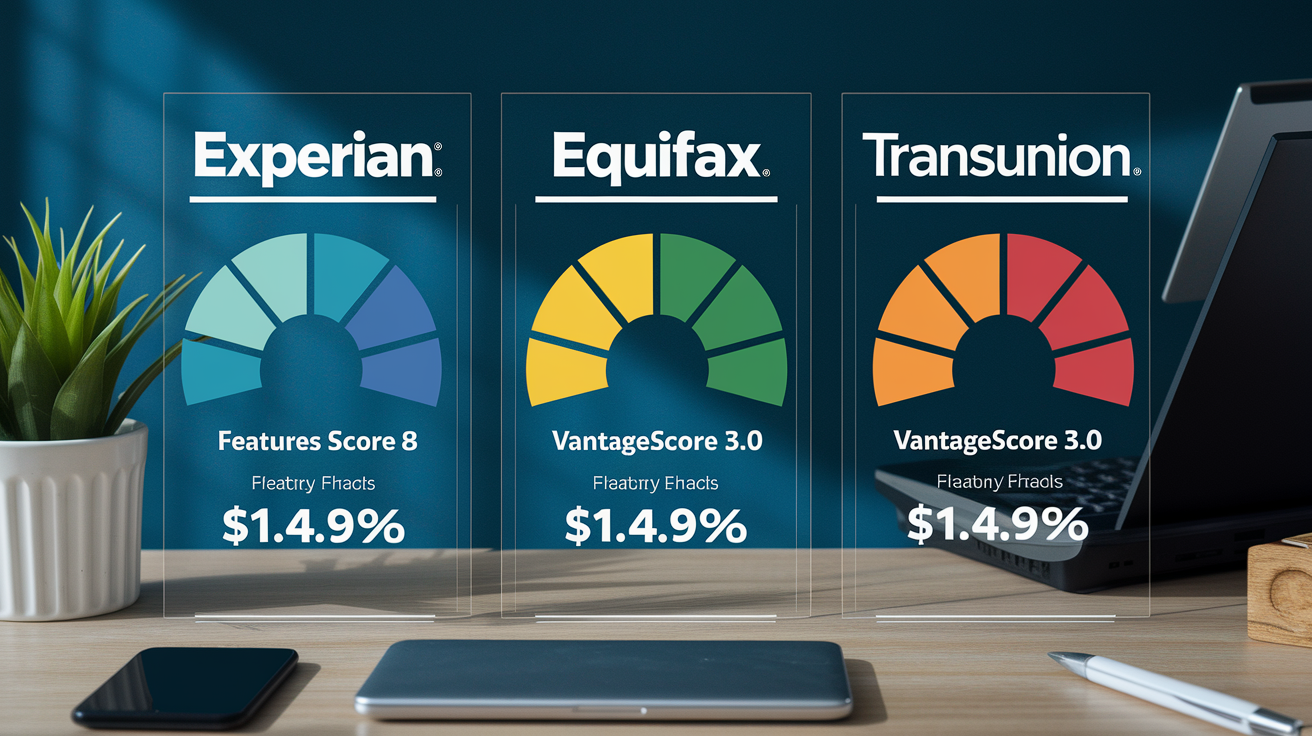
Experian delivers a free FICO® Score 8 and unlimited access to your Experian credit report, while Equifax and TransUnion offer their own monitoring products at different price points and with different score models.
Equifax provides a free Equifax report alongside a VantageScore 3.0 that updates once per month. If you want alerts and the ability to lock your Equifax file, you pay $4.95 per month for Equifax Credit Monitor. TransUnion charges $29.95 per month for a monitoring service that includes your TransUnion report and a monthly VantageScore 3.0 update. None of these competitor services give you a free FICO score. Only Experian’s free tier does that.
Score differences across bureaus happen for two reasons. Each bureau collects data from different creditors on different schedules, and each monitoring service may use a different scoring model. Experian shows your FICO® Score 8, Equifax and TransUnion show VantageScore 3.0, and lenders may pull yet another FICO version (like FICO Score 9 or an industry-specific model) when you apply for credit.
A creditor that reports to Experian on the 5th of the month may not report to Equifax until the 15th and TransUnion until the 20th, so your balances, payment status, and score can differ across all three bureaus on the same day.
Key monitoring differences across the major credit bureaus:
Experian free tier: FICO® Score 8 anytime, continuous credit-report access, real-time alerts, factor-level insights, basic dark-web monitoring. Optional paid upgrade adds 3-bureau scores and identity-theft insurance.
Equifax: Free Equifax report with monthly VantageScore 3.0 update. $4.95 per month Credit Monitor service adds alerts and credit lock.
TransUnion: Monitoring service priced at $29.95 per month includes TransUnion report and monthly VantageScore 3.0 updates.
AnnualCreditReport.com: Provides free credit reports from all three bureaus on a weekly basis (no score included), useful for reviewing file accuracy without paying for monitoring.
How Experian Credit Monitoring Helps Improve Your Credit Health

Experian’s real-time alerts catch negative events the week they appear on your credit file. If a creditor accidentally reports a late payment you paid on time, you see the update within days instead of months later, giving you time to contact the creditor or file a dispute with Experian before the error drags your score down further.
If your utilization suddenly jumps because a creditor reported your statement balance instead of your paid-off balance, the alert prompts you to check your account and either pay down the balance or wait for the next reporting cycle. Catching problems early means you can fix inaccuracies, stop fraud, and prevent small mistakes from becoming long-term score damage.
Experian’s factor-insight dashboard tells you exactly which categories are holding your score back and which ones are adding points. When the dashboard shows that “amounts owed” is your weakest factor, you know to focus on paying down balances or requesting credit-limit increases to lower your utilization percentage.
When “payment history” appears in red, you prioritize on-time payments and review your file for any late-payment errors you can dispute. This targeted feedback turns vague advice like “improve your credit” into specific actions. Pay Card A below 30 percent utilization this month, dispute the 30-day late on Account B, stop applying for new credit until your score recovers.
Borrowers preparing for major loans (mortgages, auto financing, large personal loans) use Experian monitoring to track score trends and time their applications. Mortgage lenders typically pull credit reports from all three bureaus and use the middle of the three FICO scores to determine your rate, so monitoring only Experian may not give you the full picture.
Still, watching your Experian score climb as you pay down debt or age past a late payment helps you estimate when you’ve crossed into a better rate tier. Checking your score a few months before you apply lets you spot and fix errors, avoid last-minute hard inquiries, and enter the application process with confidence that your file is clean.
Experian Boost and Additional Credit-Building Tools Inside Experian Monitoring
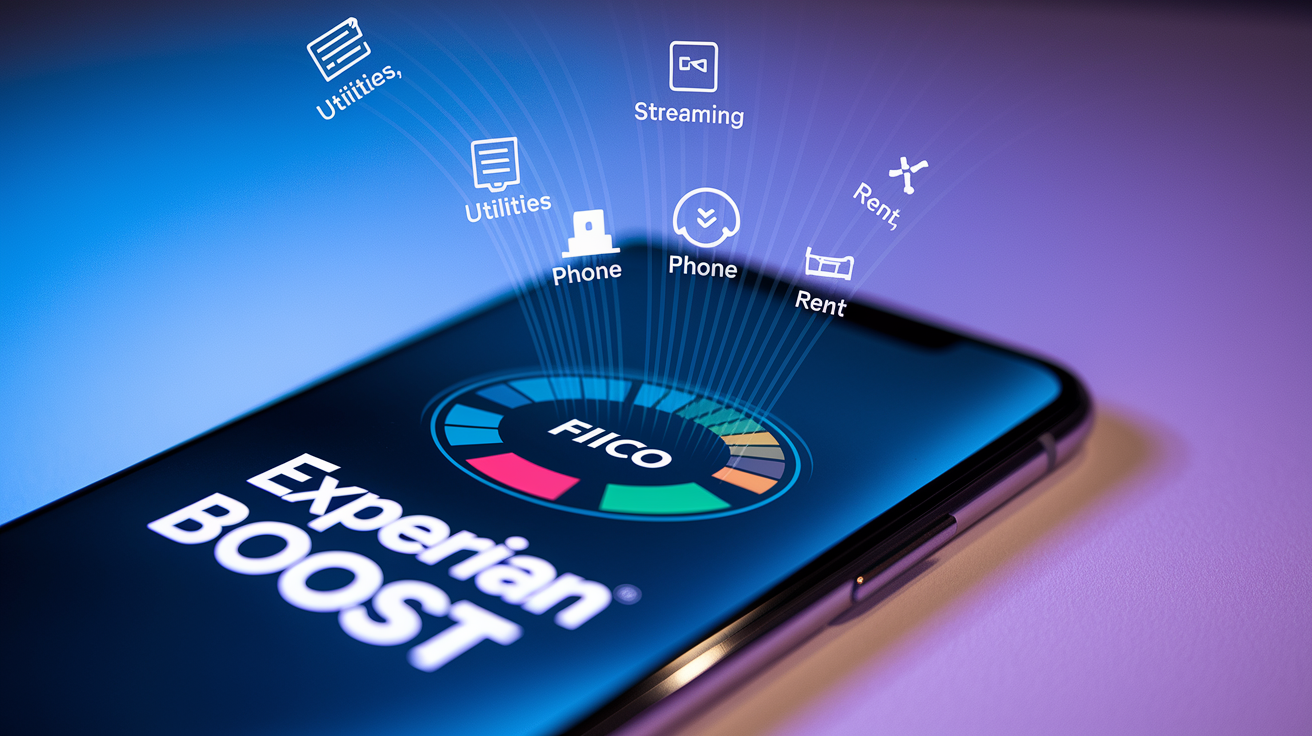
Experian Boost connects to your bank accounts and scans for eligible on-time payments that normally don’t appear on credit reports. Utility bills, cellphone bills, streaming subscriptions, insurance premiums, and online rent payments. When you add these payments to your Experian credit file, the FICO® Score 8 algorithm recalculates your payment history with the new data, and you see an instant result showing whether your score increased and by how many points.
Boost works because FICO’s payment-history factor (35 percent of your score) rewards consistent on-time payments. Adding months or years of perfect utility and phone payments can offset a thin credit file or a few missed credit-card payments.
Experian Boost helps most when you have a limited credit history, a short payment history, or recent late payments that overshadow your otherwise solid track record. If you already have ten years of perfect on-time payments across multiple credit cards and loans, adding six months of utility-bill history may move your score only a few points.
But if your oldest credit account is two years old and you missed one payment last year, adding 18 months of on-time phone and streaming bills can add 10, 15, or even 20 points by showing a longer pattern of reliable payments.
How to activate Experian Boost in three steps:
-
Connect your bank accounts by logging into your online banking through Experian’s secure interface (Experian uses read-only access and doesn’t store your bank login).
-
Choose which bills to include by reviewing the list of eligible payments Experian found in your transaction history. Select utilities, phone, streaming, insurance, or rent.
-
See instant results as Experian recalculates your FICO® Score 8 with the new payment data and displays whether your score increased and the point gain.
FAQs About Experian Credit Score Monitoring Accuracy, Updates, and Security
Does checking my own credit score through Experian lower my score?
No. Checking your own score on Experian counts as a soft inquiry and has no impact on your credit score. You can view it as often as you want.
How often does my Experian credit score update?
Your score updates every time you request it, as long as your credit file changed since the last calculation. Most creditors report about once per month, but updates can happen daily if multiple creditors report on different schedules.
How does Experian protect my personal and financial data?
Experian encrypts your data in transit and at rest, monitors for unauthorized login attempts, and offers identity-theft protections like dark-web scans and fraud alerts depending on your service tier.
Can I cancel Experian’s paid monitoring services anytime?
Cancellation policies vary by subscription. Review Experian’s terms on your account page or contact support to confirm the process and any notice period required.
Why does my Experian score differ from my Equifax or TransUnion score?
Each bureau collects data from different creditors on different schedules, and Experian shows FICO® Score 8 while competitors may show VantageScore 3.0. Different files and different scoring models produce different scores.
When should I check my credit score before applying for a major loan?
Check your score and credit reports from all three bureaus at least a few months before applying so you have time to dispute errors, pay down balances, and avoid last-minute hard inquiries that could lower your score.
Final Words
Get started now: Experian’s free tier gives you a FICO Score 8, credit-report access, and real-time alerts the moment something changes.
Paid upgrades add three-bureau monitoring, identity-theft insurance, dark web scans, and Experian Boost to include on-time bills that may raise your score.
If your goal is better credit, use experian credit score monitoring to spot errors, keep utilization low, and set alerts. Sign up, enable notifications, and check your dashboard monthly. Small, steady moves add up.
FAQ
Q: What credit score does Hyundai Finance, Truist, and SoFi use?
A: The credit scores Hyundai Finance, Truist, and SoFi use aren’t fixed. They generally rely on FICO-based scores (often FICO 8 or a FICO Auto variant) and the bureau checked varies—ask the lender or use soft prequalification.
Q: Is Experian credit monitoring worth it?
A: Experian credit monitoring is worth it if you want free FICO Score 8, report access, and real-time alerts; upgrade only if you need 3-bureau coverage, dark‑web scans, or identity‑theft insurance for fuller protection.