


Think credit monitoring is optional? Missing alerts can cost you thousands.
Credit monitoring services watch your credit files and warn you about new accounts, hard inquiries, address changes, public records, and signs of identity theft.
This post cuts through the noise: it compares leading providers, explains the must-have features—alert speed, one- vs three-bureau coverage, score models, and dark-web scans—and lays out when a free plan is enough versus when paid protection makes sense.
Read on to pick the service that actually helps protect your financial future.
Overview of Leading Credit Monitoring Services
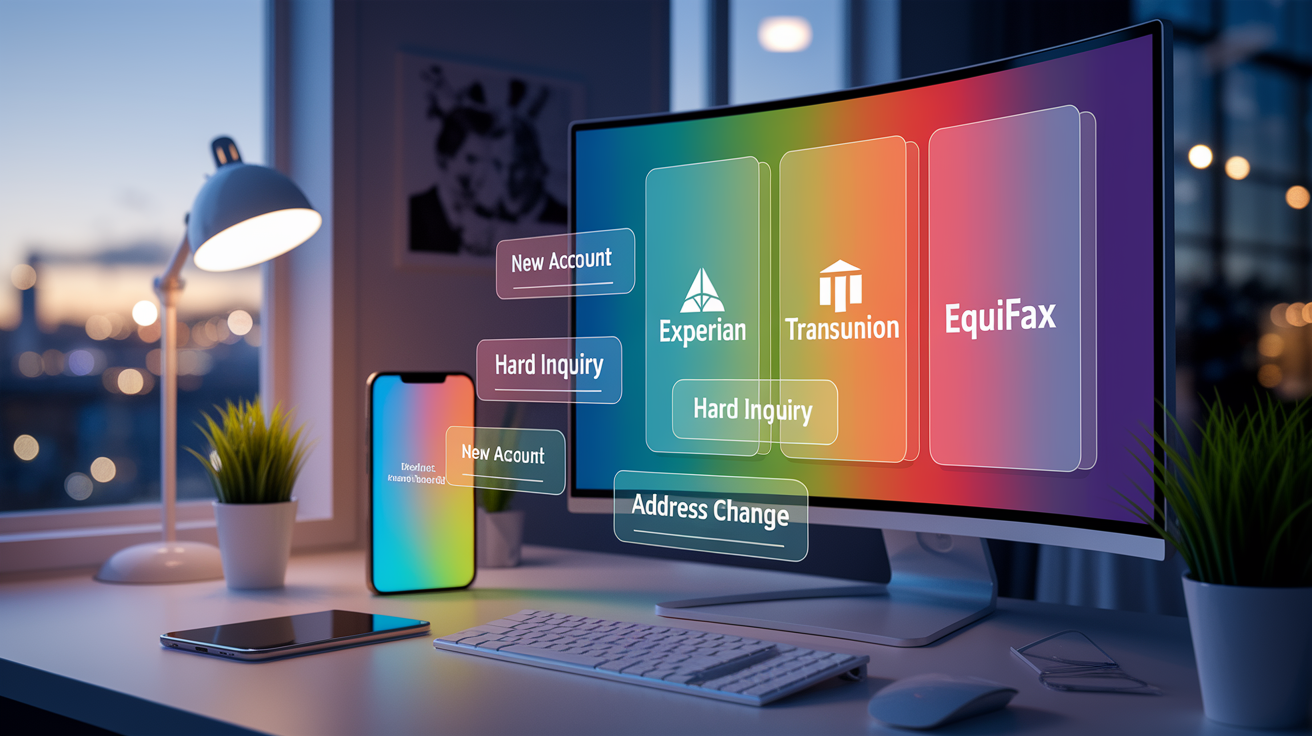
Credit monitoring services watch your credit reports around the clock for changes. New accounts, credit inquiries, address updates, public records. When activity shows up, you get an alert by email, text, or app notification. These services pull data from one or more of the three major US credit bureaus (Experian, TransUnion, Equifax) and ping you when something shifts on your file.
The top providers aren’t all built the same. Bureau coverage, alert speed, scoring models, added protections. All different. Experian offers its own bureau data, plus premium tiers that include three-bureau comparisons and identity-theft insurance for $24.99 monthly. Credit Karma provides free VantageScore updates and monitoring from Equifax and TransUnion, with weekly score refreshes and dark-web scans at no cost. Capital One CreditWise is also free and open to non-cardholders. It shows TransUnion reports and VantageScore 3.0 alongside basic dark-web monitoring. American Express MyCredit Guide delivers an Experian-based FICO score and report for free, plus breach alerts and financial calculators. TransUnion’s own service runs around $30 monthly for active monitoring, though free features like credit freezes and fraud alerts remain available without subscription.
You need credit monitoring if you want early warnings about new accounts opened in your name, sudden score drops, or suspicious inquiries that could signal identity theft. Manual credit-report checks through AnnualCreditReport.com give you a snapshot three times yearly. But monitoring services fill the gaps between those pulls and catch problems days or weeks sooner. That speed matters most when fraudulent accounts start charging balances or when lenders pull your file without permission.
Quick comparison of five leading providers:
- Experian – Best for premium features; $0 to $24.99/month; free tier includes Experian Boost; paid adds bureau comparisons, bill negotiation, and identity insurance.
- Credit Karma – Best free option; covers Equifax and TransUnion; weekly updates; dark-web monitoring included.
- Capital One CreditWise – Best for ease of access; free for anyone; TransUnion data; dark-web scans for email and address.
- American Express MyCredit Guide – Best for FICO access; free Experian-based FICO score; includes score simulator and breach alerts.
- TransUnion – Best for direct bureau monitoring; approximately $30/month; free credit freeze and fraud-alert tools available.
Pricing Structures of Major Credit Monitoring Services
Most credit monitoring services run on monthly subscriptions that start at zero dollars for basic offerings and climb to $30 or more for comprehensive identity-protection bundles. Free tiers typically monitor a single bureau, deliver VantageScore updates, and skip identity-theft insurance. Paid plans add faster alerts, three-bureau coverage, FICO score access, and fraud remediation support. Prices cluster between $7 and $25 monthly for mid-tier plans.
What drives cost up? The breadth of monitoring and the depth of recovery services. A single-bureau plan with weekly score updates and basic alerts costs less than a three-bureau package that checks all reports daily, scans the dark web for stolen credentials, and includes a $1 million identity-theft insurance policy. Premium tiers in the $25 to $30 range often bundle device security, public-record monitoring, and 24/7 fraud-resolution specialists.
Annual billing sometimes shaves a month or two off the total. Norton LifeLock and Identity Guard frequently offer promotional rates that drop the first-year cost by 20 to 50 percent, then revert to full pricing at renewal. Before you sign up, verify the regular monthly price and check whether the service auto-renews at a higher rate after the trial or discount window closes. Some providers, like TransUnion, require a credit card on file even to access free features. That can create friction if you only want basic monitoring without subscription risk.
Key Features to Compare in Credit Monitoring Services

Features separate a useful monitoring service from one that sends redundant emails and buries the important alerts. The most critical distinctions are alert speed, bureau coverage, scoring-model transparency, and the scope of identity monitoring beyond credit files.
Real‑Time Alert Accuracy
Real-time alerts mean you get a notification within minutes or hours of a new inquiry or account appearing on your report. Services like Credit Karma and Experian claim near-instant alerts for hard inquiries and new tradelines. Others batch updates daily or weekly. Speed matters because a fraudster opening a credit card in your name can rack up charges in the first 24 hours. A monitoring service that sends an alert two weeks later? You get less time to freeze accounts and file disputes. Check whether alerts cover all event types. New accounts, hard inquiries, address changes, public records, credit-limit increases. Some providers only notify on new accounts and skip other activity that could signal identity misuse.
Three‑Bureau vs. Single‑Bureau Monitoring
Single-bureau monitoring watches one of the three major credit bureaus, usually the one the service owns or has the cheapest data agreement with. Three-bureau monitoring pulls from Experian, TransUnion, and Equifax simultaneously. It catches activity that appears on only one or two reports. Lenders don’t report to all three bureaus equally. A fraudulent account might show up on Equifax first and take weeks to land on TransUnion. If your monitoring service only watches TransUnion, you miss that early window.
Free services almost always limit you to one bureau. Paid tiers in the $15 to $25 range typically add all three. If you want comprehensive coverage, confirm the plan explicitly states “three-bureau monitoring” rather than vague language like “multi-bureau access,” which can mean you view reports from all three but only get alerts from one.
Credit Score Tracking Tools
Most services show either a FICO score or a VantageScore. The difference matters. FICO scores power the majority of lending decisions, but many free monitoring apps display VantageScore because it costs less to license. American Express MyCredit Guide offers a true Experian-based FICO score for free. Credit Karma and CreditWise show VantageScore 3.0. Paid plans from myFICO deliver historical FICO scores across multiple models, useful if you want to track mortgage-score trends or auto-loan score changes.
Update frequency ranges from monthly snapshots to daily refreshes. Daily updates help you see how paying down a balance or disputing an error shifts your score in near-real time. But weekly or monthly cadences work fine if you’re not actively rebuilding credit or preparing for a major loan application.
Identity‑Related Monitoring Features
Beyond credit files, many services scan for stolen Social Security numbers, dark-web exposure of email addresses and passwords, and public-record filings like bankruptcies or tax liens. Capital One CreditWise and Credit Karma include basic dark-web monitoring at no cost. They search breach databases for your email and notify you when credentials appear in dumps. Premium identity-protection plans from Norton LifeLock, Identity Guard, and Aura add SSN monitoring, bank-account surveillance, and alerts when your personal information shows up on data-broker sites or illegal marketplaces.
These features sit outside traditional credit monitoring but catch threats earlier, sometimes before a fraudster even opens a credit account. Decide whether you need this layer or if credit-file alerts alone meet your risk profile.
Pros and Cons of Paid vs. Free Credit Monitoring
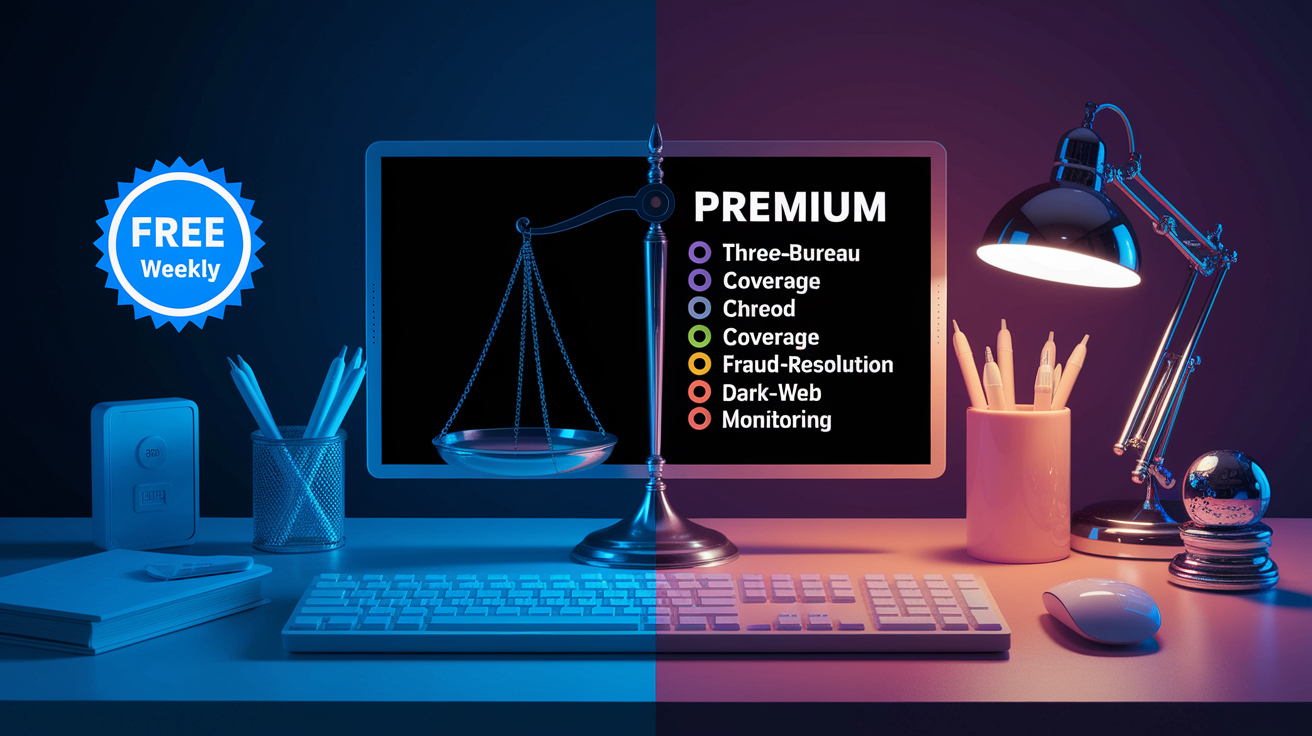
Free credit monitoring gives you single-bureau score updates, basic alerts, and zero monthly cost. Services like Credit Karma, CreditWise, and Credit Sesame’s entry tier deliver Equifax or TransUnion data with weekly or monthly score refreshes and notifications when new accounts or inquiries appear. The trade-off is limited coverage. You miss activity on the bureaus not monitored. And slower alert timing. Free services also lean on product recommendations and pre-qualified credit-card offers to generate revenue, which means more email clutter and upsell prompts in the app.
Paid monitoring adds faster alerts, three-bureau visibility, identity-theft remediation, and fraud insurance. Plans in the $7 to $25 range typically include daily score updates, real-time notifications for new accounts and inquiries, and access to fraud-resolution specialists who help you file police reports, dispute accounts, and navigate credit freezes. Premium tiers at $25 to $30 per month bundle dark-web scans, SSN monitoring, and reimbursement coverage up to $1 million or more for expenses related to identity recovery. The downside? Recurring cost and potential overlap with protections your bank or credit-card issuer already provides for free.
Six key differences between free and paid credit monitoring:
- Alert speed – Free services often deliver notifications weekly or daily; paid services send real-time alerts within minutes of new activity.
- Bureau coverage – Free plans monitor one bureau; paid plans monitor all three simultaneously.
- Identity-theft insurance – Free plans offer no reimbursement; paid plans include $1 million to $5 million in recovery expense coverage.
- Data monitoring scope – Free services focus on credit files; paid services add dark-web scans, SSN checks, and bank-account surveillance.
- Score model access – Free plans show VantageScore; paid plans sometimes include FICO score tracking across multiple models.
- Fraud remediation support – Free services provide alerts only; paid services assign specialists to guide you through disputes and account closures.
Independent Ratings, Customer Reviews, and User Satisfaction

Expert reviewers rate credit monitoring services on bureau coverage, alert timeliness, identity-restoration quality, and transparency about data use. Services that offer three-bureau monitoring, FICO score access, and dedicated fraud-resolution teams score higher in professional evaluations. Experian’s premium tier and Norton LifeLock’s comprehensive plans consistently rank near the top for feature breadth. Credit Karma and CreditWise earn praise for delivering strong free options with minimal upsell friction. Review platforms also assess how clearly each service explains what data it collects, whether it sells anonymized information to third parties, and how easy it is to cancel subscriptions without hidden fees or retention calls.
Customer reviews on app stores and consumer forums typically range from 3.5 to 4.8 out of 5 stars. High marks go to services with clean mobile interfaces, accurate alerts, and responsive customer support during fraud incidents. Users appreciate when monitoring apps send alerts that prove accurate. New accounts they actually opened or inquiries they authorized. And when false positives stay rare. Credit Karma users frequently highlight the app’s simplicity and the value of free Equifax and TransUnion access. American Express MyCredit Guide earns positive feedback for showing genuine FICO scores without requiring an Amex card.
Recurring complaints center on customer-service delays, confusing cancellation processes, and promotional pricing that jumps at renewal. Some users report waiting days for human support when fraud occurs, which undermines the value of premium plans marketed on 24/7 restoration help. Others note that services require a credit card to activate free trials, then auto-renew into paid subscriptions unless manually canceled before the trial window closes. TransUnion’s own monitoring service has drawn criticism for requiring payment details even to access free credit-freeze tools, a friction point competitors avoid. Reading recent reviews filtered by date helps identify whether a service has improved support response times or fixed user-interface issues that older reviews flag.
Privacy, Data Security, and Encryption Standards
Credit monitoring companies handle Social Security numbers, full credit histories, and linked bank-account credentials. Encryption and access controls matter. Leading services use AES-256 encryption to protect data at rest and TLS 1.2 or higher to secure data in transit between your device and their servers. Multi-factor authentication adds a second verification step. SMS code, authenticator app, or biometric login. It prevents unauthorized account access even if someone steals your password.
Data-sharing policies vary. Some providers, including Credit Karma, generate revenue by sharing anonymized consumer data with financial institutions and advertisers. It’s disclosed in privacy policies but often overlooked during signup. Other services, like myFICO, focus subscription revenue on score access and claim not to sell user information to third parties. Before enrolling, read the privacy policy’s section on data sharing, affiliate marketing, and whether the company uses your credit profile to match you with pre-qualified offers. Services that integrate with Plaid to link external bank accounts introduce another data-sharing layer. Plaid’s own privacy policy governs how your linked-account information is stored and who can access it.
Retention policies and account-deletion options also affect privacy. Check whether the service allows you to delete your account and request full data removal, or if it retains credit-file snapshots and personal information indefinitely for compliance or internal analytics. Some monitoring apps require you to contact customer support to delete data. Others offer a self-service delete button in account settings. Look for mentions of SOC 2 Type II or ISO 27001 certifications. They indicate the company follows industry-standard security frameworks and undergoes regular third-party audits.
How to Sign Up and What to Expect After Enrollment
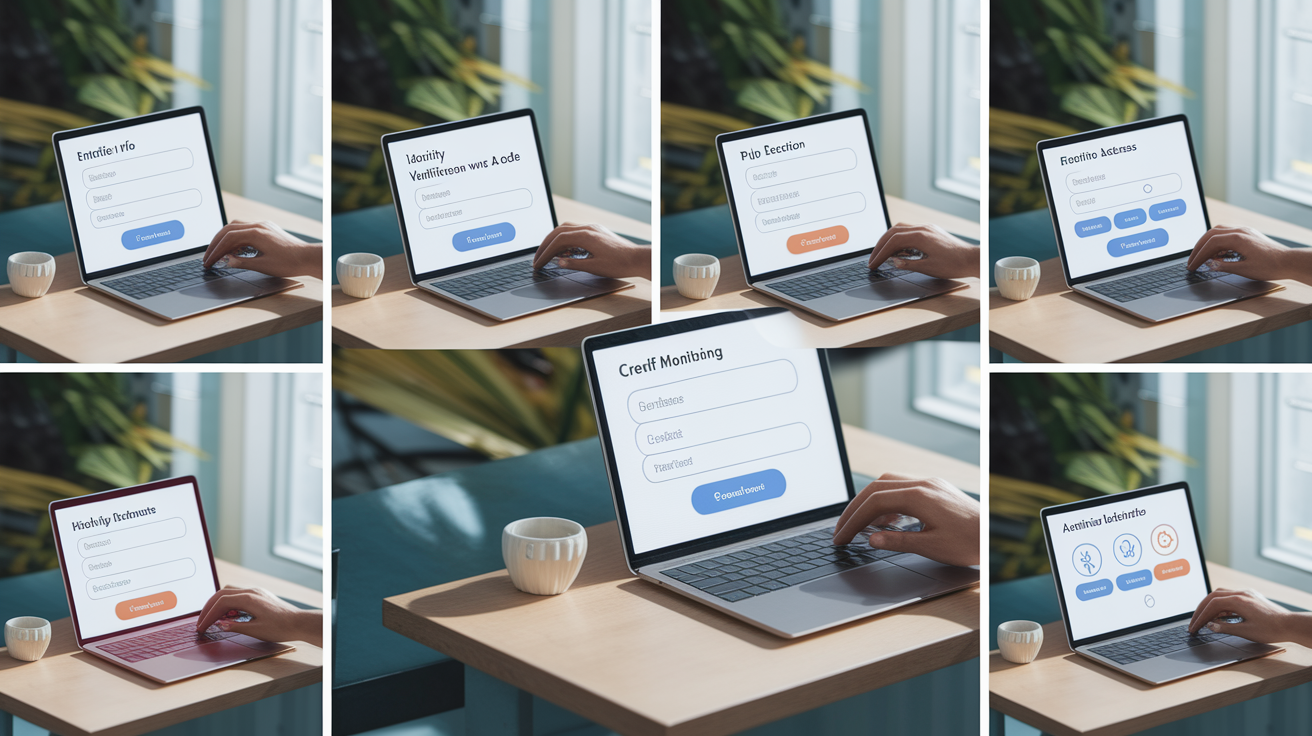
Signing up for credit monitoring requires identity verification and bureau permission to access your credit file. The process typically looks like this:
- Provide basic personal information – Enter your full name, date of birth, Social Security number, current address, and a valid email. Phone number is often required for SMS alerts and two-factor authentication.
- Verify your identity – The service sends a verification code to your email or phone, or asks knowledge-based questions pulled from your credit history. Previous addresses, lender names, loan amounts. Answer these correctly to confirm you are who you claim to be.
- Choose your plan – Select free monitoring or a paid tier. Free options activate immediately with no payment method. Paid plans prompt you to enter a credit or debit card and agree to recurring billing. Many services offer a 7- to 30-day free trial that auto-renews unless you cancel before the trial ends.
- Authorize bureau access – You consent to the service pulling your credit file from one or more bureaus. This is a soft inquiry and doesn’t affect your credit score. If you later apply for a loan or credit card through the service, that triggers a hard inquiry.
- Link external accounts (optional) – Some apps, including Capital One CreditWise and services using Plaid, let you connect bank accounts, credit cards, and loans for a fuller financial picture. This step is optional but adds account-monitoring features.
- Activate alert preferences – Set how you want to receive notifications. Push alerts in the app, SMS, email, or all three. Choose which events trigger alerts: new accounts, hard inquiries, address changes, public records, or score changes above a certain threshold.
After enrollment, expect your first credit report and score to populate within minutes to a few hours, depending on bureau data-sync speed. Alerts begin as soon as the service completes its initial pull and starts watching for changes. You’ll see a dashboard showing your current score, recent inquiries, open accounts, credit utilization, and any negative marks. Most services refresh scores weekly or monthly for free plans and daily for paid tiers. If you signed up for a free trial, mark your calendar for the renewal date and decide whether the paid features justify the monthly cost before the charge hits.
Final Words
You now have a clear map: what credit monitoring services do, which providers stand out, and which features (real-time alerts, three-bureau coverage, identity monitoring) really matter.
We walked through typical pricing tiers, paid vs. free tradeoffs, what reviewers praise or complain about, security practices, and the step-by-step signup process.
Pick a service with the alert speed and bureau coverage you need, try a free trial or low-cost tier, and check credit score monitoring services regularly. Small, consistent checks can head off big problems—and that’s good news.
FAQ
Q: Which is the best credit score monitoring service?
A: The best credit score monitoring service depends on your needs: use Credit Karma for free scores, or pick Experian, myFICO, LifeLock, or IdentityForce for three‑bureau monitoring and identity protection.
Q: What credit score does Hyundai Finance use?
A: Hyundai Finance uses auto‑specific FICO scores (FICO Auto models) rather than VantageScore; the exact FICO version and bureau vary by application and dealer, and approval also considers income and credit history.
Q: Does Sallie Mae credit check?
A: Sallie Mae does perform credit checks: hard pulls for loan and card applications, and soft pulls for prequalification or rate quotes; private student loans may require a cosigner if credit is limited.
Q: Which credit score does Truist use?
A: Truist generally uses FICO scores from the major bureaus; the specific FICO model depends on the product (cards, auto, mortgage) and can influence approval and the rates offered.